
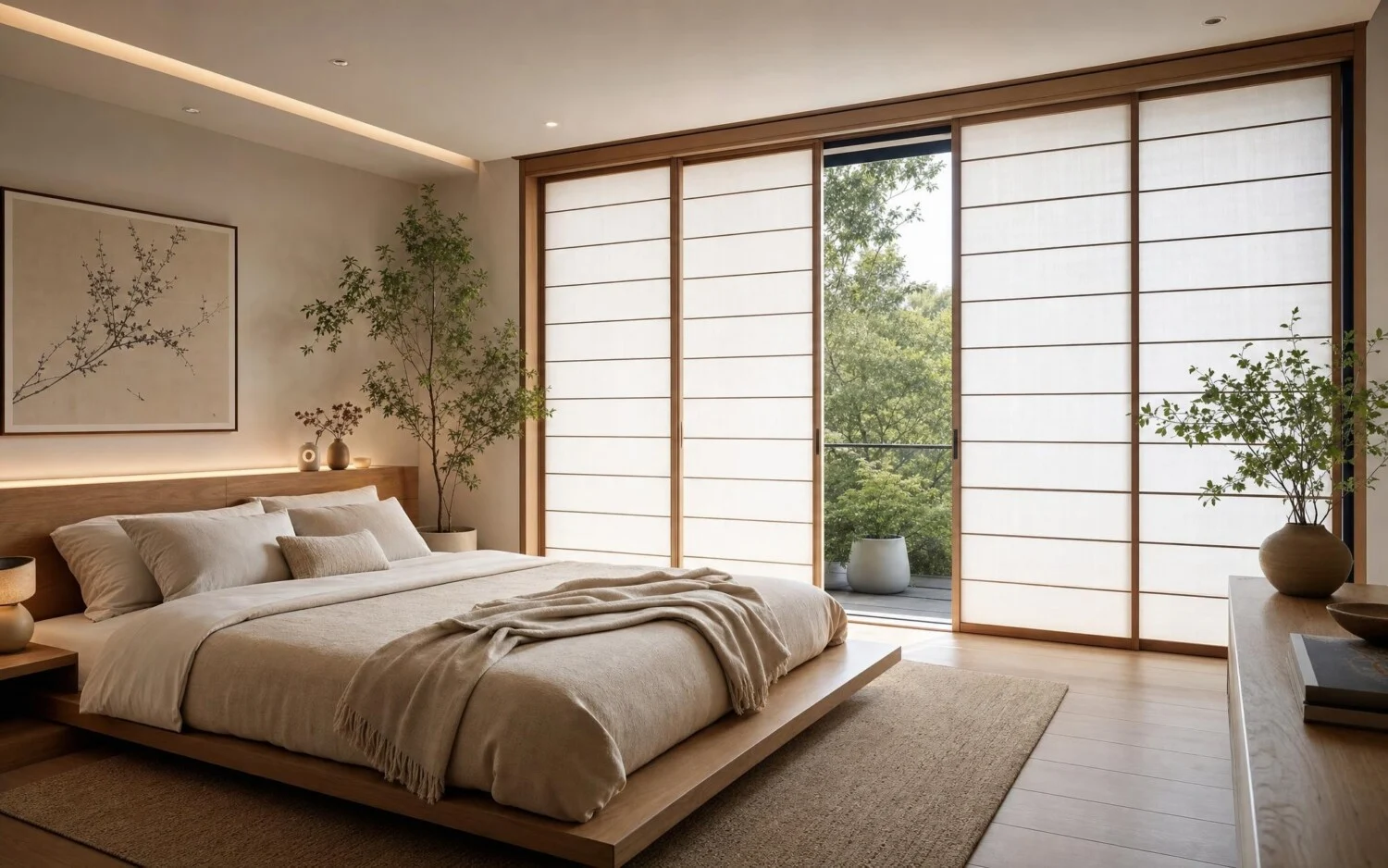
For a long time, heavy curtains were hung at the windows without much reflection. The gesture was reassuring: warmth and the feeling of a cocoon. In 2026, that reflex is beginning to feel dated. Heavy textiles take up space, trap dust, and block light rather than modulating it. Decoration desires drift toward something sharper and more linear.
According to the Spanish site Arquitectura y Diseño, several lighter and more functional solutions are now shaking up the role of the fabric curtain, including in the bedroom. Venetian blinds, roller shades, linen sheers, and especially Japanese panels allow for subtle manipulation of light and privacy while freeing up space around the windows. A discreet revolution, which often begins where we sleep.
Why traditional fabric curtains are fading in bedrooms
In the collective imagination, a warm bedroom was inevitably clothed in curtains. They filtered prying eyes, softened the light, and made the atmosphere cozier. Today, these curtains are considered bulky and difficult to maintain, especially in small urban homes where every square centimeter counts. In the Netherlands, some windows remain curtain-free, letting light pass freely into interiors.
In a bedroom, this evolution responds to concrete needs. We want to protect ourselves from prying eyes without living in darkness, to sleep in the dark while enjoying a softer wake-up. Heavy curtains often offer a whole-or-nothing solution. Current solutions aim instead to dose: let in just enough light and visually lighten the room.
In the bedroom, Japanese panels replace curtains
The Japanese panels for the bedroom, or sliding-panel curtains, consist of wide vertical fabric strips suspended from a rail mounted on the wall or ceiling. The aluminum rail can feature two to five tracks; each panel slides laterally on its carrier. When opened, the blades stack to the side, without a bulky bundle of fabric, which frees the bay window or sliding door and visually enlarges the room.
This system appeals for its minimalist style and its ability to structure space. The straight lines of the panels convey a sense of order and calm, ideal for a bedroom. In daily use, you simply adjust their position to modulate the opening and gather them on one side of the window. Maintenance remains straightforward compared with heavy curtains: a soft cloth, warm water, and a neutral-pH soap are enough, avoiding harsh products on decorated models.
What fabric to choose for your bedroom Japanese panels
The choice of fabric makes all the difference in a bedroom. To keep the view outside while filtering light, a screen fabric is suitable: with openness degrees of 1%, 3%, or 5%, it adjusts brightness without sacrificing transparency from the inside. If more privacy is preferred, a translucent fabric diffuses a soft light and only reveals silhouettes from the street.
For those who need darkness to sleep well, an opaque fabric blocks light completely. Conversely, natural fabrics like linen or a thick canvas let through a gentle light with moderate privacy and a warm texture, ideal for rustic or bohemian vibes. If you’re not ready to adopt Japanese panels everywhere, linen voiles, roller shades, and venetian blinds remain effective solutions to lighten the bedroom.
Sources
- JLM
“Forget traditional curtains: this much more trendy alternative will replace them in 2026” - JLM
“End of curtains: new lightweight trend, stylish warmth for heatwaves”
