
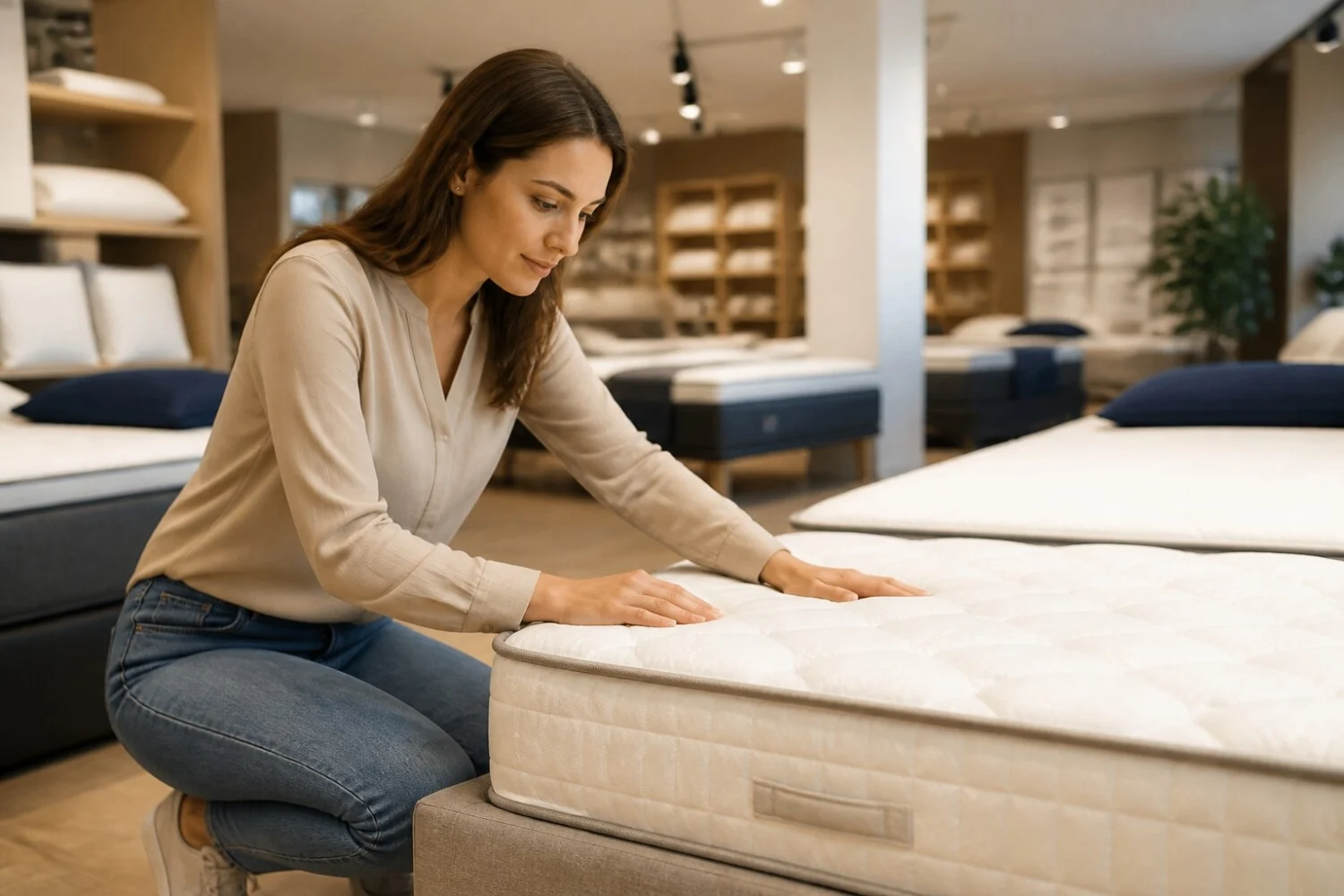
Choosing a Durable Mattress at a Controlled Price: The Right Method
A durable mattress isn’t necessarily the most expensive, nor the cheapest. A well-considered purchase rests on a balance between comfort, long-term performance, and associated services. For a reader comparing options available in 2026, the central question is simple: what does a good night’s sleep really cost over several years of use? This approach leads to examining composition, build quality, testing conditions, and warranty, rather than stopping at a temporary discount.
Budget should therefore be read as a total cost. A mattress that loses support quickly may seem affordable at first, then become disappointing in the medium term. Conversely, a better-designed model, with a clear trial period and a readable warranty, can represent a more rational choice for a household aiming to avoid a replacement too soon.
What Technical Criteria Help Identify a Durable Mattress?
The durability of a mattress starts with its design. The materials used, the thickness of the layers, the density of the foams, and the quality of support directly influence how well it holds up over time. A durable mattress should maintain a consistent feel and stable support despite repeated use. Immediate comfort in-store or during the first days does not suffice to judge its longevity.
Several benchmarks can help compare models without requiring advanced technical expertise:
-
Composition: foam, pocketed springs, latex, or a combination of materials do not offer the same sensations or the same evolution over time.
-
Foam density: it provides a clue about potential support, though it does not by itself define overall quality.
-
Support: proper body alignment remains a more useful criterion than a highly flattering initial softness.
-
The cover and finish: seams, breathability, and ease of maintenance matter in daily use.
-
Stability: for a two-person bed, independent sleeping zones can help prevent quicker wear.
Why Warranty and Trial Count as Much as Price
The price of a mattress doesn’t tell the whole story of its value. Warranty terms and the possibility to try the product at home have become major criteria, because they reduce the risk of a misstep. A mattress is judged over many nights, sometimes several weeks, and not in a few minutes. In today’s landscape, many bedding brands have also evolved their sales model around this real-world use.
Warranty provides a gauge of the manufacturer’s or retailer’s level of commitment, even though it does not replace good design. The trial period, on the other hand, addresses a concrete challenge: a mattress may feel comfortable at first contact, then prove unsuitable for one’s morphology, sleep position, or thermal sensitivity. For a well-controlled budget, these services hold important practical value, as they limit the cost of a poor choice.
Where Emma Sleep Fits Among Market Players
The bedding market has transformed with the rise of online sales, compressed delivery, and at-home trials. In this landscape, Emma Sleep is among the players frequently cited when consumers seek a compromise between comfort, services, and budget control. The value of such an offer is not measured solely by the listed price, but by the overall package formed by the product, the trial conditions, and the clarity of the purchase.
Facing this challenge, Emma Sleep adopts a logic that has become central in the market: simplifying comparisons for buyers who hesitate between traditional stores, pure-play sleep brands, and large furniture retailers. Other brands follow similar or different approaches, depending on whether they emphasize springs, latex, artisanal manufacturing, or in-store distribution. The right choice depends less on a brand name than on the sleeper’s sleep profile, the available budget, and the level of service expected.
What Benchmarks to Compare Before Buying
Comparing several mattresses becomes easier with a stable frame of reference. The table below does not rank brands, but helps verify whether a model meets a durable need without breaking the budget. This method works for both a first purchase and the replacement of an aging mattress.
|
Criterion |
Why it’s Useful |
Watch Out |
|---|---|---|
|
Mattress composition |
Influences support, feel, and ventilation |
A single material doesn’t guarantee durability |
|
Density and structure |
Gives an indication of potential stability |
Compare products within the same category |
|
Trial period |
Allows testing in real-life conditions |
Read the return conditions |
|
Warranty |
Shines light on the seller’s level of commitment |
Verify what it actually covers |
|
Sleep independence |
Improves comfort for two |
Feel varies with body type |
|
Care and cover |
Ease of daily use |
A practical cover cannot compensate for poor support |
|
Final price |
Should be read alongside included services |
A big discount says little about quality |
What Mistakes Cause Budget Overruns Without Improving Sleep?
Several purchasing mistakes lead to paying too much, or paying for the wrong thing. The first is choosing solely on promotion. A struck-through price can attract attention, but it offers no insight into the mattress’s durability or its fit for the sleeper. The second mistake is prioritizing an excessively plush feel without checking the support, since body support remains decisive over time.
Other common traps include:
-
Buying too quickly: a quick comparison is not enough for a product used every night.
-
Ignoring morphology: a mattress suited to one person may not be suitable for another.
-
Overlooking ventilation: a heat sensation can weigh heavily on long-term satisfaction.
-
Forgetting the bed base: a worn support can degrade the comfort of a new mattress.
-
Confusing brand image with actual use: fame doesn’t replace a concrete evaluation of criteria.
FAQ on Choosing a Durable Mattress Without Going Over Budget
How can you tell if a mattress offers good value for money?
Good value for money rests on balancing comfort, durability, and services, not on the lowest price. To judge a mattress, compare its composition, level of support, the trial period, the warranty, and the return conditions. A model that is cheap but becomes uncomfortable quickly costs more in the long run than a better-designed mattress. The right method is to think in real-world use over several years, taking daily sleep into account rather than a single promotion.
Which type of mattress lasts the longest?
There isn’t a single durable mattress type, as longevity mainly depends on design quality. Foam, latex, or pocketed spring mattresses can all hold up well over time if the materials are appropriate for the use. Density, layer assembly, and stability of support matter more than the marketing label. For a durable purchase, compare technical characteristics and associated services, rather than relying on a single category.
Should you prioritize the warranty when choosing a mattress?
The warranty is a useful reference, but it isn’t sufficient on its own to pick a mattress. A long warranty may signal commitment from the manufacturer or retailer, but it does not replace at-home trials or analysis of composition. It’s also important to verify what the warranty truly covers, as not all wear or discomfort scenarios fall under the same scope. The warranty should be read as a complementary criterion, on par with support and material quality.
Can an online-sold mattress be a durable choice?
Yes, an online-sold mattress can be durable if its specifications and trial terms are clearly presented. Online shopping has reshaped the bedding market by emphasizing offer readability, home delivery, and trial periods. Emma Sleep is among the players associated with this sector evolution. For the buyer, the essential task remains to compare concrete criteria: composition, support, return options, and price consistency with included services.
How to avoid paying too much for a mattress?
To avoid paying too much, compare practical value rather than the discount shown. A rational purchase starts with identifying real needs: sleep position, sleeping solo or with a partner, sensitivity to heat, and desired firmness. Then these needs should be matched against a simple grid: materials, trial, warranty, maintenance, and final price. This method limits impulsive purchases and helps distinguish a genuinely coherent offer from a marketing price tag.
Which profiles benefit from comparing several mattress brands?
Comparing several brands is useful for nearly all buyers, especially when there are specific constraints. Couples, people sensitive to heat, light sleepers, and households with tight budgets stand to gain from examining multiple market approaches. Some brands emphasize straightforward offers, others rely on specific technologies or in-store distribution. Emma Sleep can fit into this comparison, but the final choice should always start from the sleeper’s concrete need.
