
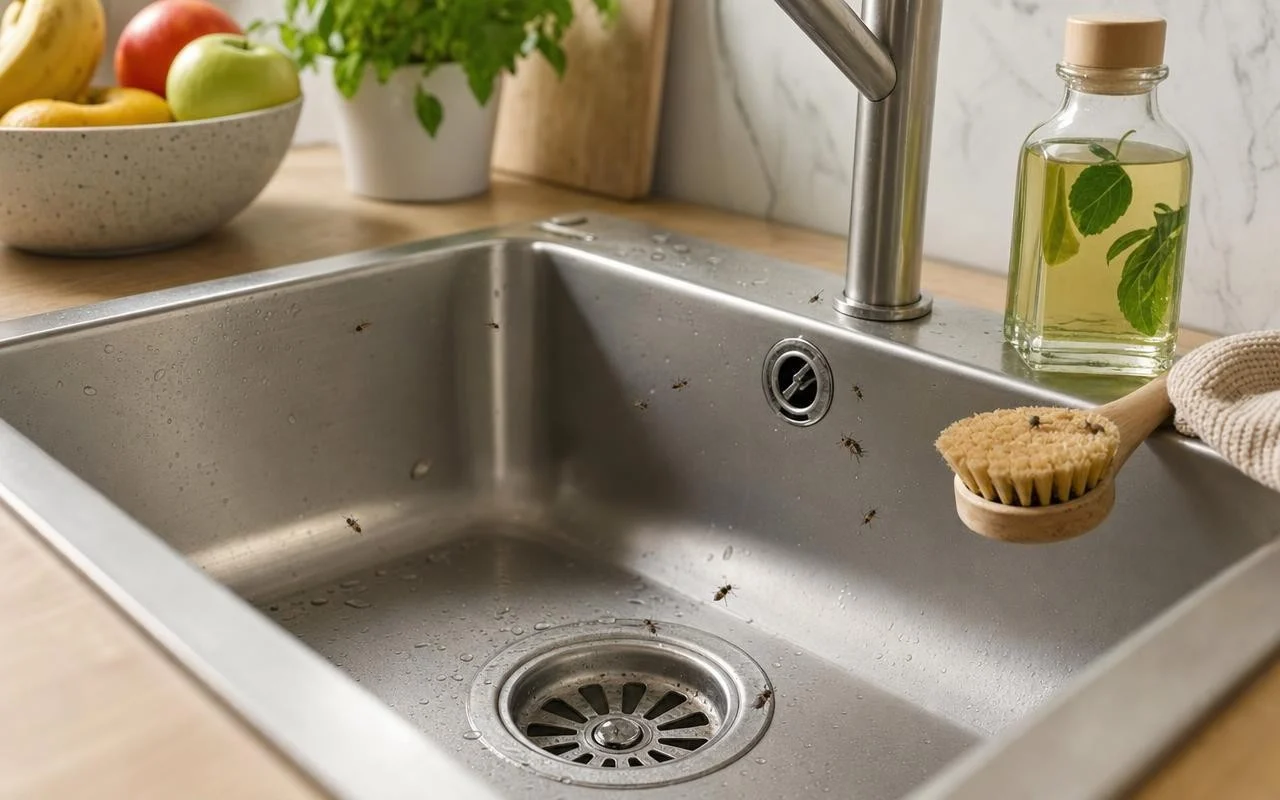
In the height of summer, the scene is familiar: a swarm of tiny fruit flies whirls above the fruit basket just as you have just filled it with peaches and bananas. The blame is quickly placed on overripe fruit, sometimes to the point of throwing everything away. Yet, even with the basket emptied, the insects continue to emerge. Their true home lies elsewhere.
If these insects seem to appear out of nowhere, it’s because their reproduction is ferocious: a female lays several dozen eggs at a time, which hatch within 24 to 48 hours. In less than a week, a new generation is already here. When you see fruit flies every day, that mostly means a well-established nest is somewhere in the kitchen.
Fruit Flies and the Fruit Basket: The False Culprit in the Kitchen
Ripe fruits mainly serve as a buffet for the adults. They emit fermentation smells that are highly attractive, but their surface remains relatively dry and changes quickly as we eat what spoils. A basket does not, therefore, form a stable nursery for eggs and larvae. By discarding only the stained fruits, you cut the meal, not the reproduction.
In reality, the true home is almost always just a few centimeters away, toward the sink, the trash can, or the dishes soaking in water. The fruit flies seek the winning combination: constant humidity and decomposing organic matter. If they swarm mainly around the drain or seem to come out of the drainage hole, that’s a strong sign that the nest is in the pipes.
Sink, Drain and Overflow: the Real Nest of the Fruit Flies
Under every sink lies a drain trap, that elbow filled with water that blocks odors from rising. Day after day, a greasy film clings to it: sauce residues, crumbs, cooking fats, soap. This nutritious layer provides an ideal breeding ground, sheltered from light. The larvae grow there quietly, then ascend through the drain as soon as they become adults.
The overflow, that small hole at the top of the basin, is even more neglected. It is hardly ever scrubbed, yet it remains damp and receives all the splashes from dishwashing. Its interior quickly forms a dark, greasy tunnel, filled with deposits where larvae thrive out of sight. As long as the drain and the overflow stay dirty, the fruit flies reappear, even if the countertop is spotless.
48-Hour Method: Clean the Sink and Drain to Break the Cycle
To stop the invasion, you must target these corners directly. Start by dismantling the drain trap if possible, then scrub the interior with an old toothbrush or a bottle brush and a bit of dish soap, until the greasy film lifts. Then clean the overflow entrance with the same tool. Finally, pour about a liter of boiling water into the drain, then into the overflow, to kill eggs and larvae. Cap the drain for the night to prevent adults from climbing back up, then repeat these steps for two consecutive evenings to cover the 48 hours required for a generation to hatch.
Once the nest is eliminated, a few habits are enough to keep a calm sink. Rinse with hot water after every greasy dish, regularly pour boiling water down the drain in summer, avoid soaking dirty dishes overnight, and empty the trash before it ferments. Also wipe the splashes around the drain and the overflow. The fruit can then stay in the basket, provided you promptly remove any that spoil.
