
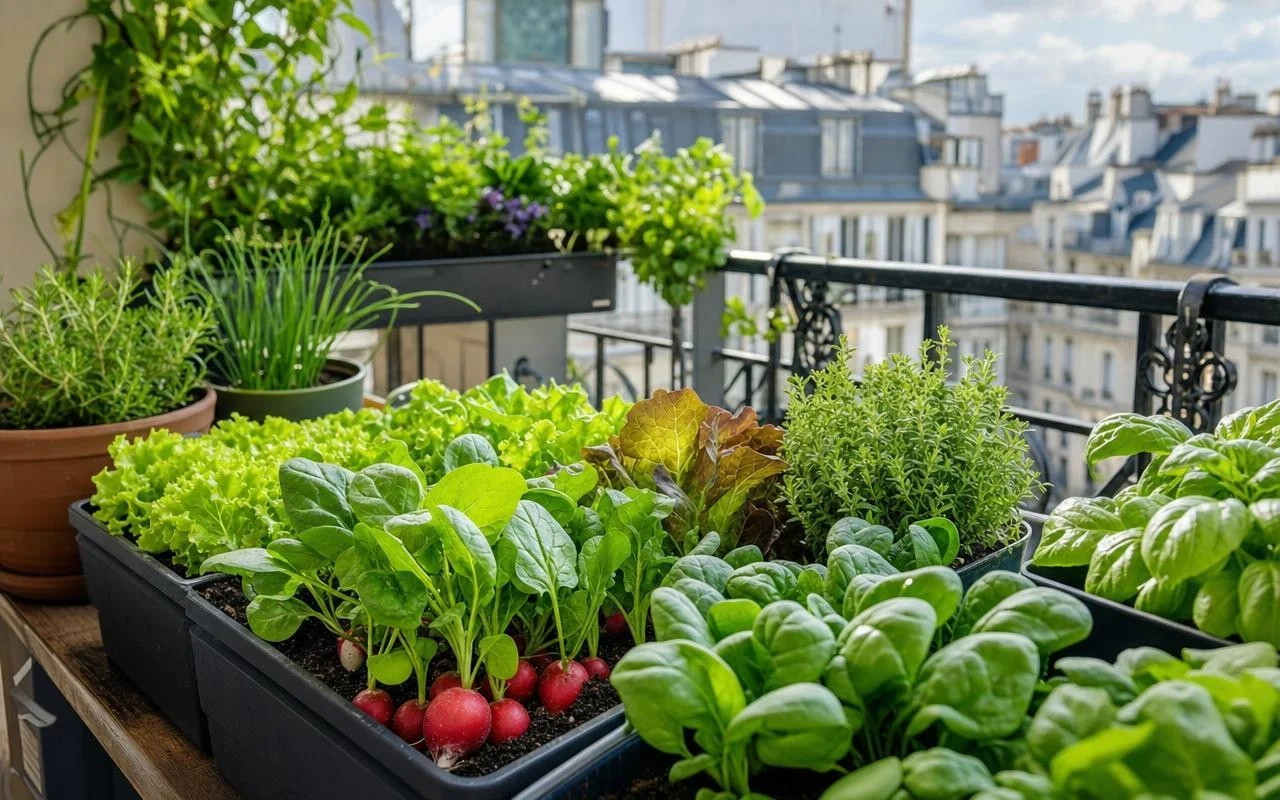
With the return of sunny days, many dream of picking their own salads without leaving the balcony. Then reality hits: no garden, little time, fear of getting things wrong. Yet, some vegetables thrive in a simple pot, a bit of potting soil, and a few rays of sun. They are approachable for beginners and quickly transform a corner of the terrace into a mini garden.
Among all the possibilities, a handful of fast-growing species stand out. They tolerate container cultivation well and offer a first harvest in just a few weeks, provided you follow a few simple rules for watering and light. Five vegetables, in particular, meet these criteria of rapid harvest and of compact footprint.
Preparing pots and planters before sowing in spring
Even before choosing seeds, the container often makes all the difference. A simple window box, a wooden crate, or a large pot will do, as long as there are drainage holes at the bottom to drain the water. Gardening guides remind us that a light, organic-rich substrate helps roots develop quickly and reduces the need for frequent watering.
Light becomes the other key to success. These easy-to-grow spring vegetables enjoy several hours of sun per day, but leaves like lettuce or spinach do not tolerate the harsh afternoon sun well. In hot regions, it’s better to place pots in a bright, slightly sheltered spot during the strongest hours, and keep the soil moist without oversoaking it.
Five easy-to-grow spring vegetables in pots, even without a garden
To start a small balcony production, five reliable choices stand out for their rapid growth and compact size: radishes, lettuces, spinach, Swiss chard, and arugula. All thrive in pots or planters and lend themselves to staggered harvests, leaf by leaf or root by root.
- Radishes: seed directly on the surface in a shallow container; their short cycle allows harvest in 3 to 6 weeks.
- Lettuces: enjoy tubs or planters; by regularly picking the outer leaves, you get young leaves in about 25 to 30 days.
- Spinach: likes fertile substrate and a cool environment; their tender leaves are harvested progressively after a few weeks, before bolting.
- Swiss chard: grows well in large planters; you can harvest young leaves around 30 days, then more developed stalks around 60 days.
- Arugula: sown broadcast in small containers; the very first leaves appear around 21 days and the harvest continues up to 6 weeks.
For each species, the technique remains simple. Radishes require a tight row with soil that is always slightly moist. Lettuce, arugula, and spinach lend themselves well to the method of cutting a few leaves at a time: the plant then keeps growing and yields multiple salads from the same plant. Swiss chard, on the other hand, structures the planter and provides large leaves to cook throughout the season.
Crafting a productive spring planter with these five vegetables
In a large rectangular planter, it becomes easy to combine these crops. You can place a few lettuce and chard plants toward the back, then sow arugula and spinach at the front, in rows or wide bands. Radishes slip between these rows: they grow faster, free up space later, and let the other vegetables occupy the space.
Adjust as needed for the climate. In hot regions, spinach and arugula benefit from shading to limit bolting. Everywhere, checking the soil before watering helps maintain proper moisture.
