
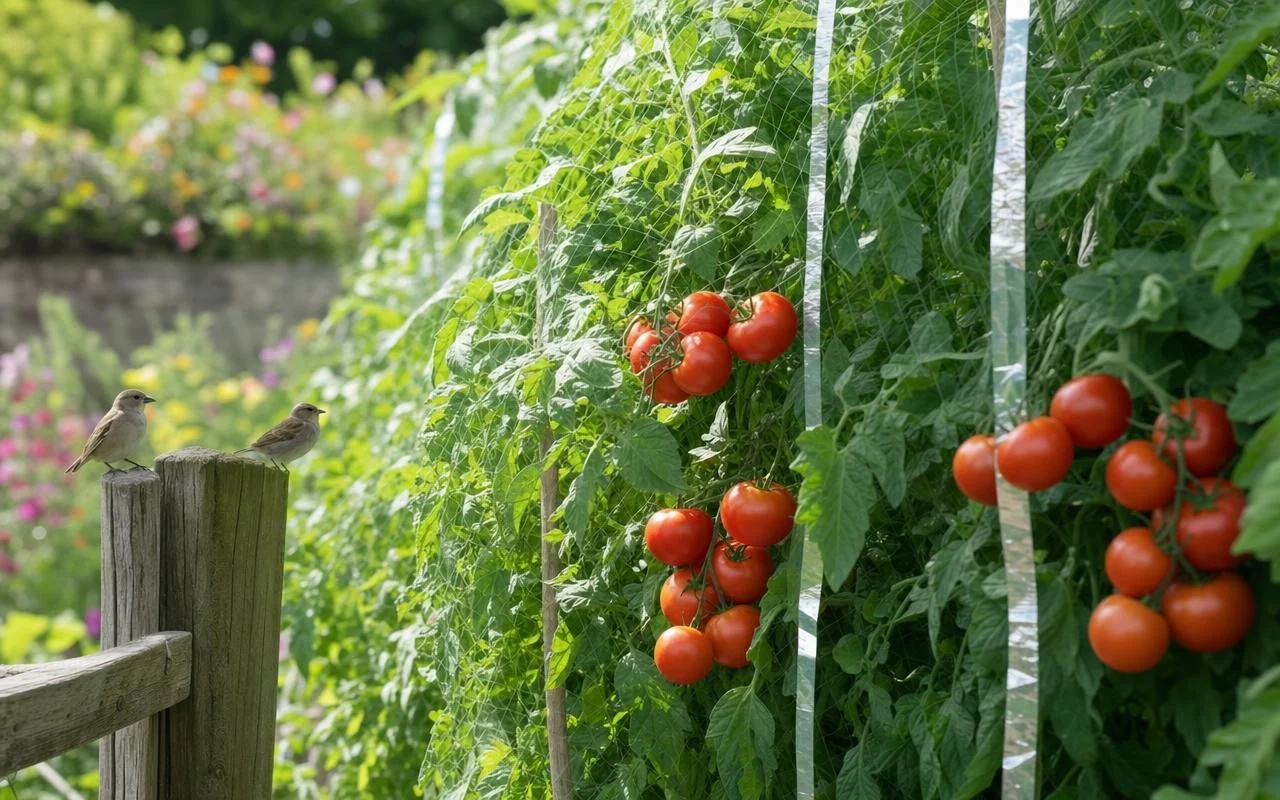
Bright red tomatoes, ready for a salad, and at dawn… a pierced fruit, barely touched, unusable. Many gardeners make the same discovery, especially in midsummer, when birds make their way into the vegetable garden. The plants are healthy, the fruits flawless, but a few beak marks are enough to spoil an entire cluster.
This scenario tends to recur precisely when the tomatoes begin to ripen on the plant. Understanding why birds take an interest in them, then adapting your harvests and protections, can truly limit the damage. The real secret starts well before the fruit has fully reddened.
Preventing Birds from Pecking Your Tomatoes: Recognizing the Damage
When a bird attacks, the tomato often retains one or two neat holes, sometimes a few extra pecks, then the fruit is abandoned. Birds typically do not eat the entire flesh; they mainly ruin the appearance of the vegetable-fruit. Sparrows, blue jays, robins and magpies are among the species that readily target garden tomatoes.
If the tomato is only marked with small perforations and remains whole, the bird hypothesis is likely. A fruit that is largely gnawed or almost emptied may indicate another visitor, such as a rodent or large insects. Early recognition of the cause helps you choose the right response to truly prevent birds from pecking your tomatoes, without wrongly implicating another pest.
Why Birds Target Your Garden Tomatoes
Ripe, smooth and colorful tomatoes look like large, juicy berries. Some birds approach out of curiosity, give a few pecks, then leave—the fruit ultimately isn’t that interesting to them. Others, once they have tasted the tomato, come back regularly and eventually start attacking fruits that are still green or yellow.
In many gardeners’ testimonies, thirst emerges as the main reason. Tomatoes contain a lot of water, making them a natural “drinking bottle” in times of heat and drought. When it is very hot and water sources are scarce, birds head toward the tomatoes simply to hydrate. Providing water elsewhere and less visible than these bright red fruits changes the situation entirely.
Effective Solutions to Protect Tomatoes from Birds
First step: address thirst. Install a birdbath or a simple bowl of clean water, placed away from the rows of tomatoes, which often diverts a portion of the attacks. The second step is to reduce the time the fruits remain clearly visible on the plant. Tomatoes, Solanum lycopersicum, is a climacteric fruit: from the turning stage, when the green fades and 30 to 50% of the surface takes on a cream, yellow or pink hue, all reserves are in place. You can then harvest without losing flavor, the ripening finishing indoors thanks to ethylene.
For complete protection, several measures work very well in combination:
- Harvest early, at the so-called breaker or turning stage, then let the tomatoes finish ripening indoors, around 18 to 21 °C, sheltered from direct sun.
- Install a dedicated water point for birds, sufficiently far from the plants, so they drink there without using your fruits as their sole source of moisture.
- Deter visually with a few shiny ribbons, old CDs or balloons decorated with a big eye; you should change their placement regularly, as birds eventually get used to them.
- Set up a bird net tightly over a frame surrounding the plants, with no holes or gaps, checking daily that no bird has become trapped.
- On a few plants only, use protective bags made of fine mesh or organza, to wrap around a single fruit or an entire cluster: air can circulate, but beaks, squirrels and large insects stay outside.
Sources
- Modes & Travaux
“Stop waiting for your tomatoes to turn red: here is the exact moment to harvest them in the garden”
