
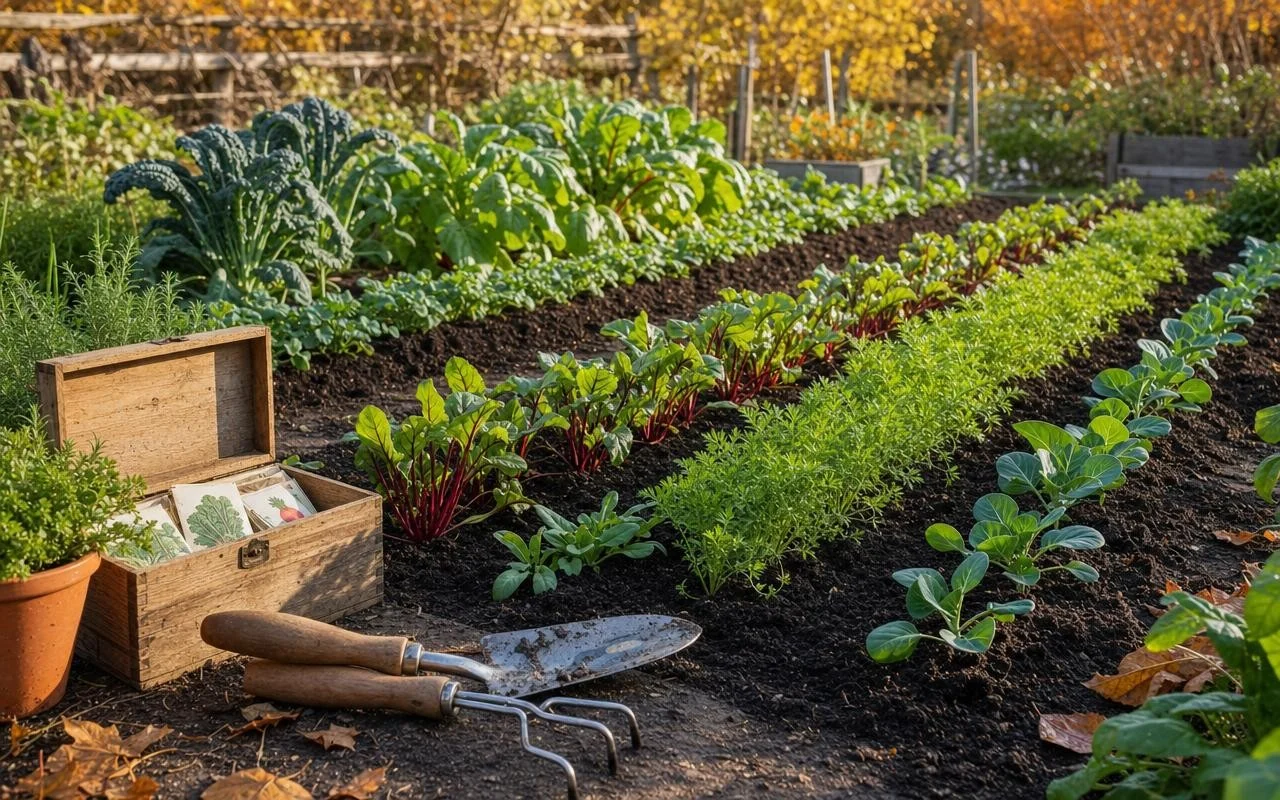
September does not necessarily mean that the vegetable garden has put away its tools for the year. When tomatoes and zucchini grow tired, many gardeners find themselves with empty rows and the impression that the season is coming to an end. In reality, the start of autumn opens a new window to plant cool-season vegetables, capable of growing quickly and producing before the first real frosts.
The key is to focus on crops that thrive in milder temperatures: tender leaves, fast-growing roots, and hardy plants able to tolerate a touch of cold. As long as your average first-frost date still leaves a few weeks ahead, it is possible to fill the beds and balcony containers again. Some varieties lend themselves particularly well to this discreet but highly profitable autumn bet.
Vegetables to plant in September that enjoy cool weather
Before pulling out the seed packets, a simple benchmark: compare the growing time indicated on the packet with your local first-frost date. If autumn is long, almost anything is possible; if cold arrives quickly, aim mainly for leafy greens and fast-rooted crops. In this category stand vegetables to plant in September such as radishes, lettuce, spinach, arugula, or turnips.
Radishes are among the champions of this period: sown in rows in light soil, they swell quickly as soon as the soil stays cool and a little moist. The spinach also enjoys the drop in temperatures, which slows bolting and softens the flavor of its leaves. For a rapid harvest, favor cut-and-come-again lettuces or mixes of young shoots, sown densely then thinned as needed.
Nine vegetables easy to sow in September for autumn
The arugula provides a peppery flavor that’s quick to obtain: sown between two wider rows or in a planter, it yields young leaves to cut almost continuously. The kale loves the cooler air and tolerates light frosts, which prolongs the picking of its large curly leaves. The mustard greens combine rapid growth with a bold taste, harvested young for a milder flavor or larger for a sharper kick.
On the root side, turnips give small tender bulbs if picked young, with in addition foliage usable in cooking. Beets appreciate loose soil and maintain good root quality under autumn climates, while offering tasty leaves to sauté. Carrots remain a longer bet: they require deep soil, in-place sowing, and decent thinning, reserved for gardens with a gentle late-season.
Succeeding September sowings in the vegetable garden
To help these crops start well, prepare crumbly soil, freed from summer vegetable residues, and water gently to maintain consistent moisture without waterlogging. Garden guides sometimes advise soaking large seeds up to 24 hours, when appropriate, to speed up germination. A light mulch helps limit temperature fluctuations and a protective row cover can safeguard young plants if a cold night is forecast.
Failures often stem from details: seeds sown too deeply for small seeds, lack of thinning that hampers root development, or too much water on heavy soils at the end of the season. It is also wise not to leave a bare bed if you decide not to sow there in September; a green manure or a nourishing mulch will preserve soil structure and will ease the cultivation of next spring.
