
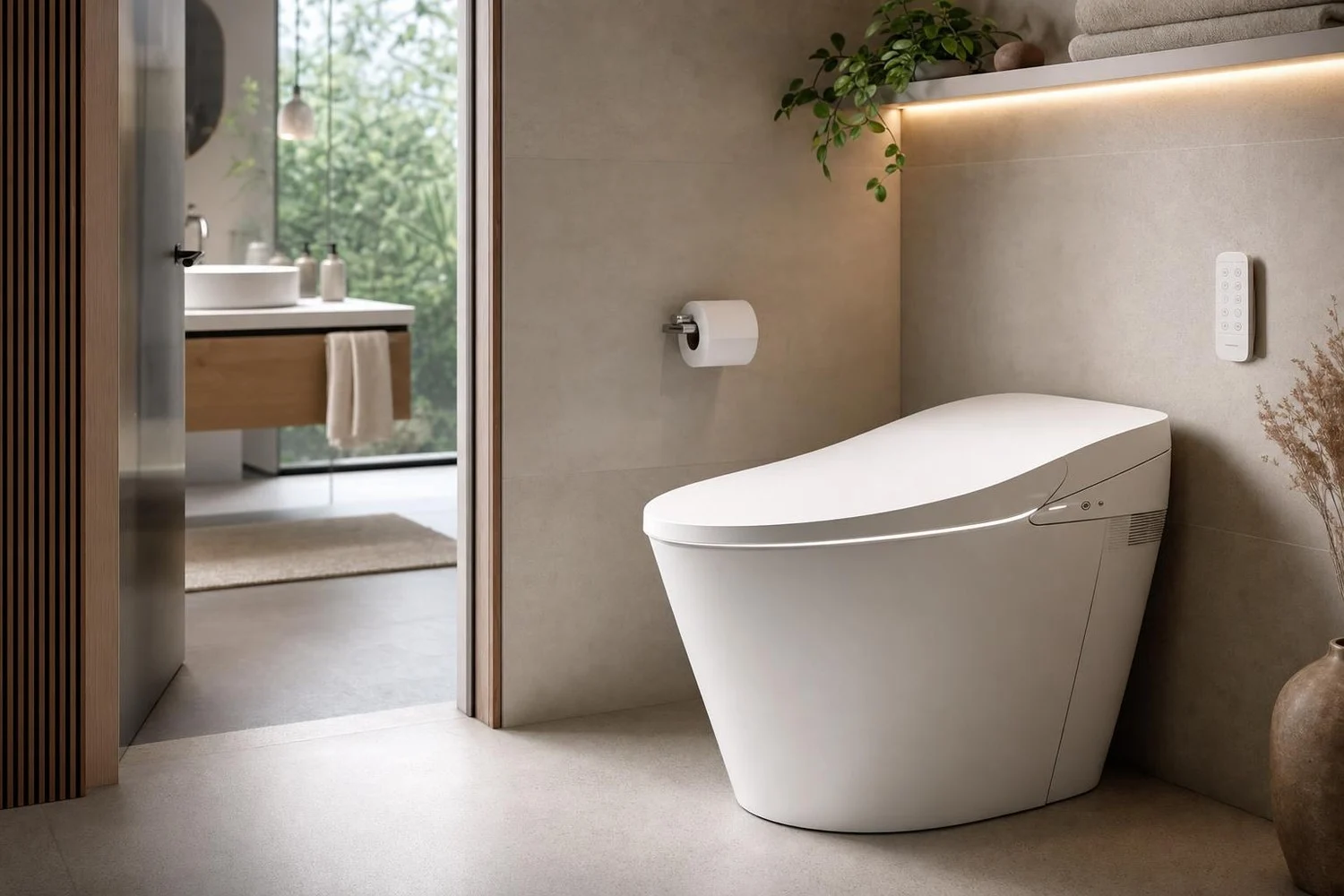
What if the most commonplace object in the bathroom, the toilet paper roll, were to enter its final years of reign? After decades of instinctively pulling off a few sheets, a new technological wave is reshaping the landscape. In 2026, a part of Europe is starting to view its toilet differently, with the striking idea that a toilet visit could happen with almost no paper involved.
In Japan, these high-tech toilets have existed for a long time, but the movement is now spreading to Spain, France, and the rest of the continent. The Spanish media Okdiario reports that the future of bathrooms lies in washlet-style and drying toilets, already marketed by brands such as Roca, which promise greater hygiene and less waste. The question remains as to how this system can truly dethrone the good old roll.
Bidet toilets: the 2026 trend that pushes back toilet paper
In its article devoted to this new fashion, Okdiario explains that these intelligent toilets, inspired by Japanese models, combine an adjustable water jet and, often, a warm-air drying. Toilet paper thus becomes secondary, reserved for the die-hards or for a few finishing touches. The editorial sums up the movement in one sentence: “We must prepare to face a future without toilet paper,” targeting the 2026 horizon.
These devices are already arriving on the Spanish market through premium Japanese toilet models or complete bowls branded by European manufacturers. The user sits, a sensor triggers the lid to open, then a washing arm cleans the intimate area with warm water. Some versions add a heated seat, soft lighting, or built-in deodorization, all little touches that make the paper roll decidedly less appealing.
Japanese toilets, water jet and drying: how this new ritual works
Concretely, these washlet toilets integrate one or more nozzles that emit a water jet whose temperature, pressure, and position can be adjusted. A simple button, a wall-mounted remote control, or a side panel allows you to start rear or front washing. The water used remains moderate while ensuring a far more complete cleaning than a few sheets of paper.
Then comes the drying step, which manufacturers describe as a stream of warm air around 35 to 45 °C for two to four minutes, with an intensity setting. Some models also include rinsing and self-cleaning of the nozzle after each use, sometimes complemented by disinfection or ultraviolet light intended to limit bacteria on the most exposed parts of the bowl.
Smart toilets: options, budget and cautions
To move toward near-paperless or paperless, several solutions exist for a French dwelling. DIY retailers describe three levels: a bidet sprayer connected to the water supply, a washlet lid that attaches to an existing bowl, or a complete washlet-drying toilet, often the most expensive. The high-end models are commonly priced between 800 and 1,500 € according to specialist sites.
Installation requires a bit of foresight: accessible water inlet, proper pressure, but also a nearby securely installed electrical outlet, guides often mentioning about 1.5 m from the toilet. Maintenance also matters, with filters to be changed every six to twelve months in hard-water areas. Many users still keep a little paper for reassurance, even if the heart of daily toilet routines is already performed with water and air.
Sources
- JLM
“We never thought we’d tell you this, but wallpaper is now over! Here is the trend that will replace it in 2025”
