
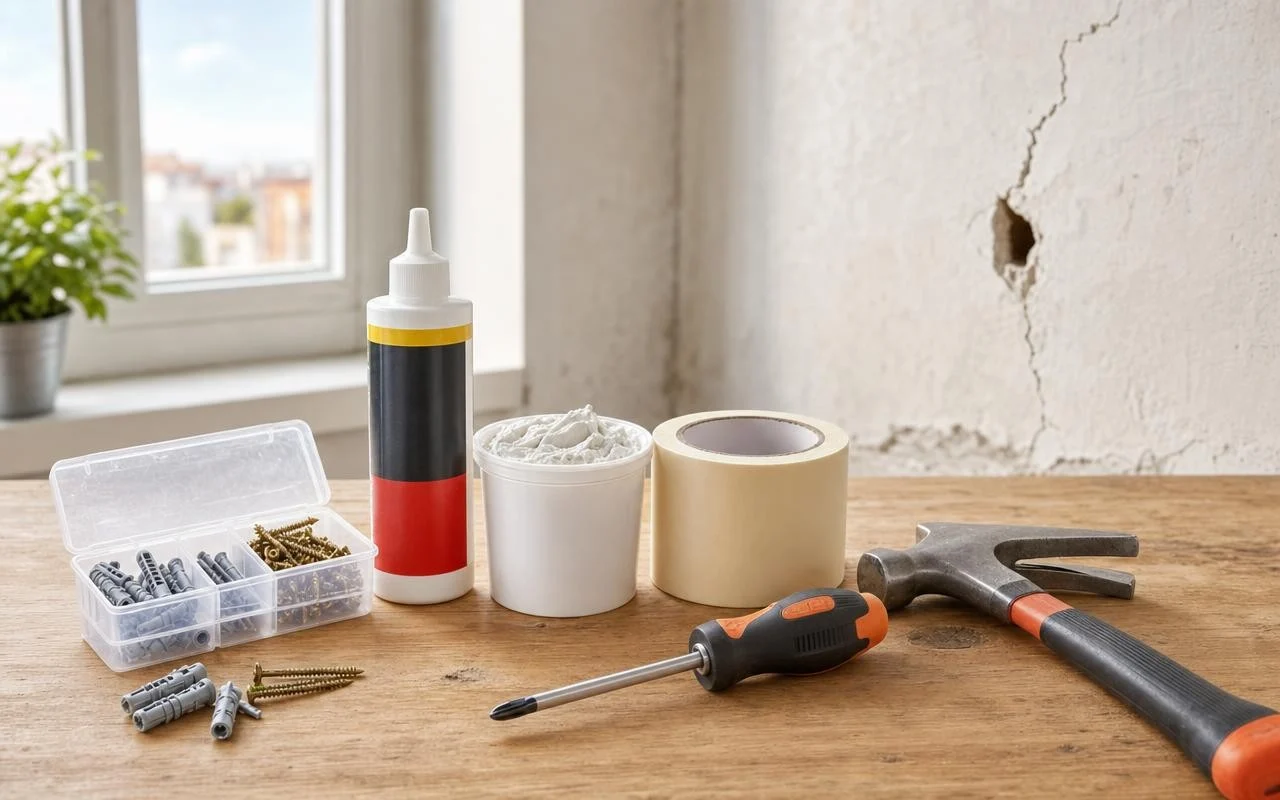
A shelf that tilts, a picture frame that falls, a small hole right in the middle of the wall… Small home improvements often arrive at the worst possible moment, when stores are closed or you don’t have a spare minute. You think you have what you need, only to realize that the right glue, the right wall plug, or a bit of filler is missing, and the whole project grinds to a halt.
To avoid these delays and to steer clear of working with makeshift tools, the best approach is to keep a few essential materials at home, ready to use. With a clever kit, you repair, fasten, and fill in just a few minutes, without improvising. The question remains which items truly deserve a place in the cupboard.
The materials you should always have on hand for quick fixing and repairs
For most quick fixes, everything boils down to three actions: fastening, filling, protecting. On the fast-fix side, you cannot skip the strong glue. A cyanoacrylate glue, such as super glue, handles small parts and plastic, epoxy glue ensures a very solid repair on wood, stone or metal, while a gel glue adheres better to vertical surfaces or slightly flexible ones. By choosing the right format, one small box already solves a large number of everyday problems.
Right next to it, a small stock of basic hardware helps across a multitude of situations: tightening a piece of furniture, hanging a mirror on plasterboard, assembling a wooden component. The idea is to gather a few references adapted to common materials.
- Wood screws, metal screws and self-drilling screws
- Universal wall plugs for solid walls and drywall
- Nails and pins of various lengths
- Matching nuts, washers and bolts
- Plastic cable ties
Ready-to-use concrete and wall filler
For all light masonry tasks, a bag or bucket of ready-to-use concrete proves incredibly useful. This product arrives pre-measured, with the necessary water and additives, which avoids rough mixtures and the big cleanup at the end of the job. It is suitable for quickly pouring a small slab, anchoring a fence post, filling a damaged section of a concrete wall, or making a small, solid anchor around a piece of furniture.
For interior surfaces, the number one ally remains wall filler. In ready-to-use paste form, it instantly fills small anchor holes and micro-cracks. In powder form, it fills deeper cavities in the wall before sanding. DIY guides recommend using a filler appropriate for humid spaces in bathrooms or kitchens, and a product designed for exterior use. This filler also serves to prepare the surface before applying a new coat of paint or wallpaper.
Masking tape, clean finishes and smart storage
The final pillar of this special kit for “little home projects,” masking tape makes all the difference in finishing touches. It protects areas that mustn’t be painted, helps draw clean lines, and can temporarily hold an item in place. Experts remind us that the choice of tape depends on the surface: bare walls, plasterboard, wallpaper, or painted wood do not all accept the same adhesion. A tape that is too sticky can pull off paint, while a tape that is too weak may slip during work. It is best to have two or three widths, from thin for precise edges to the widest for masking a door frame.
To keep these essential home-improvement materials effective, organization matters almost as much as their selection. A compartmented box for hardware, sealed buckets or bags for concrete and filler, tubes of glue stored upright away from heat—all of this extends their lifespan. Masking tapes lose their adhesion over time, glues can harden, powdered fillers can clump; a quick annual check helps avoid nasty surprises. Stored out of reach of children and in a ventilated space, these five materials turn a simple closet into a real safety net against home headaches.
Sources
- Modes & Travaux
“5 materials indispensable to always have on hand for your small projects”
