
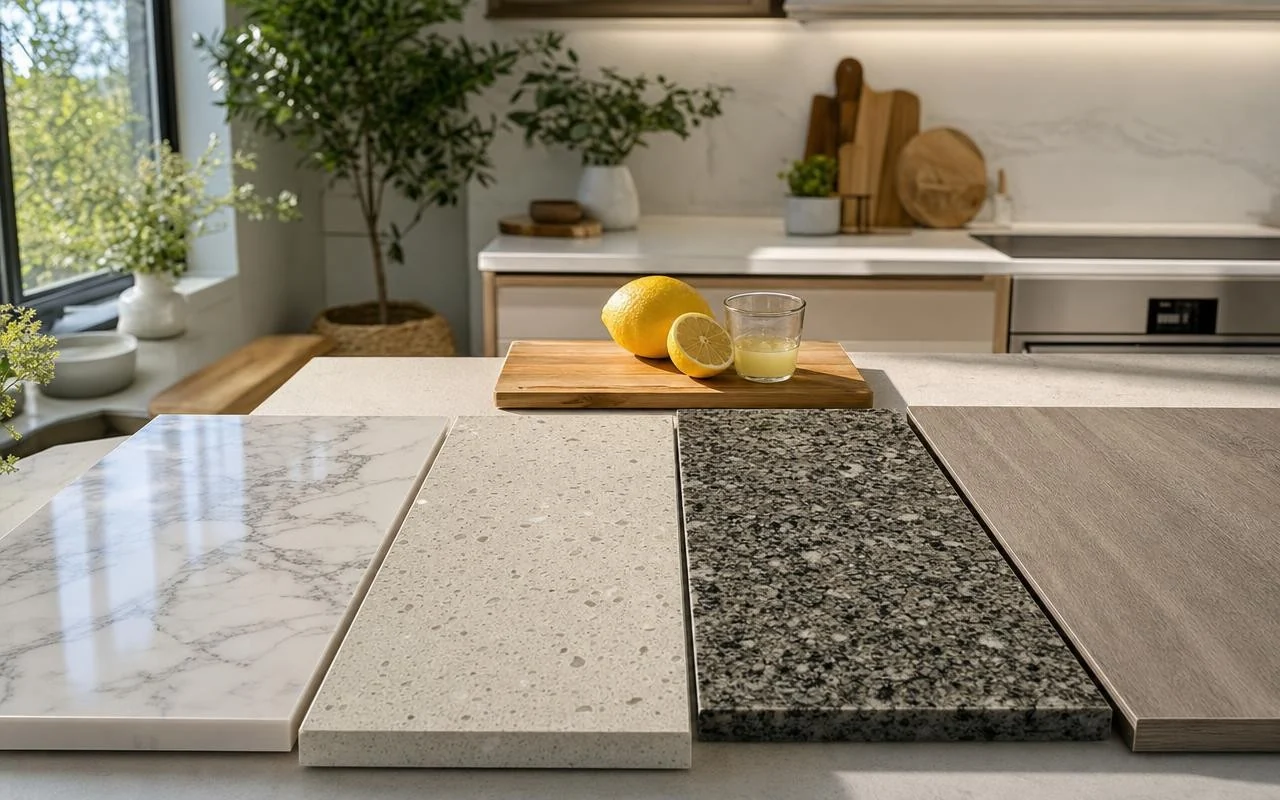
A pretty basket of lemons on the kitchen island is decorative, handy… and sometimes disastrous. Several marble workers report the same scenario: they notice the citrus fruits even before taking out their tools, because certain materials show marks at a glance from the slightest juice left behind.
The **lemon juice on a countertop** does not have the same effect depending on whether the surface is marble, quartz, or laminate. Between a true chemical attack, a simple splash to wipe up, and a risk to the resin, the right reflex changes completely. On some countertops, just a few drops are enough to cause trouble.
Why lemon juice and calcareous stone do not mix well
On a **marble countertop** or a calcareous stone (travertine, Burgundy stone, etc.), the problem is not a typical stain. The lemon contains citric acid, which reacts with the calcium carbonate present in these stones. The surface becomes hazy, slightly discolored: this is what professionals call an acid etching, or etching.
This alteration can appear in less than thirty seconds with an acidic liquid, especially if the surface is not perfectly maintained. A key point: a water-repellent treatment protects against oily or colorant stains, but not against this chemical reaction. If you have marble, travertine, or another calcareous stone, lemon should be avoided directly placed or squeezed onto the surface; keep it for plates, with a watertight bottom.
Jus de citron et plans en quartz ou stratifié : toléré, mais sous conditions strictes
For a **composite quartz**, the scenario is different. The slab contains a high proportion of very hard quartz, bonded with a resin and pigments. The mineral withstands acidity well, the resin much less. Technical data sheets recommend products with a pH between 3 and 10, and advise against products below 3, a category that includes lemon juice. If a lemon slice rests for a long time in the same spot, the surface may dull or slightly darken.
On a **laminate or compact laminate** surface, the decorative layer is durable but not indestructible. Manufacturers require liquids with acidity—like lemon, vinegar, or wine—to be wiped up immediately. Letting juice sit, especially near a seam or an opening for a sink, increases the risk of swelling of the substrate and of irreversible marks. In other words, no half-lemon left with the pulp facing down to “deodorize” the sink, nor regular cleaning with pure lemon juice.
The right reflexes if lemon touches your countertop
The first move is always the same, regardless of the material. Blot immediately with an absorbent paper, without rubbing, to avoid spreading the acid. Then rinse the area with clear water and dry carefully with a clean cloth. On calcareous stone, these few seconds make the difference between an intact surface and a permanently dulled area.
If, despite everything, a pale halo or a satin area appears on marble or travertine, household cleaners will not help: it is a surface attack, and only a professional resand and polish can restore the original appearance. On quartz or laminate, in case of discoloration, it is better to check the manufacturer’s instructions and absolutely avoid “miracle” abrasive remedies such as white stone or scouring creams. In practice, placing citrus on a tray, using a cutting board, and wiping up splashes as soon as they occur is enough to enjoy lemon in the kitchen without sacrificing the countertop.
