
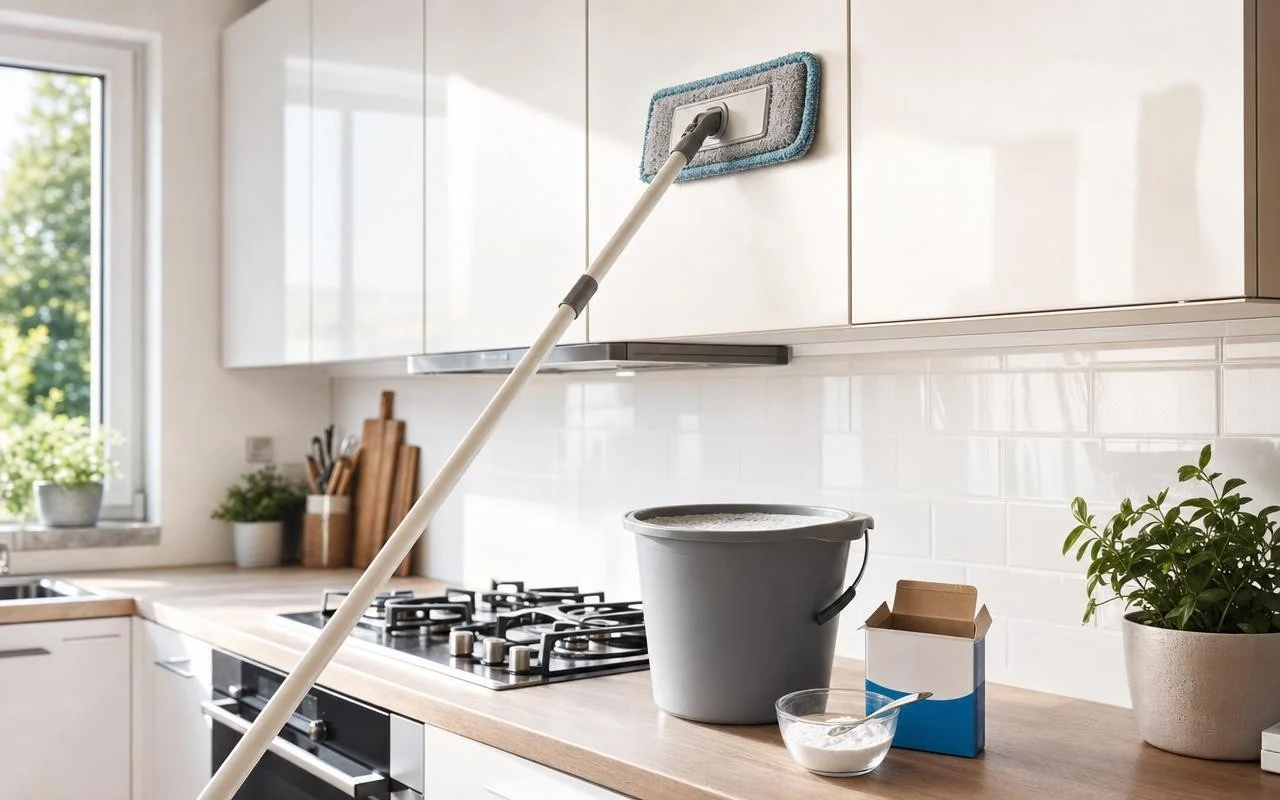
We often think of wiping the backsplash or the countertop, but the tops of the cabinets stay in the shadows. Up there, cooking grease, steam, and dust meet to form a sticky layer that catches everything. As a result, high cabinets look clean from afar, but become real traps for dirt as soon as you touch them.
To make them spotless without climbing on a chair and without harsh products, cleaning expert María Vivancos, known on social media, relies on a homemade blend based on hot water, sodium bicarbonate, dishwashing liquid and cleaning vinegar, applied with a simple mop. The key lies in how you prepare the bucket and wring out the mop.
Why do high kitchen cabinets become sticky
Cabinets located above the stoves and range hood are continuously exposed to cooking vapors. These grease-laden fumes slowly settle on surfaces, then mix with the dust that naturally accumulates throughout the room. Over time, this combination forms a greasy, slightly sticky film that also traps odors.
Because these areas are hard to reach, they are rarely cleaned. Okdiario’s article notes that this layer ends up “sticking to surfaces” if not removed regularly. The longer you wait, the more you have to scrub to remove it. Hence the value of a mixture that softens grime and grease so cleaning requires less effort.
Hot water, sodium bicarbonate, and dish soap recipe for cleaning high cabinets
María Vivancos recommends a very simple, economical blend that can be prepared in seconds. Hot water softens the ingrained dirt, dishwashing liquid breaks down grease, cleaning vinegar helps eliminate residues and restore shine, while sodium bicarbonate provides a mild abrasive action without resorting to overly harsh products.
According to Okdiario, simply prepare a bucket this way:
- Fill a bucket with hot water.
- Add a generous splash of cleaning vinegar.
- Stir in a tablespoon of sodium bicarbonate.
- Pour in some dishwashing liquid.
Stir gently to dissolve the baking soda, and it’s ready. This homemade cleaner is self-sufficient; there is no need to add other products. The hotter the solution, the more it helps lift the grease, while remaining workable with gloves.
How to use the mop to clean the high cabinets in the kitchen
The game-changing tip is to use the mop or a mop-head broom to reach the upper areas. Okdiario recommends either dunking the mop directly into the bucket, or soaking a kitchen cloth with the mixture and wrapping it around the mop head. You wring it out very well before going up to the cabinets: the fabric should be damp, but never dripping.
The specialist recommends cleaning all surfaces “in an orderly fashion and in the same direction” to avoid streaks and missed spots. Once the top and the fronts of the cabinets have been treated, finish by drying with a clean, dry cloth, possibly also fixed to the mop to reach the higher spots. The article finally emphasizes precautions: always test the preparation on a less visible area, especially for wood, melamine or delicate finishes, and avoid soaking joints and edges, as excessive moisture can damage them. Result: high cabinets that are clean, without streaks and without an acrobatic cleaning session.
