
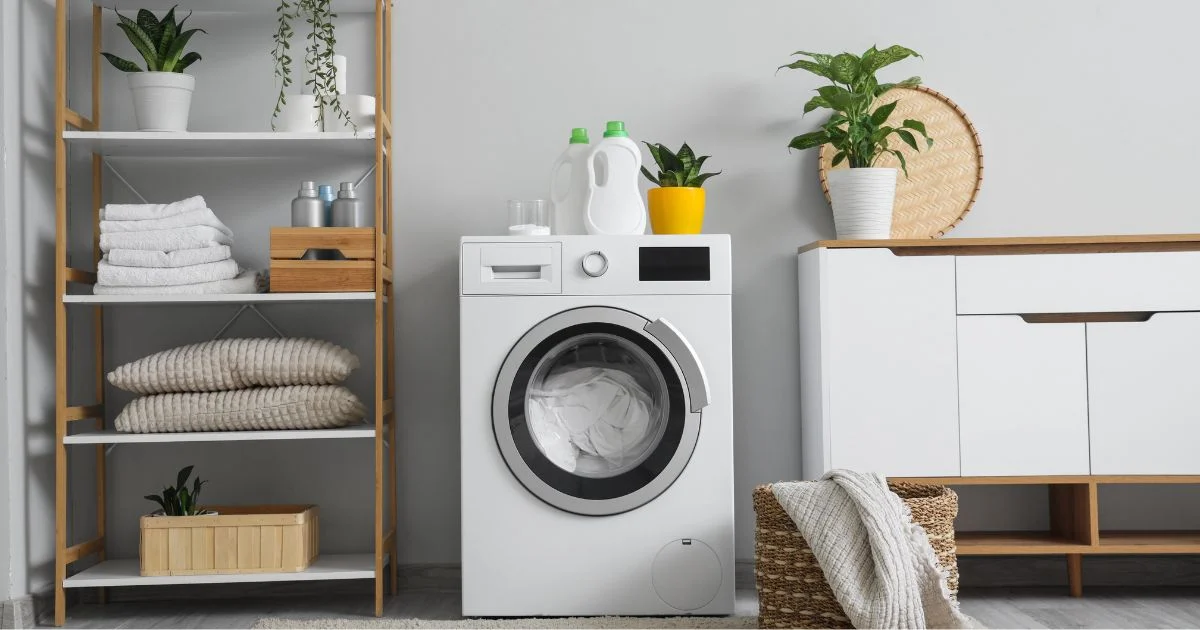
Taking a shower while a washing machine is running may seem perfectly harmless. After all, these two tasks are part of daily life, and doing them simultaneously even gives the impression of saving a few precious minutes. Yet this habit isn’t always as convenient as it seems. In some homes, it can cause temperature fluctuations under the shower, demand more from the water heater, and create pressure fluctuations in the pipes. Several plumbing professionals therefore recommend avoiding, whenever possible, running these two appliances at exactly the same moment.
A shower disrupted by the washing machine’s operation
The first inconvenience is usually noticeable very quickly. You’re under the shower when, without warning, the water suddenly becomes colder or, conversely, much hotter. The phenomenon can already occur when another person opens a tap or flushes a toilet. With a washing machine, the principle is similar. When the appliance draws water at the same moment as the shower, the two installations may end up drawing from the same water supply. The available flow is then distributed differently throughout the home. This can momentarily disturb the comfort under the shower, report our colleagues from El Mundo.
According to Alex Atkinson, a plumber with Super Brothers, the problem shows up particularly in homes equipped with a water heater that has a tank of 110 to 150 litres. When several water-using appliances demand water simultaneously, this reserve can be drawn upon much more quickly. A fairly long shower combined with certain washing machine cycles can thus accelerate the depletion of the available hot water. The outcome naturally depends on the installation, the tank capacity, the type of machine used, and the consumption of each appliance, but the most modest installations are more likely to reveal their limits.
A shower taken at the wrong moment can cost more
This simultaneous use can also have consequences that are less immediately noticeable. When a water heater must respond to a high demand, it works harder to bring the water back up to the desired temperature. This exertion can increase energy consumption and, when repeated frequently, contribute to wearing out certain equipment more quickly. It isn’t a matter of thinking that starting a laundry cycle during a shower will automatically damage a water heater. What should be understood instead? Intensifying hot-water needs over a short period can make the installation work harder.
Pipes can also be affected. The specialists at SebaKMT, a company specializing in leak detection, warn in particular about significant pressure variations within the home network. When several water points operate at once, some older or poorly balanced installations can experience more pronounced changes in flow and pressure. In the long run, repeated fluctuations are not ideal for plumbing that is already weakened. Here again, the situation varies a lot depending on the age of the dwelling, the state of the pipes, and the design of the network.
Settings that help avoid surprises under the shower
To avoid these inconveniences, the simplest solution is to slightly stagger the usages. Running the washing machine before or after the shower prevents the two installations from drawing water at the same time. The delayed start available on many machines can also be practical for programming a cycle at a time when the bathroom isn’t in use. When the electricity contract includes off-peak hours, this adjustment can furthermore allow the appliance to run during a period when energy prices are more favorable.
There are finally technical solutions when the problem recurs regularly. Nick Hendricks, managing director of Kingdom Plumbing, particularly recommends installing a thermostatic mixer or a balancing valve. These devices help better manage temperature fluctuations and limit abrupt changes under the shower. An intelligent hot-water recirculation system paired with a booster pump can also improve comfort in certain installations. Before going that far, simply changing one’s habits often suffices. Spacing out the shower and laundry helps limit temperature variations, reduce the strain on the water heater, and avoid unnecessarily stressing the entire system.
