
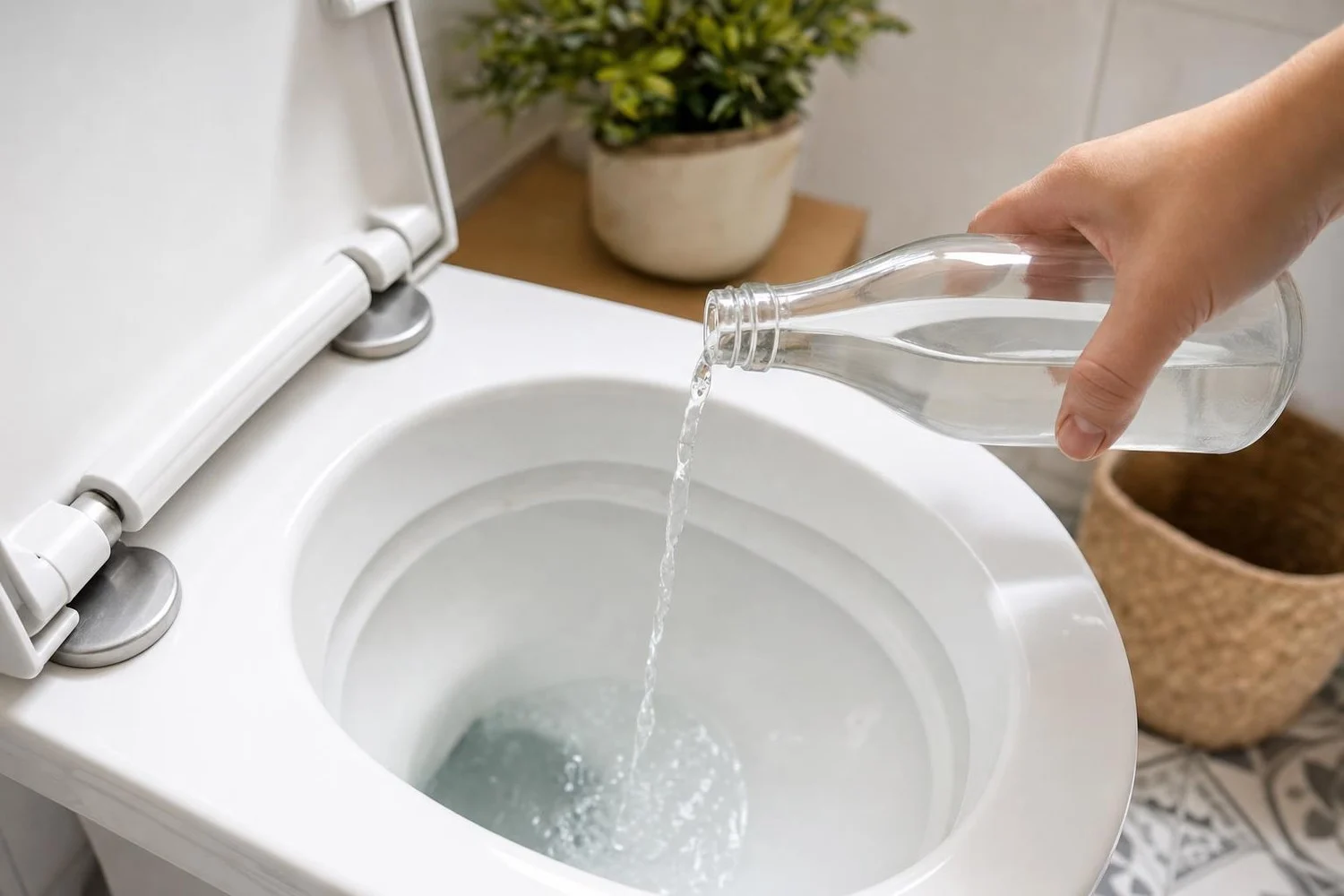
In many households, a new habit is slipping into the cleaning routine: once a week, a little white vinegar is poured into the toilet bowl. This gesture, often associated with grandmotherly tips, is making a comeback, driven by a search for more natural and economical solutions for home maintenance.
Specialized sites remind that it is a mild acid, capable of dissolving limescale, reducing unpleasant odors, and replacing part of the chemical products sold commercially, which are more expensive and sometimes irritating. But between miracle promises, conflicting quantities, and fears of damaging the porcelain, many internet users still hesitate. Especially when the operation is to be repeated weekly.
White vinegar in the toilets: what this weekly gesture really changes
White vinegar is primarily acetic acid. The site Okdiario summarizes: “Vinegar is an acetic acid that dissolves mineral deposits white or yellowish caused by hard water.” In a toilet bowl, this targets the tartar that forms white or brown streaks at the water line, under the rim, and at the bottom. Result: fewer marks and a flush that runs more smoothly.
Okdiario also emphasizes the deodorizing effect: “Unlike other deodorizers, vinegar does not mask the odor, it neutralizes it. It destroys the bacteria that cause the bad smell and absorbs unpleasant aromas.” Some sites, however, remind that its disinfectant power remains domestic: it helps reduce many germs but does not replace a medical disinfectant.
Why vinegar dissolves tartar in toilets
The tartar sticking to toilet walls is the same as the scale that coats kettles: calcium carbonate, formed by the combination of calcium and carbonate ions present in hard water. Once attached to a surface, this deposit becomes hard and only comes off with vigorous scrubbing or an acid treatment.
Pouring vinegar into the bowl amounts to applying a mild acid in direct contact with this calcium carbonate. Acetic acid softens the early deposits and limits crystallization, preventing the marks from turning into a thick crust that is hard to remove. Plumbing guides advise between 100 and 200 milliliters per week for preventive maintenance.
How to use white vinegar once a week in the toilets without risk
For the gesture to be effective, articles agree on a simple routine. Okdiario recommends removing a bit of water from the bottom with the brush, then pouring two cups of white vinegar onto the walls and the bottom of the bowl, aiming carefully at the water line and under the rim. The product should remain in place for at least half an hour, or overnight for a very encrusted toilet. Its ecological and affordable nature is appealing to an increasing number of households.
Household experts also emphasize precautions. Wecasa reminds never to mix white vinegar with bleach or another chemical product, to avoid the emission of toxic fumes. Articles in Marie France point out that too frequent and too concentrated use can fatigue some seals or parts of the mechanism. In practice, weekly maintenance with vinegar is enough, complemented if needed by a heavy vinegar-powered descale every month.
