
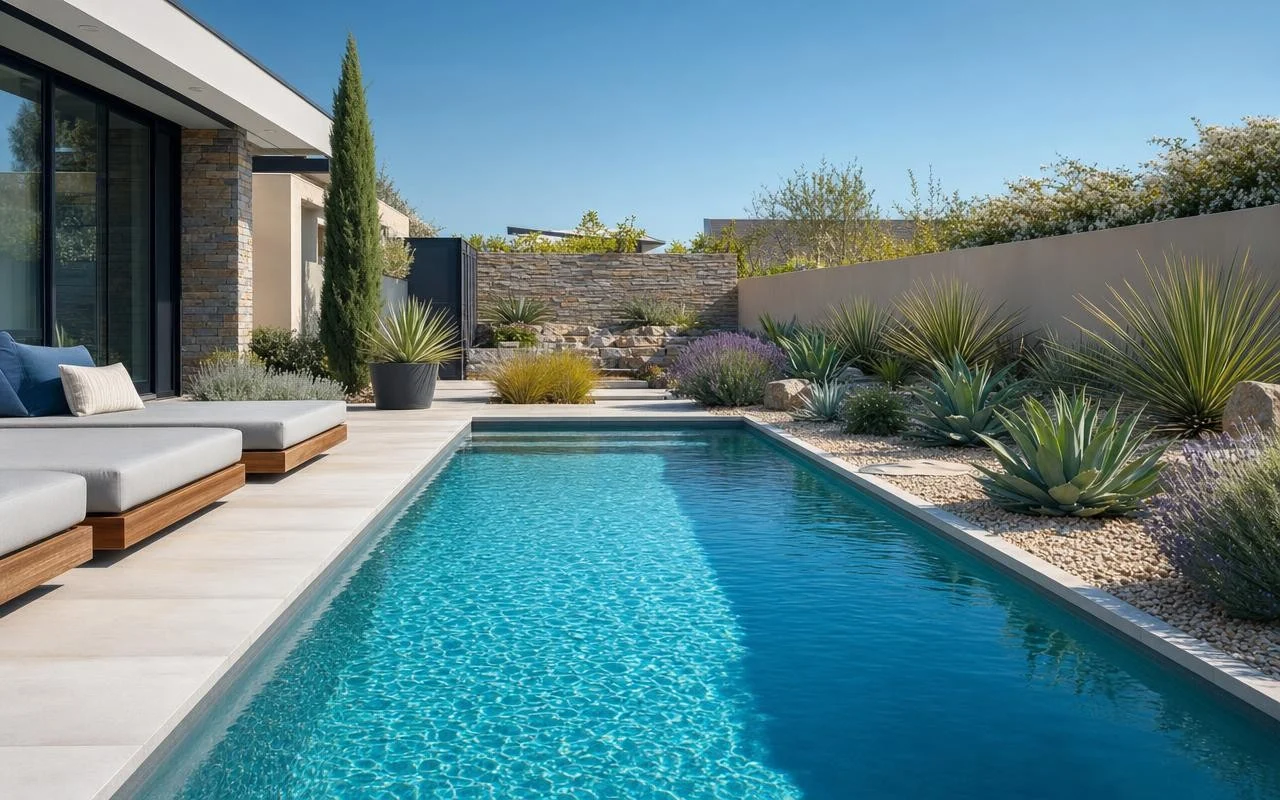
Around the pool, many gardens tell the same story: beds scorched by the sun, fallen leaves stuck to the waterline, and filters clogged with debris. We plant to beautify the pool, only to end up spending our weekends with the net. Some landscapers have taken a clear stance: near the water, only plants able to withstand heat, chlorinated splashes, and dry spells have a place of their own.
The immediate environment of a pool combines several constraints: a slab that reflects heat, dry soil, water charged with chlorine or salt, and constant barefoot foot traffic. Many beautiful species in a garden become real troublemakers here. Starting from this observation, a landscaper can propose a radical selection that changes everything, without giving up the lush décor that one expects from a poolside corner.
Why plants around the pool burn and dirty the water
Before choosing the plants around the pool, it’s essential to understand why so many trials end with toasted vegetation. The radiation accumulates from sun, light-colored stones, and water that reflects light; the soil dries out quickly, especially since watering is kept light to avoid puddles. Chlorine splashes burn delicate foliage, and drastic temperature swings stress sensitive species.
Another key point is water cleanliness. Deciduous leaves, petals, or needles blow away at the slightest breeze and end up in the basin, where they foul skimmers and filters. The site Ootravaux recommends placing the plantings at least 2 meters from the edge, with even more setback for large shrubs, and adding a 50-centimeter band of pebbles, or even a root barrier lowered to 1.5 meters.
The landscaper’s radical selection for flawless plants around the pool
To end the chore of netting, the landscaper begins with a very clear blacklist of plants around the pool to ban. Trees such as willows or poplars have vigorous roots that can damage the pool’s foundations; conifers, meanwhile, constantly shed needles that are hard to collect. Trailing bamboos and overly thorny roses, ill-suited to a space where people walk barefoot, are also added to the list.
Once this sorting is done, the selection tightens around drought-tolerant yet decorative species. Grasses like Stipa tenuissima or Pennisetum form airy clumps, truly plants that do not dirty the pool, and they endure full sun and drought without flinching. They can be paired with Mediterranean plants such as lavender, santolina, or rockrose (cistus), all known for resisting poor soils and splashes that are mildly chlorinated.
A planting bed near the pool that stays beautiful all year and does not dirty the water
To keep the scene pleasant even when the pool is covered, this landscaper relies on evergreen shrubs as a backdrop. Pittosporum tobira, Elaeagnus, or Mexican orange keep their leaves in winter and form dense screens that cut the wind without accumulating debris. In front of them, an olive tree, a purple Phormium, a few agapanthus, or a Yucca rostrata establish very graphic silhouettes around the basin.
This mix of fine, evergreen foliage and water-sparing textures creates a structured planting bed that requires little maintenance: light pruning at the end of winter and occasional watering during the early years are usually enough. The use of chemical products becomes nearly zero, the water stays clear, and the gardener can finally enjoy the pool without the daily onslaught of the net, in a stable green frame that enhances the basin year-round.
