
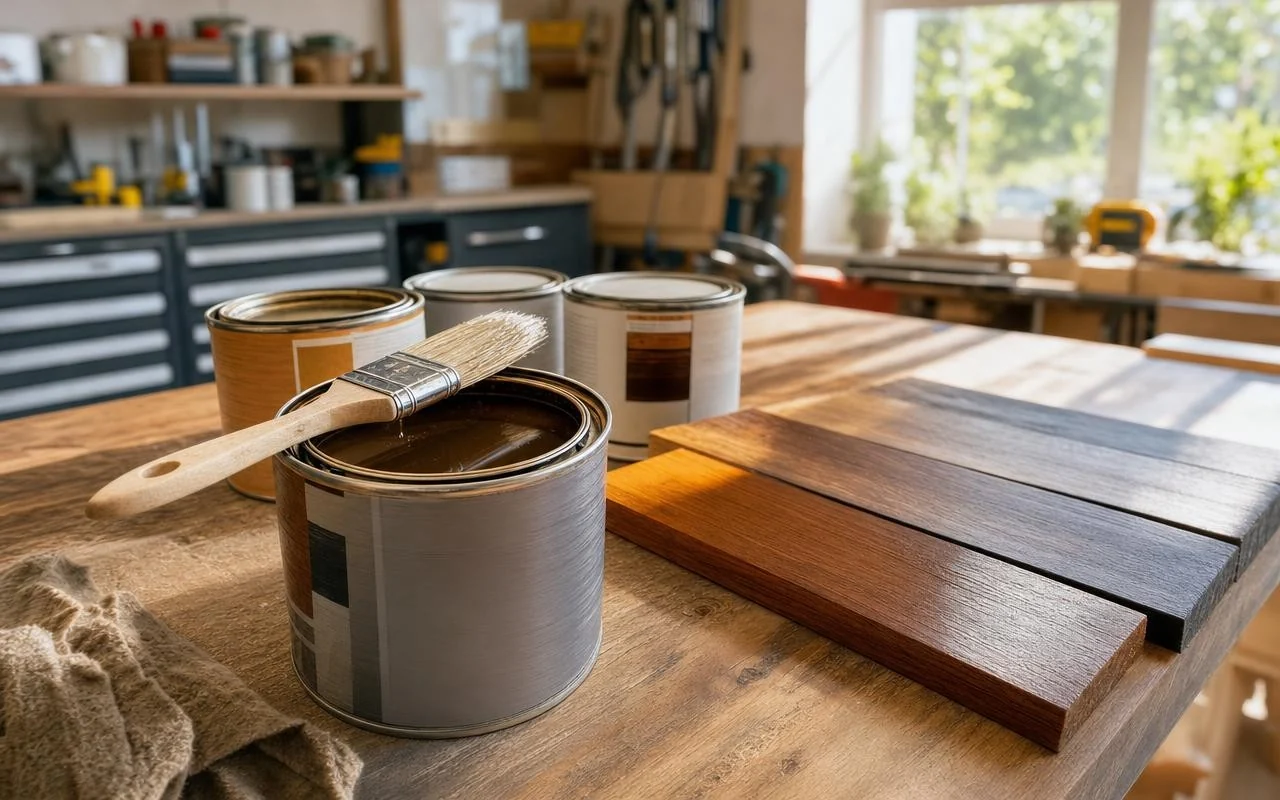
You stumble upon an old pot of stain, opened and tucked away at the back of the garage, with a lid that feels a bit sticky and a date that’s no longer legible. The impulse is to wonder whether this leftover product could still elevate your terrace or ruin the wood and hours of labor you’ve invested. Discarding it without a thought hurts your wallet, but applying it blindly isn’t reassuring either.
Manufacturers rarely provide a single rule that applies to all brands and every type of stain. Between the composition, the air that has entered the pot, and how you stored it, the answer can vary a lot. “A wood stain can stay usable for years, but there isn’t a universal time frame,” sums up the specialized site HouseDigest. It’s enough to cast doubt when facing a pot that’s been open for a long time.
Open wood stain shelf life: the major benchmarks
Guidelines vary considerably from product to product. An exterior water-based stain sold by IKEA, for instance, recommends using it within 6 months after opening if the pot has been tightly closed, with storage between 5°C and 35°C. Other deck stain manufacturers speak of 12 months for an opened pot. FurnitureClinic goes further with the instruction “use within three years after opening.”
For water-based stains, some manufacturers like General Finishes specify that they should be “used preferably within a year of manufacture,” while acknowledging that a well-stored product can remain usable for 2 to 3 years. Among these markers of 6 months, 12 months, or even 3 years after opening, the key remains your own assessment: the product’s appearance, odor, and behavior as it dries.
Water-based, oil-based, or gel stain: impact on shelf life after opening
A water-based stain reacts poorly to temperature swings. If the pot has frozen in a non-climate-controlled garage, the product may become lumpy or separate irreparably. Some water-based stain manufacturers even require use within a year after manufacture. For an opened pot, 6 to 12 months remains a prudent window if the lid closes tightly and the product hasn’t frozen.
Oil-based stains tolerate time better. Carpenters cited by HouseDigest say they have used products opened for more than 20 years without issue, though nothing guarantees that a pot that old will still be good. Once the lid is pried off, the oil will still react with oxygen, especially if the pot is half-empty. Gel stains thicken quickly or form a skin when the lid doesn’t seal well.
How to check if an opened wood stain is still usable
Before writing off a pot because it has sat for years, you should open it and inspect it. A pigment sediment at the bottom is normal: Protégez-Vous reminds us that simply thorough mixing can re-suspend the pigments. Stir for a long time with a clean stick. If the stain becomes homogeneous again, flows without lumps, and maintains a fluid texture, it has already passed an initial test.
- Hard lumps or a thick crust that do not dissolve with mixing.
- Rubbery or stringy texture, even after agitation.
- Visible mold spots or an unusually strong odor.
Last, essential step before applying it to a terrace or to visible furniture: test it on a scrap piece of wood. Apply the stain as planned, let it dry according to the time indicated on the label, then touch it. If the surface stays sticky, wipes off easily, or if the color doesn’t set, it’s better to abandon this pot. To extend the shelf life of your wood stain after opening, wipe the rim, reseal the lid tightly, store the pot away from frost, decant the remainder into a smaller container when there’s little left, and note the opening date on the lid.
