
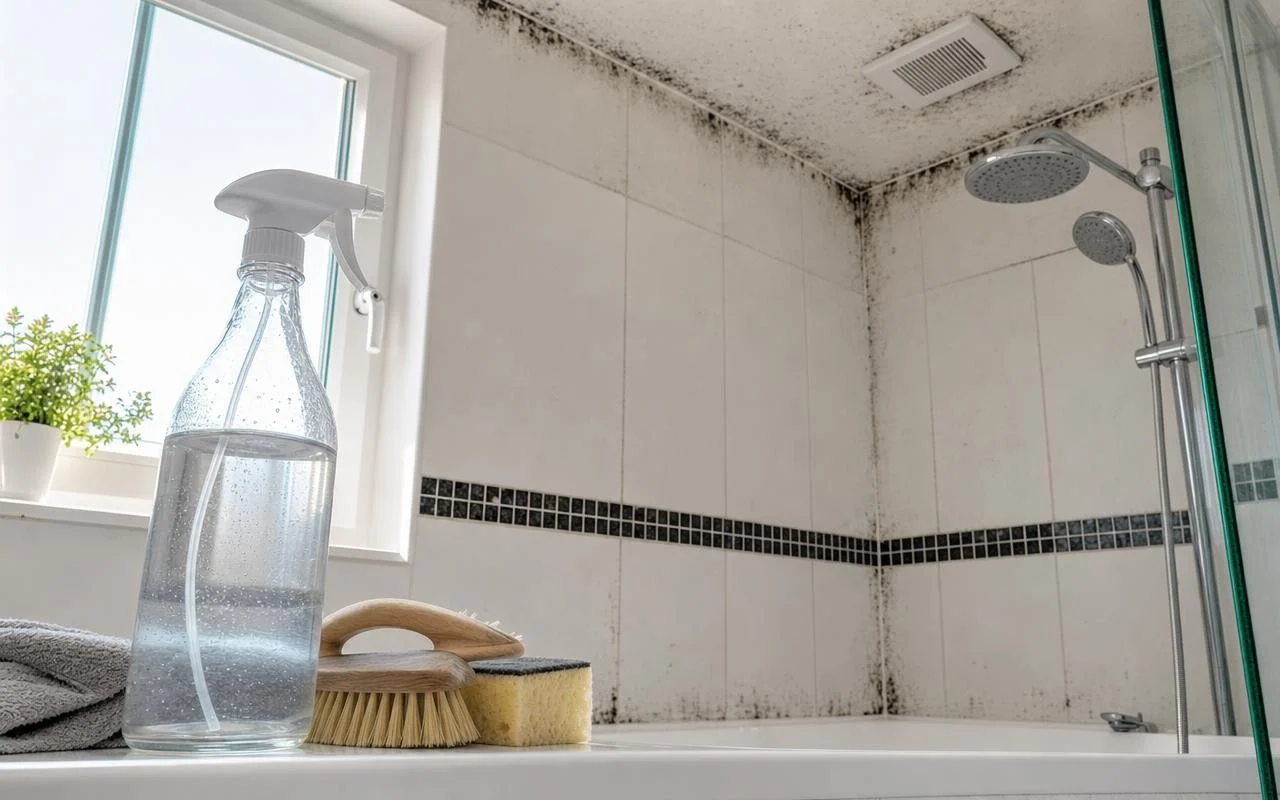
In many bathrooms, it all starts with a few black specks at the base of the shower or a gray veil on the grout. The immediate instinct is to grab the bottle of white vinegar and generously spray the surface, hoping to fix the problem. In the moment, the stain lightens, the sharp smell of the acid masks the odor of dampness, and you tell yourself that the mold is behind you.
A few weeks later, the same stains reappear in the same spot. The grout seems to deteriorate, a musty smell settles in, and you begin to worry about the health of the family. Health authorities remind, however, that any
White vinegar and bathroom mold: how far does it really go?
Experts from Oregon State University explain that mold is primarily a symptom of excessive moisture. As long as water stagnates or the air stays saturated, spores have something to grow on—be it grout, tiles, or the ceiling. On a small area—less than about 10 square feet, or 0.93 m²—the U.S. Environmental Protection Agency (EPA) considers that you can intervene yourself.
In this case, white vinegar against bathroom mold works fairly well on superficial black or white mold. A half-water, half-vinegar solution helps moisten the stain, then vigorous brushing is usually enough to make the haze disappear. The vinegar cleans and kills a good portion of the fungus, provided you let the area dry completely afterward.
Bathroom humidity: the overlooked step that makes mold come back
Researchers remind, though, of a point often forgotten: without treating the root cause of humidity, mold almost always returns to the same spot. The bathroom concentrates several possible sources: inadequate ventilation, lack of an extractor fan or mechanical ventilation, damaged shower joints, a slight pipe leak behind a cabinet, mats or a shower curtain that stay perpetually damp.
According to the EPA, the problem must be approached the other way around. First, identify and fix the water source: repair a leak, improve ventilation, keep the room’s humidity below 50%, avoid textile coverings in very wet areas. Only then proceed to vinegar cleaning. Cleaning without this diagnosis is like masking a symptom without treating the disease.
How to use white vinegar and the limits of DIY mold-fighting
Once the humidity source is managed, the protocol remains simple. Start by properly ventilating the bathroom and wearing a protective mask to limit inhalation of spores and dust. The moldy area is then moistened with a sprayer filled halfway with water and halfway with white vinegar: dampening before scrubbing helps prevent spores from dispersing into the air.
After a few minutes, simply scrub the affected surfaces until the traces disappear, then let the area dry completely using a squeegee, a towel, and good ventilation. Experts advise against scrubbing mold dry and remind that you should never mix bleach with other products, including vinegar, due to the risk of toxic gases. If the contaminated surface exceeds about 0.93 m², the EPA recommends bringing in a professional. For the Centers for Disease Control and Prevention (CDC), once you see mold, there is no need to have it analyzed in a laboratory: any visible mold should be removed.
