
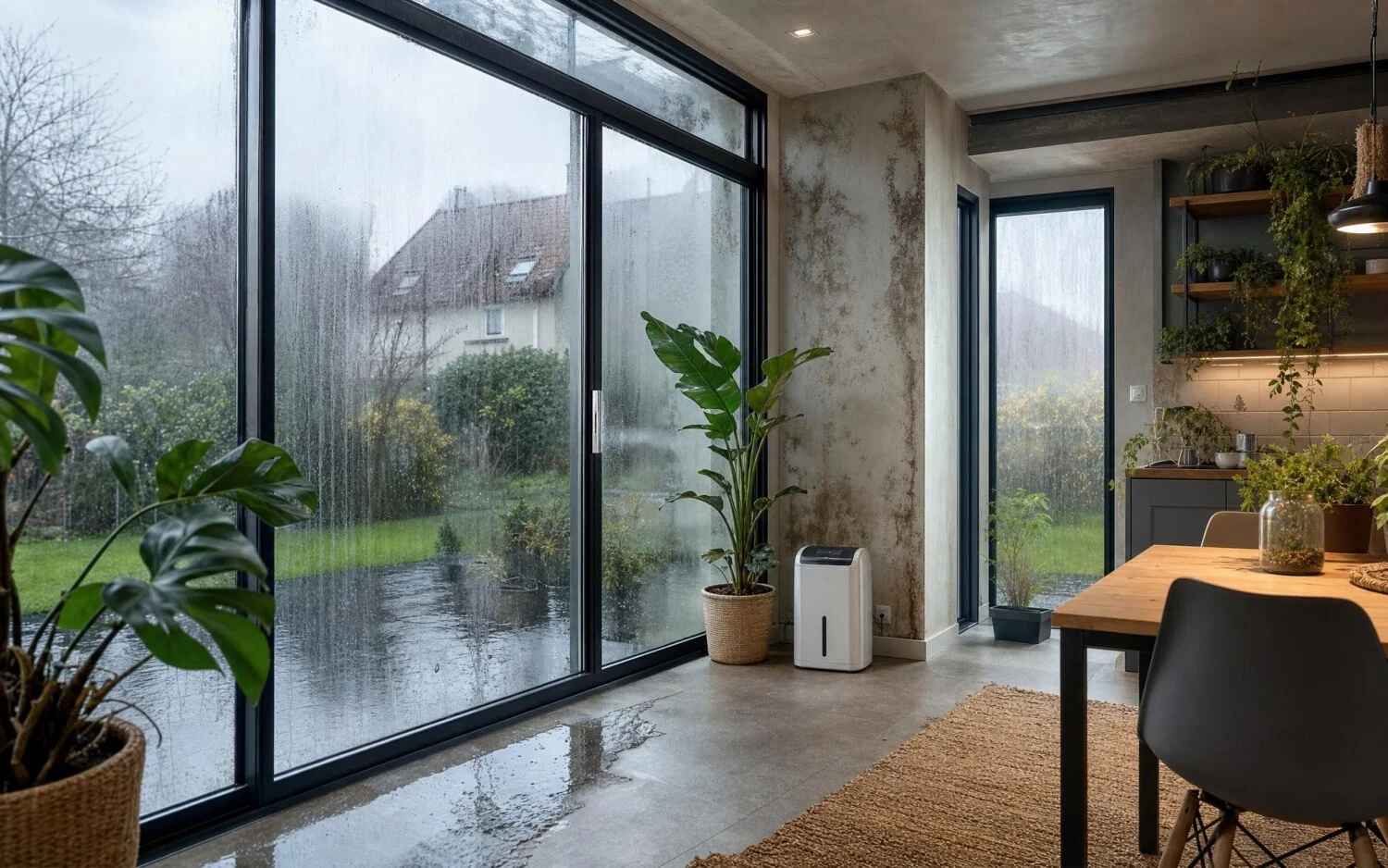
On Instagram, fully glass-walled kitchens are a hit: glass walls, greenhouse-style glass roofing, plants everywhere, and light at all hours. We picture ourselves preparing dinner surrounded by potted tomatoes and climbing basil, with the feel of being in a garden even in January. This image is of course dreamy, and the trend of the greenhouse kitchen seems to tick every box for the ideal home.
But this magazine-worthy setting hides a reality far less glamorous when it comes to everyday comfort. A kitchen remains the most demanding room in a house: it concentrates water, steam, grease, appliances, and the plumbing network. In a space that is largely glazed, the slightest oversight quickly shows up as fogging, odors, and bills. And that’s where the error that spoils everything slips in, quietly.
The number one mistake of greenhouse kitchens: glass does not manage temperature
A real garden greenhouse operates precisely on the opposite of a comfortable home: the glass lets in the sun and lets outdoor cold or heat escape very quickly. In a greenhouse kitchen, that means a room that is stifling in summer and freezing in winter if nothing has been planned. To keep it at a stable temperature, you must then push heating and air conditioning, with rising bills and an energy footprint that is anything but negligible.
But the other option isn’t better: letting the room follow the seasons. In a structure that is very glassed, the thermometer can plunge very low in the heart of winter. Pipes running along exterior walls or under the floor risk freezing, or even bursting. You end up with costly water damage, whereas the initial goal was simply to add a bright corner for cooking and growing a few fresh herbs.
Heat, steam and humidity: the cocktail that derails a greenhouse kitchen
Added to this temperature challenge is the humidity issue. A kitchen already concentrates cooking steam, kettles, the sink, the dishwasher, and sometimes the washing machine. In a space lined with glazing, this humidity condenses on the cold surfaces, drips toward the joints, and seeps into the tiniest corners. Without proper ventilation, you see persistent fogging, a musty smell, gray marks around the frames, and then mold.
The experience recounted on Grandma’s Tips illustrates this mechanism well. In a closed kitchen, with the dishwasher and washing machine running, the remaining humidity in the tanks and joints was enough, in just two weeks of summer, to darken the rubber seals and fill the room with a heavy odor. As the article summarizes, “closing does not purify when humidity is in play.” In a greenhouse kitchen that is very sunny, this little tropical climate forms even faster.
The right reflexes for a greenhouse kitchen that’s pleasant all year round
To limit these drifts, it all starts at the project stage. Rely on double glazing, or even triple glazing, on large bays to reduce heat exchanges between inside and outside. The initial cost is higher, but the heating needs in winter and cooling in summer drop significantly. A more traditional roof, well insulated, also protects the space from heat surges and from branches striking the glazing.
Then comes how you live in the room, especially in summer or when you’re away. In a greenhouse kitchen, it’s better to treat the dishwasher and washing machine as small humid zones to let them breathe. Before a few days away from home, a mini ritual prevents odors and seals from darkening:
- rinse the dishwasher’s filter and wipe the damp seals;
- run a hot empty cycle if the machines have run a lot;
- leave doors and portholes slightly open, with a window open or a VMC running.
With this trio of insulation, ventilation and routine, the greenhouse kitchen remains a pleasure.
Sources
- Gourmand
“On July 25 these 12 light recipes will help you avoid the big mistake of cooking everything in the oven”
