
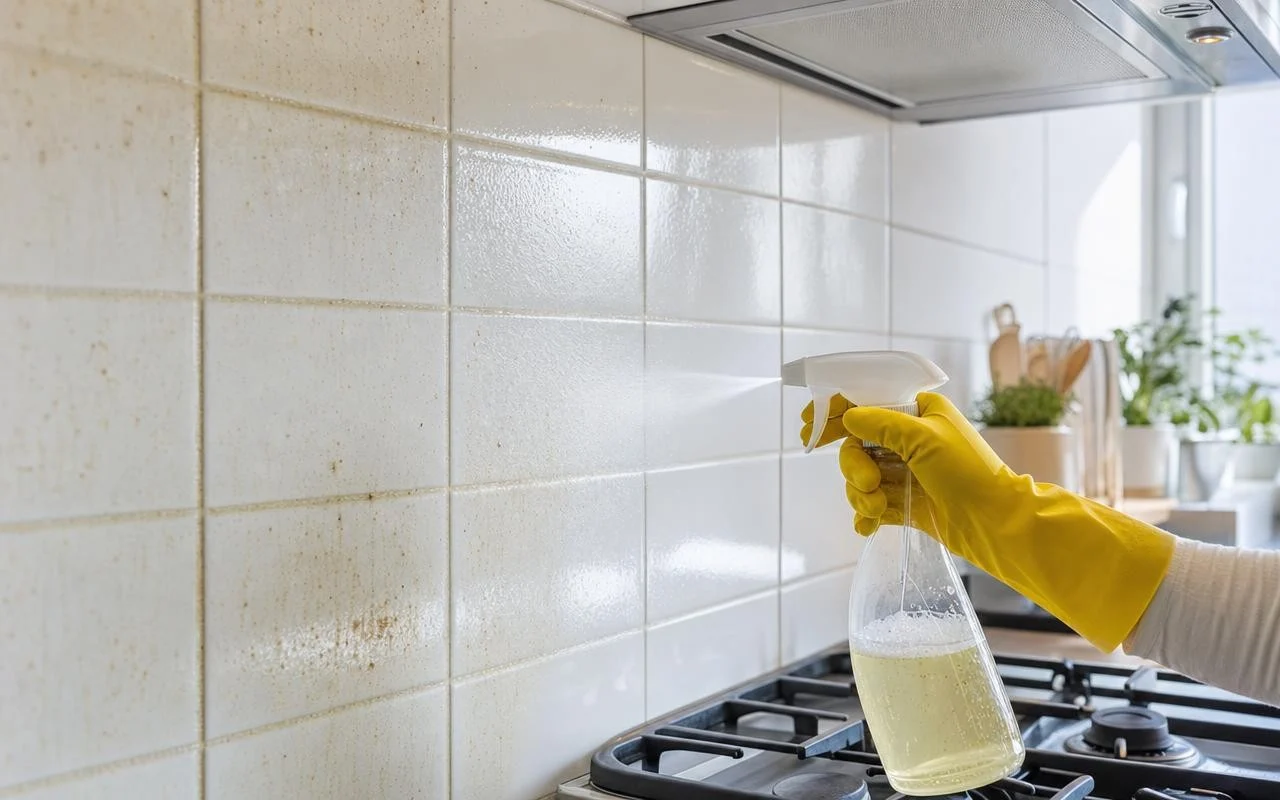
Between the boiling water, the sizzle of bacon, oiled woks, and sauces simmering, the area behind the stove receives with every meal a blend of steam, oil, and small food splatters. They settle on the tiles, cling to the grout, and eventually form a sticky layer. Good news: there is a simple method to clean the grease from a tiled backsplash without damaging it.
Why does grease stick to a tiled backsplash and attack the joints
Home design specialists explain that the weak point of tile is its porous joints, far more than the tiles themselves. Around the stove, cooking fats oxidize, then “polymerize with heat to form a sticky layer, then harden, almost impossible to lift off without harsh products,” summarizes a technical article cited by Ouest-France. Once established, this crust clings particularly well in the grout lines, where a sponge struggles to pass.
To prevent this sticky film from taking hold, Southern Living recommends wiping behind the stove with a damp sponge after a fatty meal, washing the backsplash with hot soapy water each week, then performing a deep clean every few months. The site also reminds readers to protect the countertop with a towel, to test products on a small, inconspicuous area, and to ban abrasive sponges that scratch the enamel.
Simple method to degrease a tiled backsplash without damaging it
Inspired by a test published by Real Simple magazine, one combination stands out as the most effective for degreaing a tiled backsplash: very hot water and a grease-cutting dishwashing liquid in a spray bottle. The author advises filling a spray bottle with hot water, adding a small amount of dish soap, spraying from top to bottom, and letting it work for about 90 seconds before scrubbing with a microfiber cloth or a non-abrasive sponge.
On glazed ceramic tile or a glass backsplash, this solution often suffices. For older splashes, Real Simple suggests dusting a pinch of baking soda onto the damp sponge before scrubbing, then rinsing. Southern Living also notes that a 1:1 mixture of water and white vinegar, left to sit for five to ten minutes, effectively dissolves grease on non-porous surfaces, provided you rinse and dry thoroughly.
Backsplash grout, stubborn stains and moves to keep the tiles clean
Grout lines require targeted treatment. These articles recommend using a soft toothbrush dipped in warm soapy water, then, if needed, a baking soda paste (one part powder to two parts water) left for a few minutes before rinsing. On a natural stone backsplash, they remind readers to avoid vinegar and to prefer a pH-neutral cleaner designed for stone.
To limit grime, Southern Living suggests covering pots, running the range hood, and wiping splashes immediately. The site also recommends sealing grout and natural stone regularly so that the backsplash stays easier to maintain.
Sources
- JLM
“Greasy kitchen backsplash: I tested all the homemade cleaners, only this mix made it disappear”
