
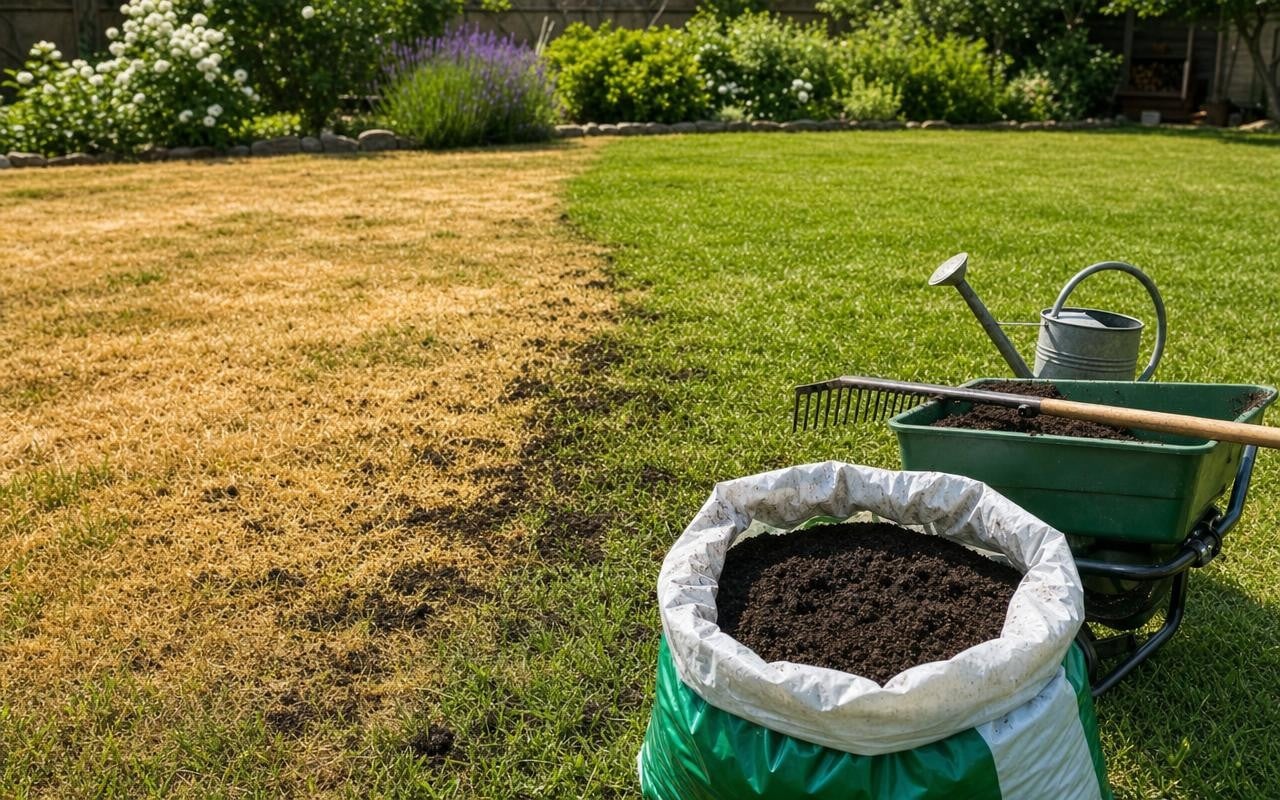
A lawn that greens yellow as soon as watering restrictions begin, soil as hard as concrete, and puddles that linger instead of seeping in: many gardens finish the summer in this state. People often think that more watering is needed, that the lawn should be replaced, or even that the whole area should be dug up. In reality, a simple surface treatment of the soil is often enough to revive a tired lawn.
This action is lawn topdressing, also known as surfacing or top dressing: a thin layer of organic or mineral material spread over the grass. When carefully chosen, properly dosed, and applied at the right moment, it improves soil structure, nourishes the roots, reduces evaporation, and restores a healthy green color without excessive irrigation. It all comes down to a handful of millimeters.
Lawn Topdressing: Why This Surfacing Changes Everything
The principle of topdressing is simple: spread across the entire surface of the lawn a very fine layer, maximum 0.5 to 1 cm, of compost, light topsoil, or an appropriate blend. This film fills small hollows, protects the crown of the blades, and above all works its way between the blades to gradually mix with the existing soil, without completely covering the lawn. The lawn then appears denser and more even.
For a healthier lawn, the reference remains sieved compost, well mature and very fine, sold at around 2 to 4 euros per bag. In a layer of 5 to 10 millimeters, it acts like a sponge that holds rain, dew, and irrigation and then slowly releases moisture to the roots. The soil becomes more pliable, more alive, with sometimes up to 50% fewer irrigation needs. Ideal for a healthier and more aesthetically pleasing lawn without overusing water.
When to Topdress a Lawn and How to Choose the Right Material
So that the grass can weather the operation properly, it must be in full growth. The best time to topdress a lawn is in spring, from March to May, or early autumn, from September to October. Avoid heatwaves, pronounced drought, or, conversely, forecast heavy rains, and even frozen soils. It is better to intervene in the morning or late afternoon, once the dew has evaporated.
The choice of material depends on the lawn’s condition and the nature of the soil. Sieved compost works very well on poor or well-draining soils, enriching them with organic matter. A mixture of compost and washed sand improves drainage on clayey soils that tend to retain water and helps correct small irregularities. Light topsoil or a special lawn topsoil mainly serves to fill holes and to accompany reseeding with seeds, while maintaining good infiltration.
How to Topdress a Lawn Step by Step Without Damaging It
Preparation counts as much as the material. Start by mowing a little shorter than usual, around 3 to 4 cm, then remove leaves and debris. If a layer of thatch exceeds half a centimeter, a scarifier or a vigorous rake will open it. On very compact ground, coring aeration further improves the result. Next comes the spreading: 5 to 10 liters of topsoil per square meter, i.e., 5 to 10 mm thick, is more than enough.
Spread the topsoil with a shovel or a spreader, then work it down between the blades with a leaf rake until the tips of the grass remain visible. A light misting of water is enough to fix the layer to the soil. Then let the lawn rest for about ten days before resuming mowing. On a well-established lawn, topdressing every two or three years is sufficient, provided you avoid thick layers and clay-rich materials that suffocate the roots; over the seasons, this simple addition of a few millimeters keeps a lawn denser, greener, and more resistant to dry summers.
Sources
- Pleine Vie
“Lawn: this topdressing with sieved compost at 2 € can reduce watering by half during restrictions this summer”
