
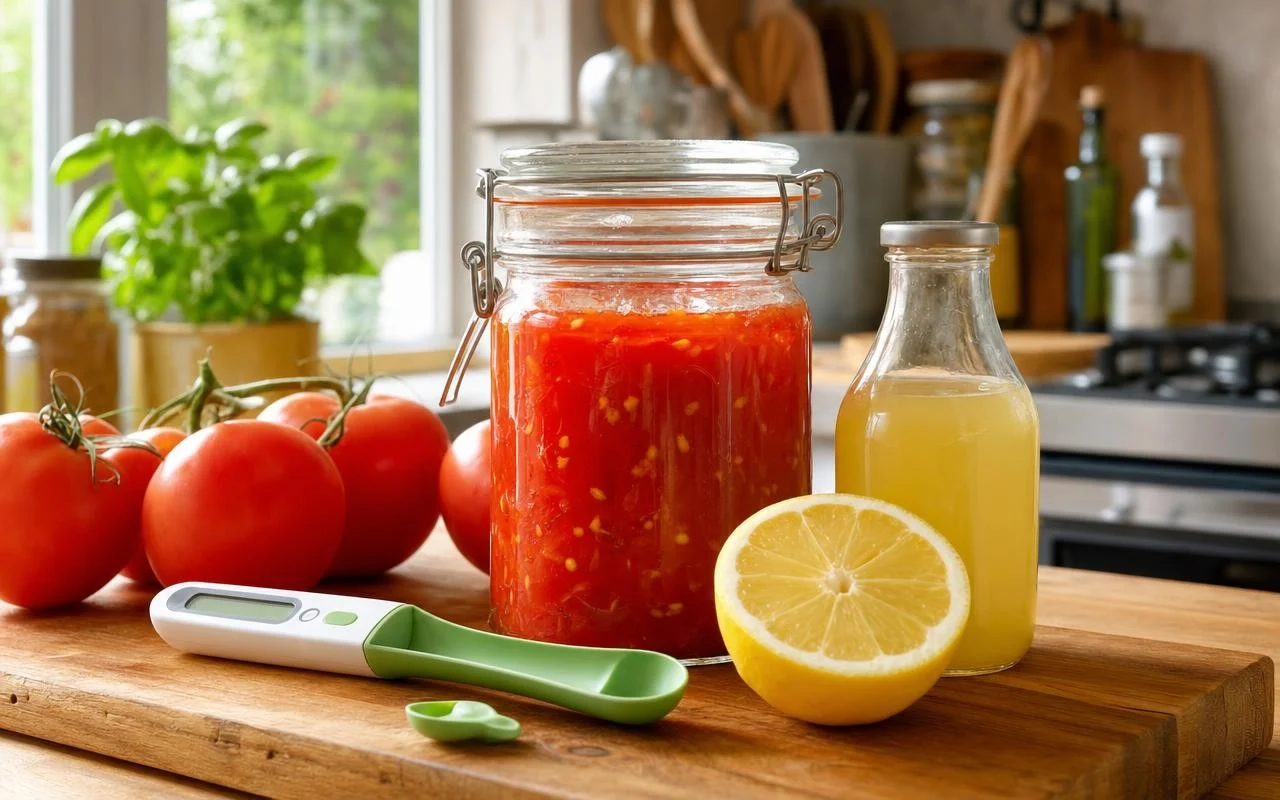
A jar that clicks as it cools, a jam that lasts all winter: homemade preserves offer reassurance. Many recipes call for a few tablespoons of lemon juice, and the temptation is strong to squeeze a fresh lemon rather than crack open a bottle.
The idea seems logical: fresh would be more natural, more fragrant. For preserves, the reality is different. In many recipes, lemon juice is primarily used to secure the pH; this is where the exchange between fresh lemon juice and bottled lemon juice becomes delicate.
Lemon juice and home canning: a safety ingredient before a flavoring
Authorities such as Health Canada remind us that only highly acidic foods, with a pH at or below 4.6, inhibit the bacterium Clostridium botulinum, responsible for botulism. Tomatoes sit right at the edge of this limit, and their acidity varies with variety, ripeness, or the stress endured in the garden.
The National Center for Home Food Preservation and the University of Minnesota Extension therefore recommend adding an acid to all tomato canning. The USDA guidelines are simple: per liter of tomatoes, 2 tablespoons of bottled lemon juice or 1/2 teaspoon of citric acid. 5% vinegar can substitute for lemon, at 4 tablespoons per liter, but with a more pronounced flavor.
Fresh lemon juice or bottled: why they don’t stack up for acidification
On paper, 2 tablespoons of lemon juice seem identical whether it is fresh or bottled. In practice, Kansas State University reminds us that the fruit’s acidity changes from lemon to lemon, making the final pH unpredictable. The University of Minnesota Extension is explicit: “Use bottled juice sold commercially” and “Do not use freshly squeezed lemon juice. The acidity level varies and there is a risk of juice contamination from the rind.”
A 2026 update from the National Center for Home Food Preservation adds an important nuance: not all bottled lemon juices are equal. The organization advises a juice “reconstituted from concentrate,” with standardized acidity; some freshly pressed juices may be less acidic. Many contain sulfites; for sensitive individuals, experts favor citric acid or a pure frozen lemon juice, at the same doses as a standard bottled juice.
Home canning: in which cases fresh juice and bottled juice are truly interchangeable
Lemon juice does not always serve a safety role. In a marinade consumed within hours or a jam kept in the freezer, it mainly serves to flavor or aid setting. The National Center for Home Food Preservation specifically cites freezer jams: cold storage ensures preservation, and fresh lemon juice is then perfectly suitable.
To navigate home canning, a few simple guidelines help decide when fresh juice is possible and when bottled juice is indispensable:
- When the recipe calls for “acidifying” or indicates a pH, keep to the bottled juice as instructed.
- Choose a concentrate-based juice and adhere to the official doses without reducing them.
- If sulfites are involved, switch to citric acid at the doses recommended by the USDA or a public body.
