
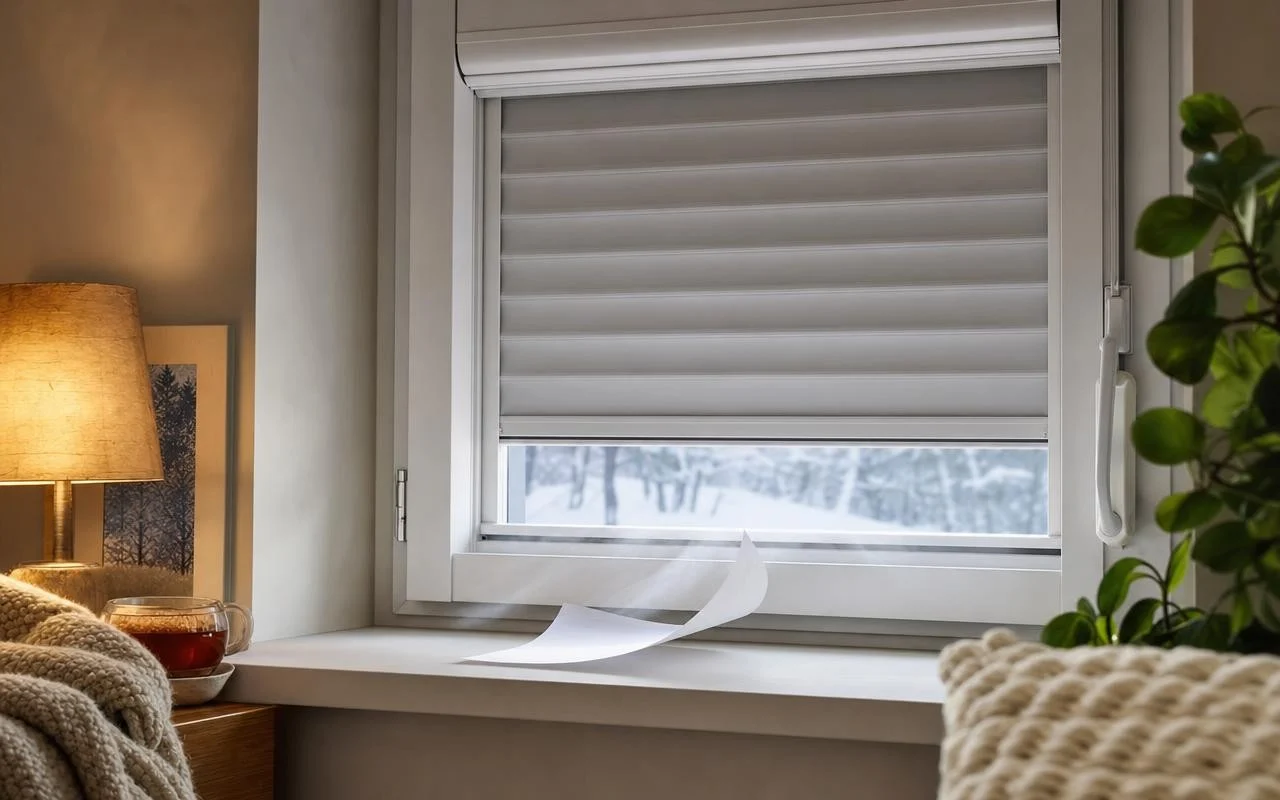
A single sheet of paper slipped under a closed roller shutter that lifts by itself: many homeowners say that this small test put them on the trail of their heat losses. At first, you think it’s just a harmless draft. Then you realize that outside air can freely pass through the gap in the shutter and that the heating bill follows a different trajectory.
Every autumn, people replace window seals, tuck a draft stopper at the bottom of doors, and monitor the glazing. Yet the roller shutter box, the housing that holds the rolled-up sash, often stays out of sight, even though it can let 10 to 30% of a window’s losses slip away according to several estimates. Behind this tiny opening of a few millimeters hides sometimes a major energy leak.
Why the roller shutter box lets so much heat escape
To understand what’s at stake, you have to look closely at this housing placed above the window. The shutter panel rises inward and exits through a gap that communicates directly with the outside. When the box is made of PVC, wood, or aluminum—materials that are not well insulated—and it shows a little play or worn joints, cold air rushes in and warm air escapes without resistance.
The sensitive areas are located around the inspection hatch, the connection to the wall, the mounting points, and, on manual shutters, around the strap or the crank. Several sources indicate that an uninsulated box can account for 10 to 30% of a window’s losses. And since closed roller shutters can reduce up to 60% of a window’s losses, addressing the box becomes an obvious lever for the future energy performance diagnostic.
Test the roller shutter box in 60 seconds, then seal it
The leaf test requires no skill or tools. Simply close the shutter as you do every evening, choose a moment with no draft in the room, and slide an A4 sheet, possibly folded in two, into the exit gap of the slat. If the sheet flutters, lifts, or comes out almost without resistance, this reveals air leaks between the outside and the room.
To refine the locating, repeat the gesture under the access panel, near the side cheeks and at the junction between the box and the wall. Some feedback mentions a sheet that comes out almost by itself; after applying a simple seal, the room becomes less suffocating on late summer days. The same fault lets in the cold in winter, and this test remains an indicator, not a full diagnosis, but it clearly justifies this quick check before the first cold snaps.
Insulating the roller shutter box: recommended materials and observed effects
Once the leaks are identified, the priority is to seal them before trying to insulate the box. New seals around the cover, sealant in the cracks, low-expansion foam to fill gaps: the idea is to stop air passage without hindering the mechanism. Then only can you slide an insulating material into the housing, respecting the available space and the travel of the slat, whether it’s mineral wool 3 to 4 cm thick, expanded cork, or polyurethane foam.
The budget remains modest—just a few tens of euros of materials per box—for an effect that is as noticeable as it is felt: walls less cold, fewer drafts and less noise, a slightly lower need for heating or air conditioning. The exact gain depends on the whole dwelling, but for a very leaky box, these actions translate into radiators running less and a more stable sense of daily comfort.
