
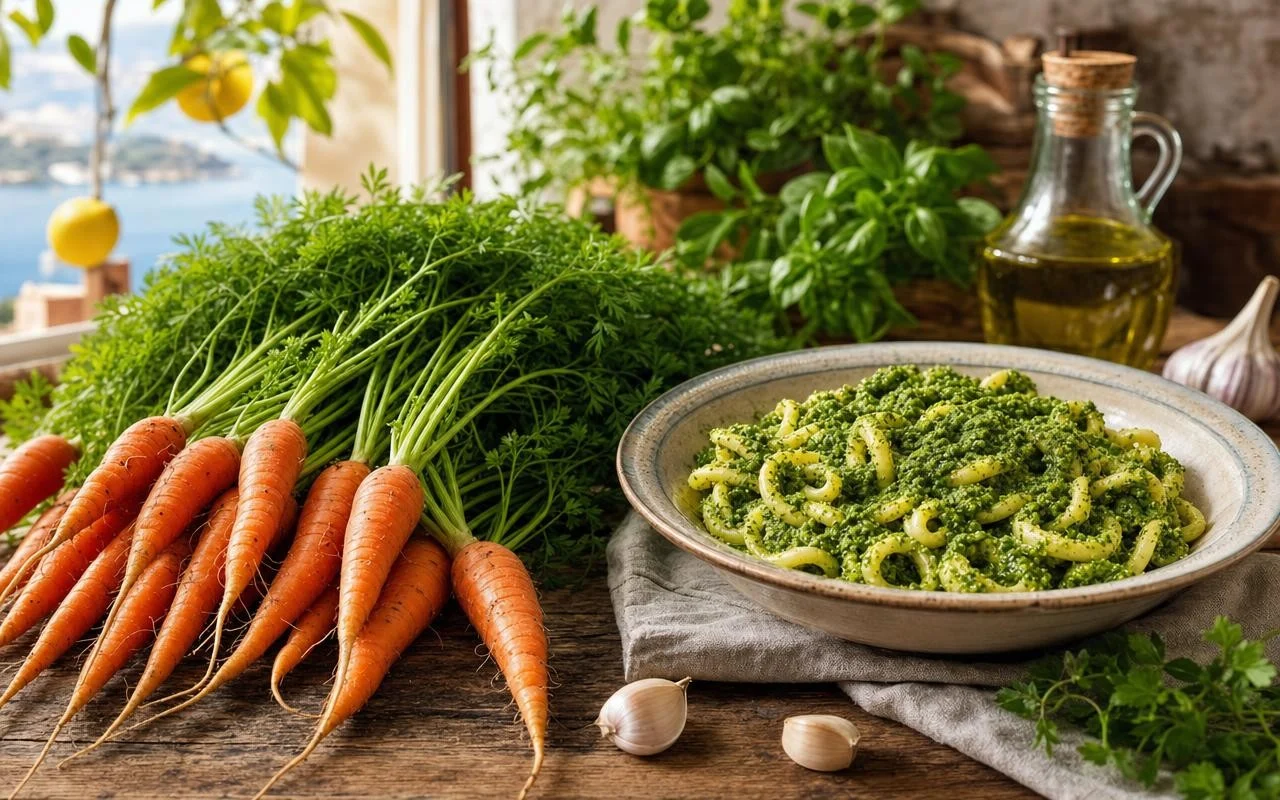
In many French vegetable gardens, the scene repeats itself: you pull up the carrots, trim the green tops, and head for the compost. Yet these greens represent nearly a third of the weight of the bunch, a pretty bouquet of green that is treated as waste. Meanwhile, in southern Italy, that same bouquet forms the base of entire family dishes.
In Puglia, Calabria, Sicily, or Basilicata, people have preserved this peasant-cooking reflex where nothing is wasted. Carrot leaves, just like rapini tops or fennel fronds, are seen as a true leafy vegetable. They flavor pasta, soups, and omelets. It’s enough to make you want to cook carrot tops rather than throw them away.
Why throwing away carrot tops is a wasteful anti-gasping mistake
At markets, most carrots arrive already decapitated, which masks the scale of waste. When you harvest your own or buy by the bunch, the greens weigh nearly a third of the vegetable. These leaves belong to the Umbelliferae, like parsley. They contain vitamin C, calcium, potassium, and beta-carotene, often in greater amounts than the orange root.
For a long time, many gardeners believed these tops to be toxic or inedible, especially because their flavor is more pronounced than that of the carrot. In reality, the foliage is entirely edible. It offers a herbaceous, slightly bitter taste that recalls arugula while staying close to parsley. Using these leaves almost effortlessly doubles the nutritional value of a row of carrots.
In the Mezzogiorno, cooking carrot tops is a reflex
In the Mezzogiorno, cuisine has been built on a strict resource-saving economy. The same hands that hoe the garden chop the tender leaves to put them straight into the pot. Carrot tops, radish greens, or beet greens share the same fate: they join pasta, omelets, or minestrone. Their intense aroma pairs ideally with ripe tomatoes and the local extra-virgin olive oil.
Three preparations recur in almost every Southern family. The most emblematic remains the carrot-top pesto: about 80 g of washed tops, 50 g of Parmesan or pecorino, 30 g of pine nuts or almonds, one garlic clove, 100 ml of olive oil, and the juice of half a lemon blended together. The leaves are also quickly sautéed in a pan, like spinach, or puréed into a green soup with onion, potato, and broth, then blended after about twenty minutes.
How to properly prepare carrot tops at home
To bring these practices home, it all begins with choosing the bunches. The carrot tops destined for cooking should be very green, with no yellow spots or wilted leaves. It’s best to pick carrots from organic farming or the garden, as the treatments tend to focus on the leafy tops. Washing requires a bit of care, as the leaves easily trap sand and dirt.
Once the bunches are brought in, plunge the tops into a large basin of cool water, shake them gently, then repeat the operation two or three times. A thorough wringing prevents the pesto from diluting or the sautéed greens from releasing too much water. To save time, many Italians prepare a large bouquet at once. Here is a simple method:
- Detach the thickest stems, keeping especially the tender leaves and the small stems.
- Wash the tops in two or three baths of clean water, then wring them well.
- For the refrigerator, roll the clean tops in a slightly damp cloth.
- For the freezer, chop the tops, slide them into bags, or prepare a pesto topped with a drizzle of oil that will keep for a week in the fridge.
