
Entre les shampoings “spécial vélo”, les sprays lustrants et les
dégraissants ciblés, l’entretien d’un deux-roues peut vite remplir
une étagère entière. Beaucoup de cyclistes cherchent pourtant une
solution simple, efficace et un peu plus maligne pour venir à bout
de la boue, de la poussière et du film gras du quotidien, sans
abîmer leur monture ni casser leur budget.
C’est là que le savon noir revient sur le
devant de la scène. Les fabricants comme Le Briochin le décrivent
comme un “dégraissant naturel” qui permet de “nettoyer, dégraisser,
détacher, et faire briller toutes vos surfaces naturellement : on
peut l’utiliser partout !”. Maison, linge… et vélo. Reste à voir
comment l’utiliser concrètement, et sur quelles zones du vélo, pour
en faire un vrai produit unique.
Savon noir et vélo : pourquoi ce produit unique fonctionne si
bien
The black soap is a multi-use cleaner made from vegetable oils, cherished for its degreasing power and its gentler touch compared to many detergents. Le Briochin even calls it “the most complete product.” On a bicycle, it excels at removing dust, water traces, chain spray, and small greasy stains, all while respecting the paintwork and decals, without requiring you to scrub the frame like crazy.
In practical terms, this product is suitable for the frame, the front fork, the wheels, the handlebars, and a large portion of accessories. It works as a “mild soap” as recommended by maintenance guides from major sporting retailers, while still having enough bite to dissolve light grease. You simply need to keep it away from bearings and be precise around the drivetrain and braking areas, sensitive points that we’ll detail further.
Nettoyer son vélo au savon noir : le kit minimal à garder sous
la main
Guides from manufacturers like Trek and tips from Decathlon stress one core idea: you don’t need a sophisticated arsenal to wash a bike, just a few basics chosen well. The aim is to replace a multitude of sprays with a single washing product, while preserving the essentials for the bike’s longevity, especially the chain lubricant.
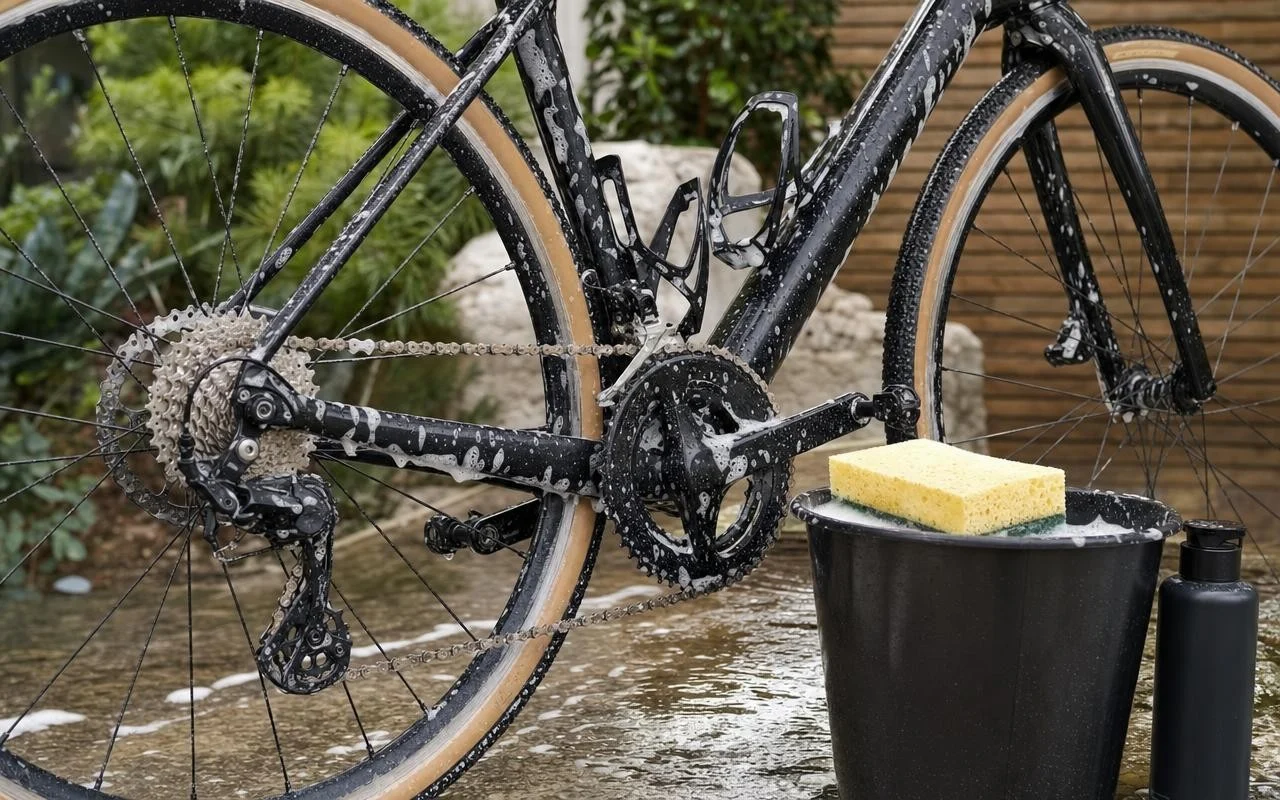
- A bit of black soap (paste, cube to dissolve, or liquid to dilute).
- A sponge or a brush with soft bristles.
- A bucket of warm water and a low-pressure spray.
- A cloth or microfiber for drying.
- A chain lubricant suitable for a bicycle.
The black soap is available in paste, a dissolving cube, or liquid form. For bike use, the liquid or diluted form proves very practical. Starwax offers a simple recipe: 1 teaspoon of black soap in 500 ml of hot water for washing with a sponge, then rinsing. Marius Fabre proposes another option for stubborn grime: pure black soap on a sponge, targeted washing, then careful rinsing.
Comment nettoyer son vélo au savon noir sans abîmer freins et roulements
The steps follow the logic recommended by Decathlon: rinse, wash, dry, then lubricate. Begin by wetting the bike with a low-pressure jet or a bucket of water, never with a high-pressure cleaner that can force water and soap into the bearings (hubs, bottom bracket, headset). Dishwashing liquid should also be avoided, as it is perceived as too harsh with salts and additives for a bike frame and its components.
Next comes the wash with black soap. For routine maintenance, follow the ratio of 1 teaspoon per half a liter of warm water, applied with a sponge or a soft brush on the frame, wheels, and non-sensitive components, while avoiding discs and brake rims. For a more marked grease stain, a dab of pure black soap on the sponge, as suggested by Marius Fabre, often suffices. Rinse thoroughly, then dry the entire bike with a microfiber cloth.
Discipline should be applied to the drivetrain a bit more carefully. After a potential targeted degreasing of the chain if it is heavily encrusted, you can wash it with soapy water using black soap, then rinse. The recommendations echoed by Decathlon remind never to lubricate a chain that is still wet, as this can promote internal corrosion. Therefore, dry it thoroughly, wait a moment, and then apply the lubricant only to the links, strictly avoiding discs and braking surfaces. With this regular ritual, the bicycle stays clean and smooth, without cluttering the workbench with five different bottles.
