
A radiator that gurgles, warm at the bottom but cold at the top, is often the first sign of autumn. This sound of water circulating unevenly means there is air trapped in the heating circuit and that your installation is using more energy to heat less effectively. According to the Swiss program SuisseEnergie, regular bleeding can reduce energy consumption by up to 15%.
One question still divides DIY enthusiasts: should radiators be bled with the heating on or off? Intuition leads some to keep the boiler running to “push” air toward the purge valves. Expert recommendations, however, go in a very different direction, and the reason is often surprising.
Purge a Radiator: Heating On or Off, the Experts’ Rule
Various sources agree: bleeding a hot-water radiator should be done with the heating off and radiators cooled. The Spanish site Okdiario, which cites plumbers, sums up the rule as follows: “The water must be cold to avoid burns and to reduce the pressure in the circuit.” The same message comes from SuisseEnergie and the consumer association Test-Achats.
Test-Achats highlights a key point: on a cold radiator, the air stays concentrated at the top, where the purge valve is located. Bleeding with very hot water increases the risk of scalding and the pressure in the circuit makes the operation harder to control. The answer is therefore clear: heating off, then wait at least about thirty minutes for the radiators to cool down.
The Right Method for Bleeding a Radiator When Off, Step by Step
The best time to bleed remains the early autumn, just before restarting the heating. SuisseEnergie specifies that this action concerns only radiators connected to a boiler or a heat pump, not electric radiators. We turn off the boiler or set it to summer mode, let the radiators cool, then follow a precise order: start with the radiator closest to the boiler and finish with the farthest, moving from the ground floor upward. The organization estimates it takes about 45 minutes to bleed ten radiators.
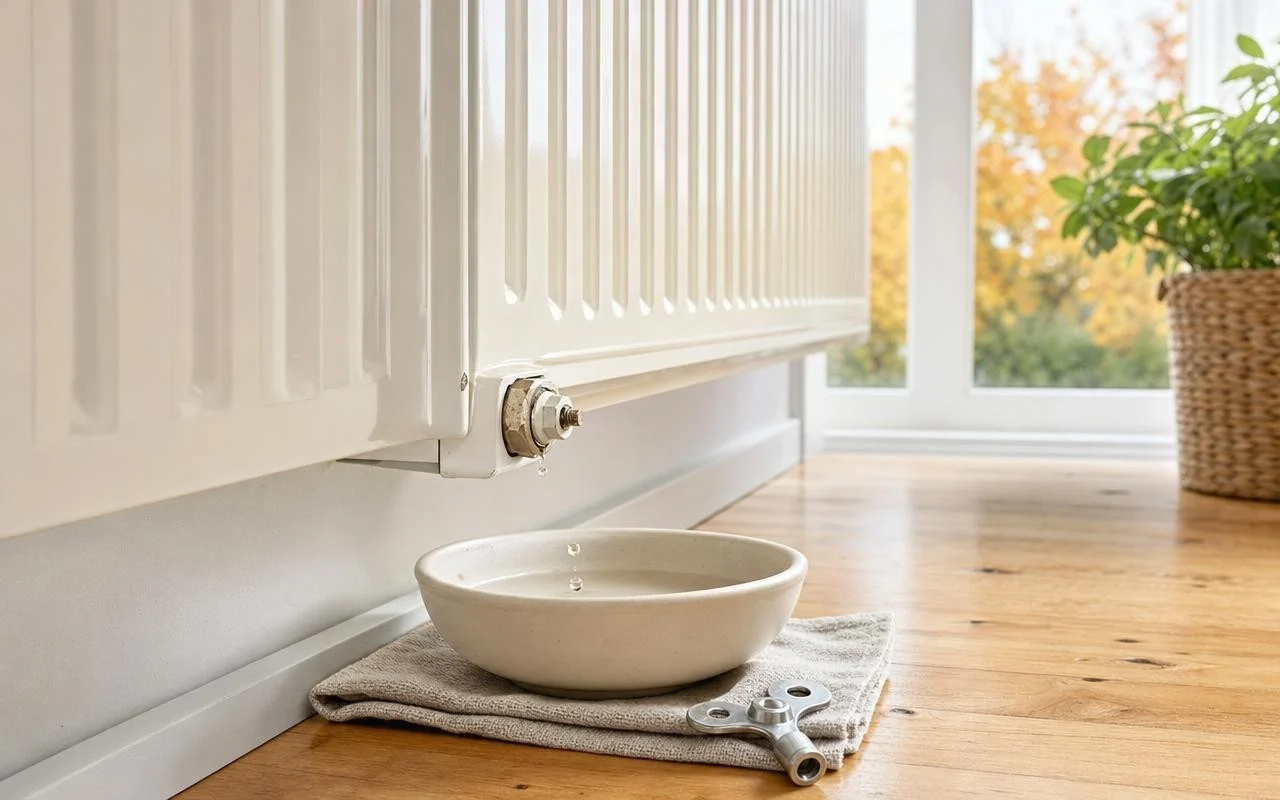
On the tool side, a simple bleed valve key is usually enough, sometimes a flat-head screwdriver. Also prepare a container, rags and gloves. Okdiario emphasizes a point often forgotten: “You should only release the air. Letting out too much water can alter the circuit’s pressure.” Concretely, place the container under the purge valve, open it slowly, let the air escape with a whistling sound until a steady trickle of water appears, then close immediately.
Pressure, Dark Water and Savings: What You Must Absolutely Check
Once all radiators are bled, there remains a step that many skip: checking the pressure on the boiler’s gauge. By releasing the air, you also release a little water. According to SuisseEnergie, in a typical home the pressure usually sits between 1 and 1.5 bar; the needle should stay in the green zone indicated by the manufacturer. If it is too low, add water through the filling tap before restarting the heating.
The water that comes out during the purge is often black. SuisseEnergie notes that it is “already degassed and protects the pipes from corrosion.” So it’s better not to let it flow unnecessarily. If a radiator remains cold after the purge, Test-Achats advises checking the valve at the bottom, sometimes left closed. The organization recommends bleeding every autumn as soon as radiators make noise or heat only partly, and at least every three years, even without symptoms, to fully reap the potential savings on the heating bill.
