
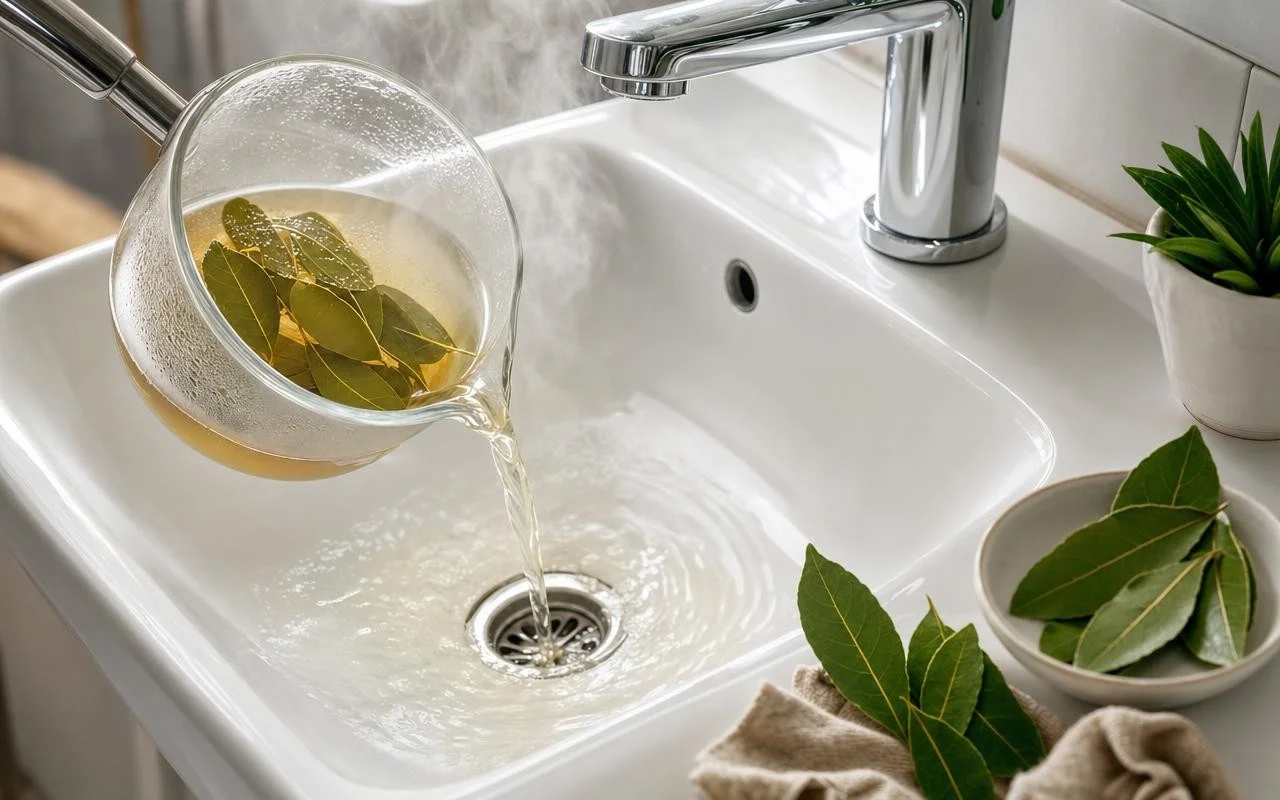
You turn on the bathroom faucet, the water runs, and a sewer-like odor hits you in the nose. The bathroom is clean, the trap seems to be in place, yet nothing helps: the smells return every morning. Many immediately reach for a bottle of chemical cleaner, though they don’t always solve the problem. There exists another approach, more subtle.
Plumbing specialists remind us that sewer odors almost always originate from the sink or shower trap, where hair, soap, and sebum accumulate. This mixture forms a slimy deposit that ferments and releases gases. Instead of masking these emissions with air fresheners, it is better to tackle this malodorous biofilm directly.
Sink Odors: What Happens in Your Siphon
The siphon principle goes back a long way: in 1775, Alexander Cumming patented the S-shaped siphon, designed to trap a small amount of water and block the miasmas coming from the drains. Today, the NF DTU 60.1 standard requires a water seal of 50 mm under your sink, an essential barrier against gas backflow.
The problem: this stagnant water holds onto everything that goes down the drain. Saint-Gobain Maison describes traps saturated with hair and organic residues, never emptied, where bacteria develop. The sulfate-reducing bacteria produce hydrogen sulfide, responsible for the rotten-egg odor that rises up. If the mechanical ventilation (VMC) or a vent duct is clogged, these gases spread through the entire bathroom.
Bay Leaf Infusion: Why Pour It into the Bathroom Sink
Soap and sebum residues melt around 40 to 50 °C. A bay leaf infusion poured at about 75 to 85 °C provides just enough energy to liquefy this greasy blockage without deforming PVC pipes. PVC-U tubes withstand 60 °C continuously: pouring a bucket of boiling water at 100 °C all at once can soften the seals and create micro-leaks behind walls.
Another benefit: the 10 bay leaves steeped in 1.5 liters of water release phenolic compounds and cineole, natural surfactants. They help loosen the biofilm and limit sulfate-reducing bacteria, while perfuming the water seal. Pouring this infusion stirs the siphon, destroys part of the colonies, and replaces the sewer odor with an aromatic note. The Departmental Sanitary Regulation also prohibits discharging concentrated toxic substances into networks, which targets widespread use of bleach.
How to Use Bay Leaf Infusion When the Sewer Odor Persists
For this method to be effective without harming the installation, one can speak of vegetal thermal cleaning. The idea is simple: use a very hot, but controlled, bay leaf infusion to loosen fats and rinse the sink’s siphon. Here is the protocol endorsed by sanitary plumbing specialists.
- Bring 1.5 liters of water to a boil, turn off the heat, add 10 crushed bay leaves.
- Cover and let steep for 15 minutes, until the water drops below 90 °C.
- Remove the leaves, pour about 250 ml into the sink to gently pre-warm the siphon.
- Wait 2 minutes, then pour the rest of the infusion in a steady stream to rinse the piping.
If the odor persists after this treatment, the problem goes beyond light maintenance. It is necessary to disassemble and clean the siphon to remove hair and deposits, verify that the water seal has not emptied, and inspect the joints. Saint-Gobain Maison also notes odors linked to a dry toilet siphon, a damaged bowl seal, or a defective vent stack. In all cases, avoid topping up the infusion with large amounts of bleach, which generates irritating chloramines and hardens fats.
