
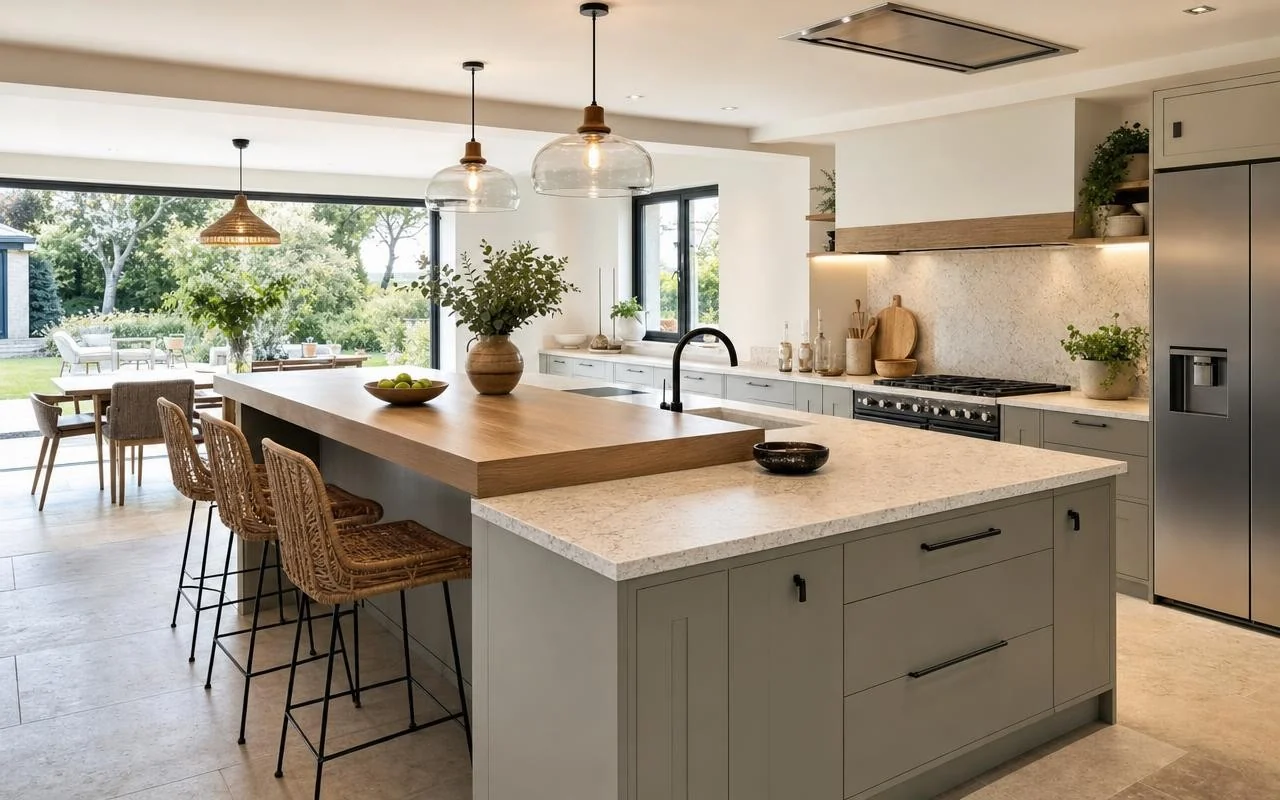
In many kitchens of parents or grandparents, one detail kept coming back: a large island in the middle of the room, split into two heights, with on one side meal preparation and on the other the children’s stools that did their homework. For years, this boomer arrangement was filed under “dated”.
Yet, this two-level block is making a comeback in open-plan kitchen projects, driven by a desire for living spaces that are more convivial as well as more practical. Many kitchen designers even present it as a path for the kitchen of tomorrow: what if the baby-boomers were right all along, before their time?
Two-level kitchen islands, the boomer trick making a strong return
A two-level kitchen island is first and foremost a simple idea: two aligned work surfaces at different heights to create two distinct functions. The top part is used for cooking, chopping, and placing down dishes, while the lower or elevated part becomes a dining zone, a homework corner, or an improvised telework station. In baby-boomer kitchens, this central island did it all: cooking, eating, chatting, putting away.
Guidelines provided by specialty brands remain fairly stable: about 90 cm for the prep surface, 110 to 120 cm for a bar-style snack counter, 74 to 75 cm for a standard table height. This play of heights helps delineate uses within the same space without adding a partition, convenient in an open kitchen connected to the living room. Another advantage often highlighted by designers: the raised section hides pots, cutting boards, or tableware, while maintaining a circulation of 100 to 120 cm around the island.
How to modernize a two-level kitchen island without a dated look
To avoid the bulky look of models from the 70s or 80s, interior designers today favor sleeker lines and a mix of materials. A worktop in light stone or quartz for the cooking area, extended by a warm wooden surface on the dining side, is enough to bring this concept up to date. In a large room, some even choose to noticeably lower the social area to table height, which makes it possible to use real chairs, more comfortable for both children and seniors.
The possible configurations are numerous, but a few ideas repeatedly appear among kitchen designers.
- A 90 cm high work surface in a mineral material, complemented by a 110 cm wooden return for nibbling or sipping coffee.
- A central part at 90 cm for cooking, with a 75 cm table integrated in the extension to accommodate the whole family.
- An upper level treated as a shelf or a thick backsplash, where cookbooks, plants, or stylish vintage appliances can be displayed, while hiding the work surface behind.
Two-level kitchen island: for which interiors and which mistakes to avoid
This type of island works particularly well in a kitchen open to the living area, in families who truly live around the kitchen. The double height creates a comfortable social zone without sacrificing the prep space. Some models even provide a small section even lower, around 15 cm beneath the main plane, reserved for pastry work to knead or roll more easily. When everything is properly sized, the island becomes a genuine multi-use living station.
Yet some critics remind of the limits of this layout: too many level breaks can break perspectives, visually weigh down the room, and reduce the large flat surface that some cooks need. In a small kitchen where every centimeter counts, a single uninterrupted counter may be more sensible. Experts thus recommend checking three points before getting started: ensure at least 1 meter of clear passage all around, limit the number of levels to maintain a fluid silhouette, and choose heights that are coherent with the planned stools or chairs. Once these basics are set, the baby-boomer island can reclaim its central place in our contemporary interiors.
