
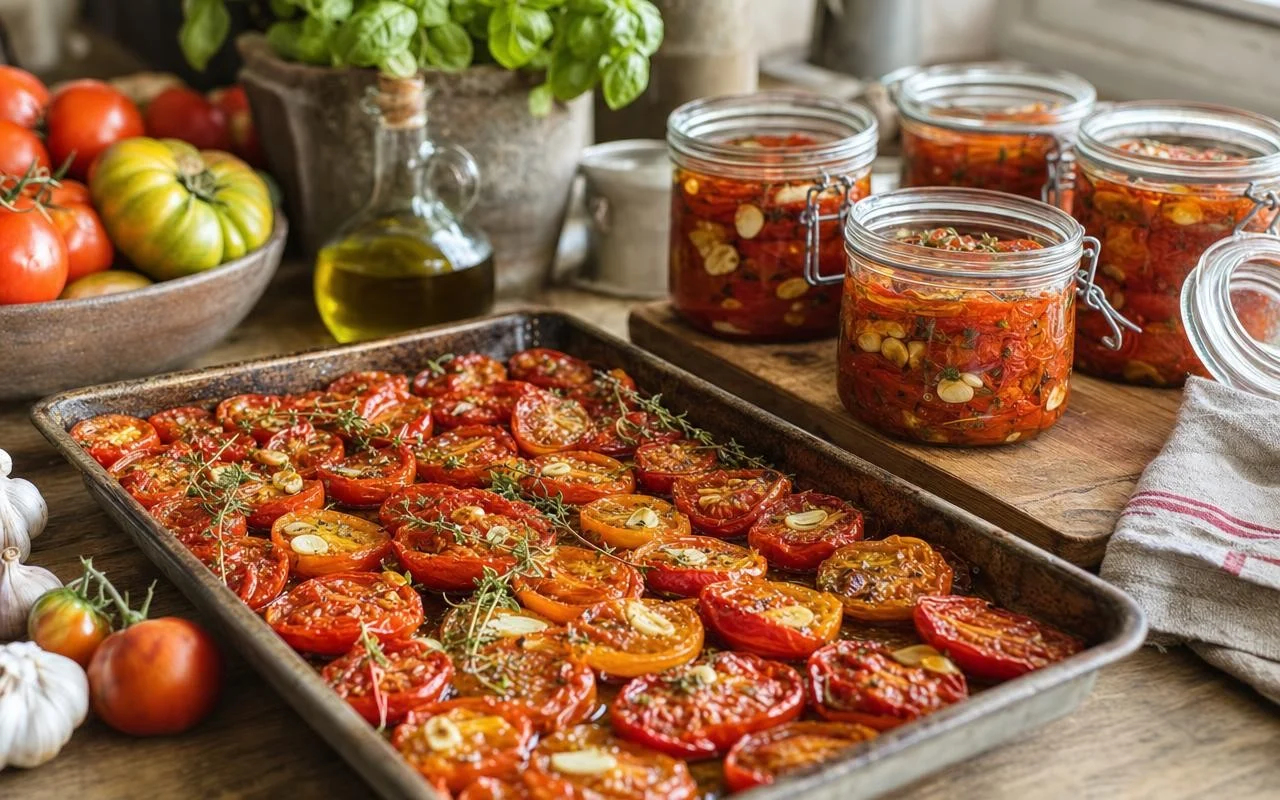
On the windowsill, the August tomatoes were piling up, bright red at first, then beginning to wrinkle and soften. In my house, this stage always signaled the same fate: off to the compost, with a small pang of regret over what I considered wasted good fruit. I truly believed that a tomato that puckered was a doomed tomato.
Yet a cook explained to me that it is exactly the opposite: these overly ripe fruits sit at the peak of their perfume, loaded with sugars, aromas, and umami flavor. In other words, what I was discarding actually held the best potential for a homemade tomato confit. It was a complete shift in how I viewed these softened tomatoes.
Why August tomatoes that soften are a culinary treasure
When the skin loosens and the flesh yields to a touch, the tomato has reached its physiological peak of ripeness. Its natural sugars, acids, and aromatic compounds are at their highest, far more than in a firm tomato. Professionals actually seek out this very state to prepare sauces, purées, and confits.
Varieties grown in open soil, such as Cœur de Bœuf, Noire de Crimée, Marmande, or Rose de Berne, respond particularly well. At the end of summer, their pulp becomes almost confit-like on its own, the skin peeling away. These overripe tomatoes are ideal for a gentle cooking that will concentrate their juices even further.
The cook’s method: oven, garlic, and patience for a tomato confit
The key gesture can be summed up in three words: slow oven cooking. Rather than quickly blitzing the tomatoes, the cook relies on gentle heat at 130 °C for 2 hours 30 minutes to 3 hours. The water gradually evaporates, the juices concentrate, and the sugars caramelize slightly. The garlic, kept in its skin and tucked among the pieces, perfumes without overpowering and also becomes melt-in-the-mouth.
To obtain about a 500 g jar, the base recipe rests on a few very simple ingredients:
- 1.2 kg of ripe to very ripe tomatoes
- 1 whole head of garlic
- 6 tablespoons of extra-virgin olive oil
- 2 teaspoons of brown sugar
- 1 teaspoon of fine salt and some pepper
- A few sprigs of fresh thyme and, if desired, a branch of rosemary
Cut the tomatoes in halves (or into quarters if they are large) and place them skin-side down on a sheet, surrounded by the garlic cloves in their skins, drizzled with oil, salted, sweetened, and sprinkled with herbs. After 2 hours 30 minutes to 3 hours at 130 °C, they have contracted, the edges have browned, and a syrupy juice has formed. Simply press the garlic gently to release the pulp and stir it into the tomatoes: you obtain a melting tomato confit ready to be enjoyed warm or cold.
Storage, variations, and ideas to use this tomato confit all year round
This confit keeps for a week in the refrigerator in a jar covered with olive oil. To extend its life even further, it freezes well in small portions in ice cube trays or flat bags. A classic canning method in jars such as Le Parfait or Weck also lets you enjoy it through the heart of winter, when good tomatoes are scarce.
There are many variations that keep the recipe simple: lemon zest for a fresh note, oregano or basil added at the end of cooking, a few Nyons black olives, a hint of Espelette pepper, or a splash of balsamic vinegar just before serving. This tomato confit pairs wonderfully with burrata, fresh pasta, grilled fish, roasted poultry, or simply a slice of toasted country bread. Some people even use it as a base for a delicate tart, with a touch of mustard and a few shavings of parmesan.
