
Your aloe vera looks sad as you water it “a little when you think of it”? Many beginner gardeners discover that this plant reputed to be unkillable ends up yellowing, softening, or rotting at the base. The cause is almost always the same: improper watering. Between those who drown their succulent and those who forget it for weeks, finding the right measure can seem difficult.
Originating from arid regions, aloe vera stores water in its fleshy leaves and tolerates drought much better than prolonged excess moisture. Experts remind us that this succulent dies far more often from overcare than from a lack of water. The real, practical question for the living room or balcony remains: what watering frequency for aloe vera truly allows it to thrive without the risk of rot?
How often to water an aloe vera: the dry-root rule
For aloe, the right rhythm starts with a simple rule: water only when the root ball has truly dried out. The site Pousse reminds us: “Be careful to ensure the root ball surface is completely dry between two waterings, while guaranteeing drainage through the roots.” This drying interval prevents water from stagnating around the roots, the main cause of rot and yellowing leaves.
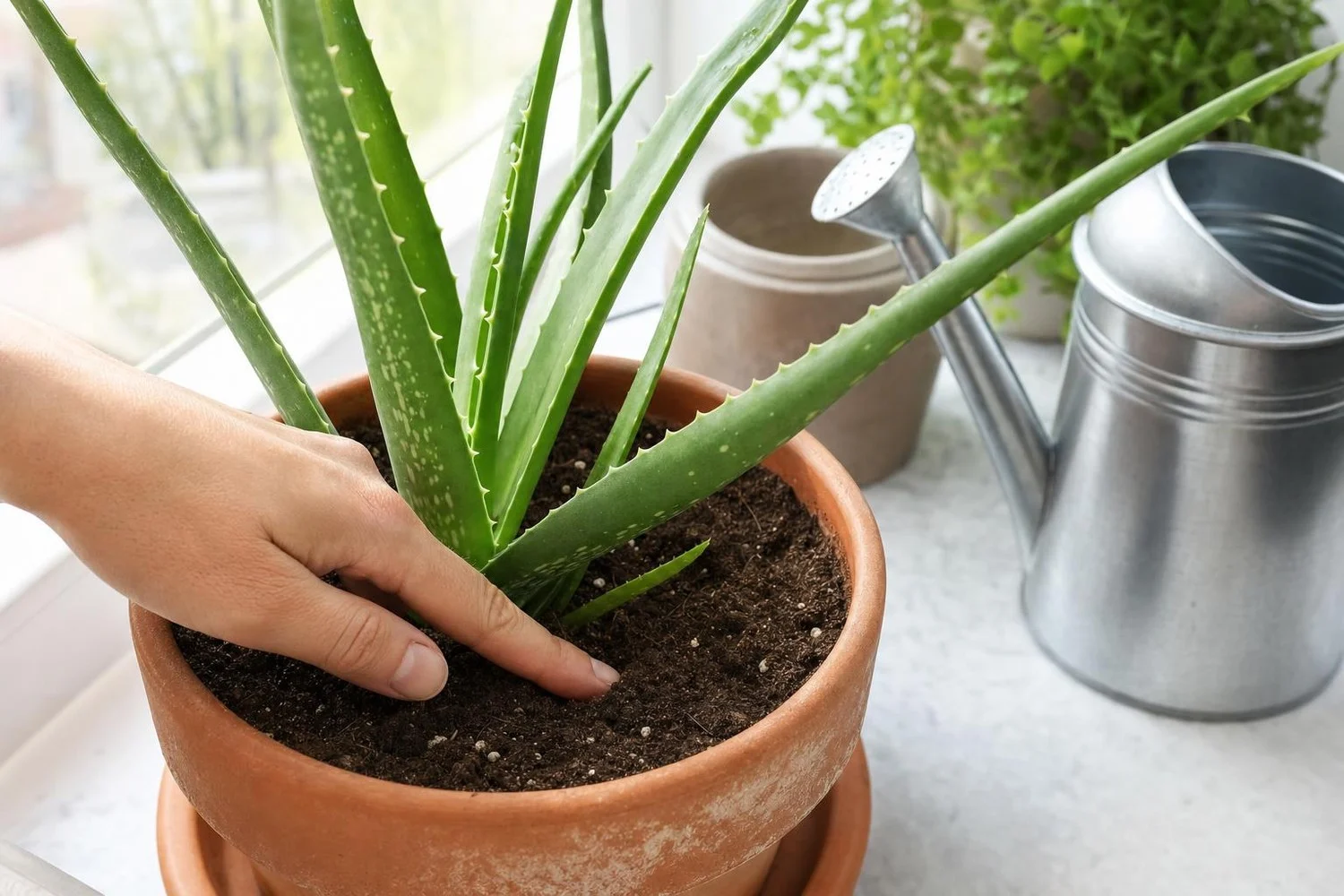
To know if your plant is thirsty, ditch the calendar and rely on the substrate. Insert a finger two or three centimeters deep: if the soil still sticks, wait; if it is dry and the pot feels light, it’s time to water. Very dry potting mix can detach from the pot walls and repel water, hence the value of a slow, thorough watering followed by good drainage.
Watering frequency of aloe vera by season
In spring and summer, when light is strong and the temperature sits around 18 to 21 °C, the water needs increase. NaturAloe summarizes: “Watering should be regular but moderate. Water the plant once a week or every two weeks, when the surface soil is dry,” favoring water at room temperature.
In autumn and winter, growth slows and the aloe enters a resting phase. NaturAloe advises waiting until the substrate is dry a few centimeters deep and then limiting to “one watering per month.” Other guides mention monthly input or even more spaced watering if the room is cool and not very sunny, always checking the soil before each watering.
Adapting aloe vera watering to your interior
The watering frequency of aloe vera varies according to how you cultivate it. A terracotta pot placed near a sunny window dries out much faster than a plastic pot in a dark corner. To decide when to fill the watering can, three simple checks help daily:
- feel the soil deeply to verify that it is dry;
- lift the pot to sense whether it has noticeably lost weight;
- observe the leaves, which hollow or droop when the plant is water-stressed.
Soft, translucent leaves that yellow or brown at the base often signal excess water and ongoing root rot. Pousse notes that “brown leaves” can also betray a prolonged lack of water. Conversely, thinner, curling leaves with brown tips indicate that the plant is thirsty. To minimize stress, use rainwater or room-temperature tap water, avoid cachepots without drainage, and wait two to three days after repotting before watering, as NaturAloe recommends.
