
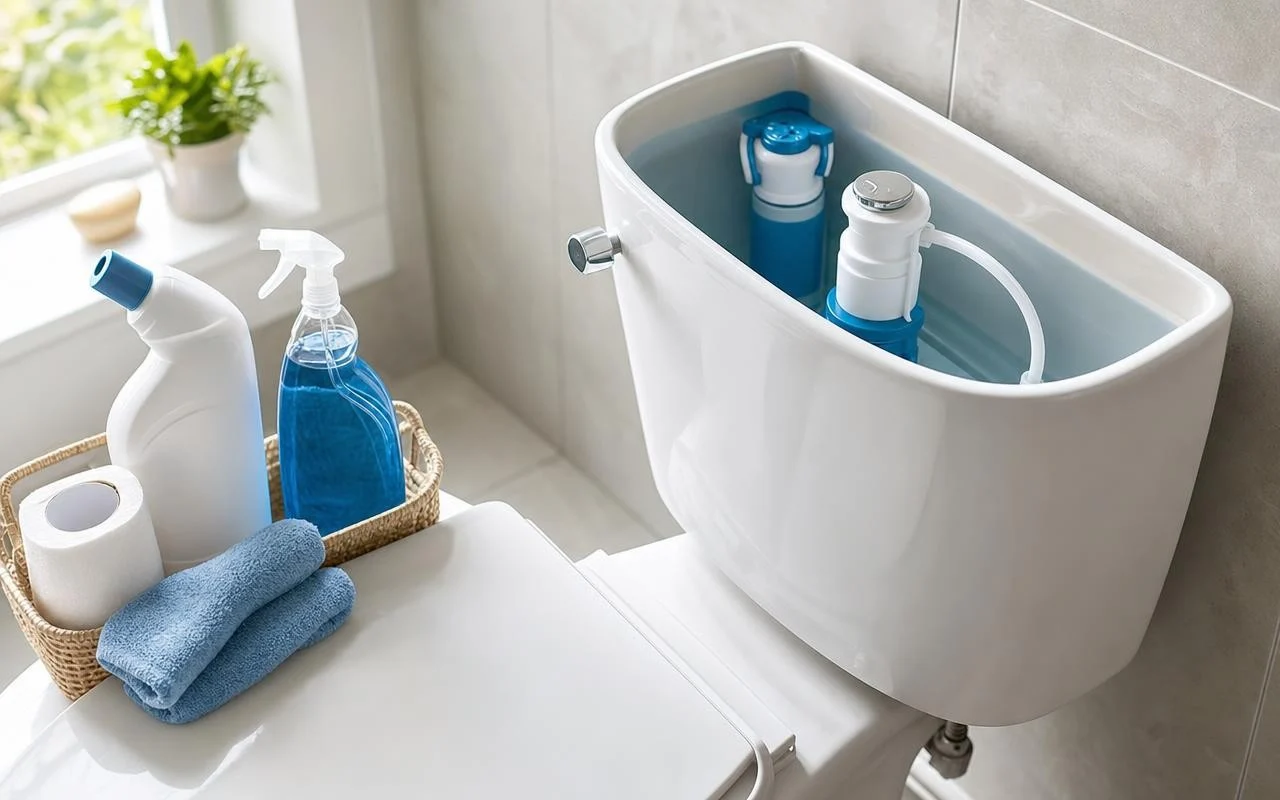
Between the gleaming toilet bowl and the freshly mopped floor, everything looks clean. Yet, as soon as the toilet door opens, a surprising odor rises, often right after flushing. Many blame the pipes or overuse scented sprays, without considering the water itself. Indeed, smelly toilet water is never a coincidence.
Maintenance specialists point to a discreet culprit: the flush tank, rarely opened and even less often scrubbed. Mildew, bacteria and mineral deposits settle there, then travel into the bowl water with every refill. Another trap: the seals at the base of the toilet can release a urine-like odor that makes the water seem to smell bad. It is better to diagnose the root cause correctly.
Why Toilet Water Ends Up Smelling Bad
When the odor appears mainly at flush time, the reservoir is the primary suspect. Over time, the interior becomes coated with mineral deposits, algae, and sometimes small patches of mold that tint the water and give it a musty or rotten-egg smell. Each flush sends that loaded water into the bowl, maintaining the odors despite cleaning.
If the odor resembles urine as soon as you enter, the problem often comes from the floor around the base of the toilet. The cold water in the tank sits around 10 to 12 °C while the room is about 20 °C: this difference creates condensation that drips onto the seals. Mixed with micro-splashes of urine, it soaks the tiles and porous joints. A strongly sewer-like odor can also signal a problem with the siphon or ventilation, to be checked.
Cleaning the Tank to Stop Odors at the Source
To permanently prevent the toilet water from smelling bad, experts recommend a monthly tank cleaning with white vinegar. Simply lift the lid, check for cracks, then pour about a cup of vinegar into the water. Let it sit all night without flushing; in the morning, one or two flushes rinse everything. Acetic acid dissolves part of the limescale, limits microbial growth, and improves the odor.
For a tank that is very dirty or a stubborn odor, a treatment with baking soda is useful. Shut off the water supply, flush until the tank is empty, then sprinkle a cup of baking soda onto the bottom. After 15–20 minutes, gently scrub the walls with a brush, reopen the water and rinse by flushing several times. Some combine 2 cups vinegar and 1 cup baking soda: first pour the vinegar, then add the powder, let it fizz for about ten minutes, brush, wait another twenty minutes, then rinse.
Mistakes to Avoid and Actions Around the Bowl if the Odor Persists
“Miracle” products poured into the tank are not without consequences. Sources strongly discourage several solutions often seen online:
- Bleach and chlorine tablets in the tank: they corrode rubber seals and plastic parts, leading to leaks and failures.
- Laundry detergent or fabric softener: these products leave a greasy film, create foam in the conduits, and can damage the mechanisms.
- Essential oils in the tank: they cling to the walls, foul the internal components, and promote blockages.
Another very important safety point: never mix or pair white vinegar and bleach too quickly, or you risk releasing irritating gases. If, despite a clean tank, an odor persists, it is better to treat the base of the toilet. Once a week, clean and dry the floor, then spray a veil of white vinegar around the base and behind the bowl, letting it act for 10 to 15 minutes before wiping and thoroughly drying.
For urine odors embedded in the joints, baking soda acts as a mineral sponge. On a clean, dry floor, apply in the evening a thin ring of powder at the base of the toilet. For 6 to 8 hours, its slightly basic pH, around 8.4, neutralizes derivatives of uric acid and absorbs moisture. If, in the morning, the powder has turned into a mushy paste in a specific spot, or if a puddle remains, this may reveal a leak or a worn waterproof seal at the drainage pipe; a plumber can then confirm the odor’s origin and secure the installation.
Sources
- Maison & Travaux
“This habit of using vinegar around the toilet makes odors disappear; experts urge you to adopt it” - Maison & Travaux
“Putting baking soda at the base of your toilet, what it’s for and why it’s recommended”
