
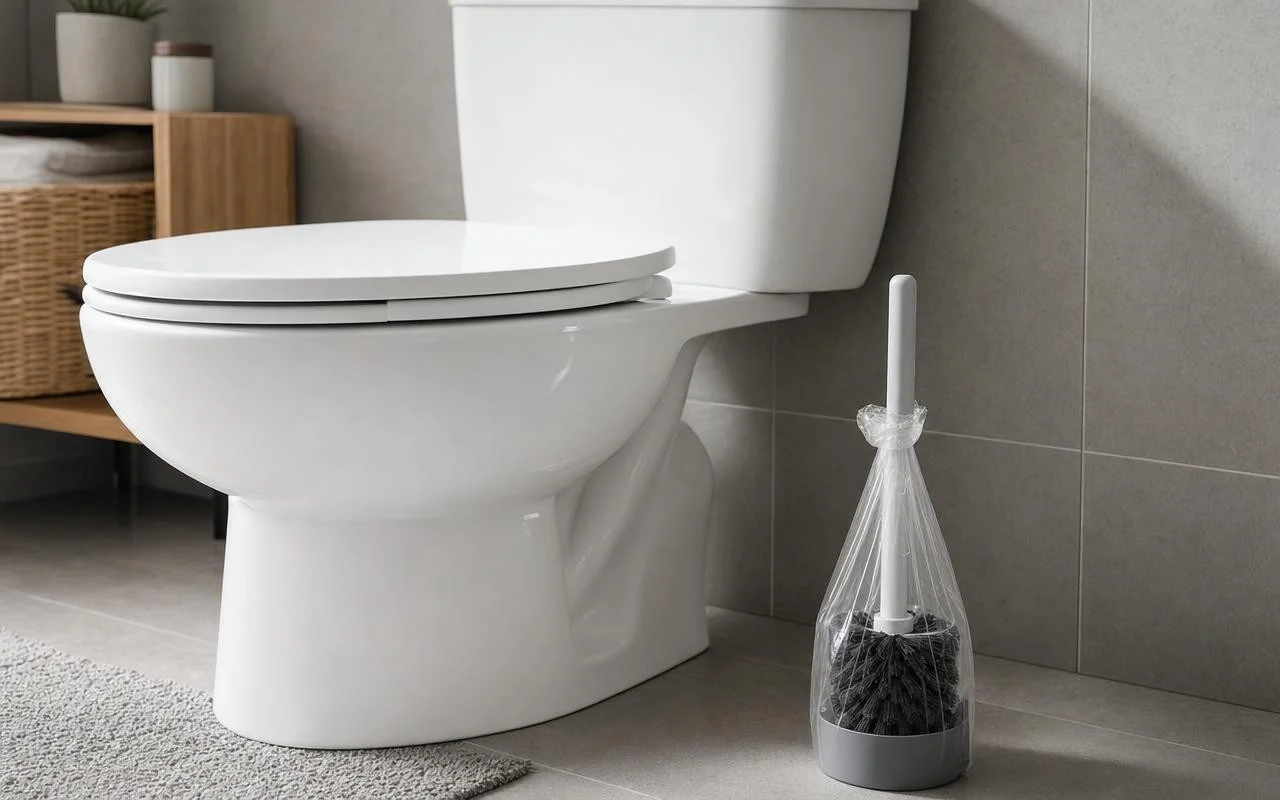
When toilets clog at the worst moment, you often find yourself without a plunger and fearing a flood. In this situation, most people think of a plumber, rarely of the toilet brush. Yet cleaning experts today advocate an unlikely duo using a simple plastic bag, provided it is used correctly.
This move involves wrapping the toilet brush in a plastic bag to create a pressure effect in the bowl. Several maintenance guides, from HG to Ootravaux and EROSKI Consumer, describe this solution as an effective first reflex for many clogged toilets, well before calling a professional. The way you go about it makes all the difference.
Why placing the plastic bag on the toilet brush can unclog toilets
Practically speaking, the brush dressed with its bag becomes a mini suction cup. By dunking it into the water and performing slow back-and-forth motions, the air trapped inside the bag and the water in the bowl exert pressure on the blockage. This combination of pushing and pulling helps move the blockage toward the sewer, without harming the porcelain.
Experts remind us that these clogs very often originate from wet wipes and other solid waste flushed into the bowl. Water companies like EMASESA explain that these products, assumed to be disposable, remain intact in the pipes, slow down flow, and eventually cause bad odors, unsanitary conditions, or even floods in public sewer networks.
How to use the toilet brush and a plastic bag without flooding the bathroom
First of all, check the water level. If the bowl is nearly full, the risk of overflow is too high and it’s best to call a plumber. If the water is still some distance from the rim, put on gloves, lay a mop or towel around the base of the toilet, and most importantly do not flush again if the water rises.
As soon as the level is stable, slide a sturdy, hole-free plastic bag over the head of the brush and secure it with a knot or a rubber band. Gently insert the bag-covered brush into the bowl, then perform smooth back-and-forth motions. If the clog gives way, the water will start to descend; you can then try a single flush and remove the bag by turning it inside out to avoid contact, before disinfecting the brush and thoroughly washing your hands.
Common mistakes, alternatives and prevention of clogged toilets
Many people improvise with a rigid handle and a cloth, but a poorly secured fabric can detach and worsen the blockage, while a stick that is too hard risks scratching the porcelain. Home improvement guides also remind that boiling water should not be poured into the bowl, due to the risk of cracking the ceramic. If despite the plastic bag method the water does not descend, or backs up into other fixtures, it is wiser to stop trying and call a professional, who typically charges between 40 and 50 euros for a small unblock, and up to nearly 1,000 euros for the heaviest cases, with the average around 80 to 130 euros.
To avoid reaching emergency mode, domestic maintenance experts stress a few simple habits that spare the plumbing. Only toilet paper and the items the WC is designed to handle should go into the toilet; wipes, feminine hygiene products, cotton, hair, food scraps, or small packaging should be disposed of in a closed trash can, and early warning signs such as gurgling or slower drainage deserve immediate attention with the toilet brush and plastic bag method.
