
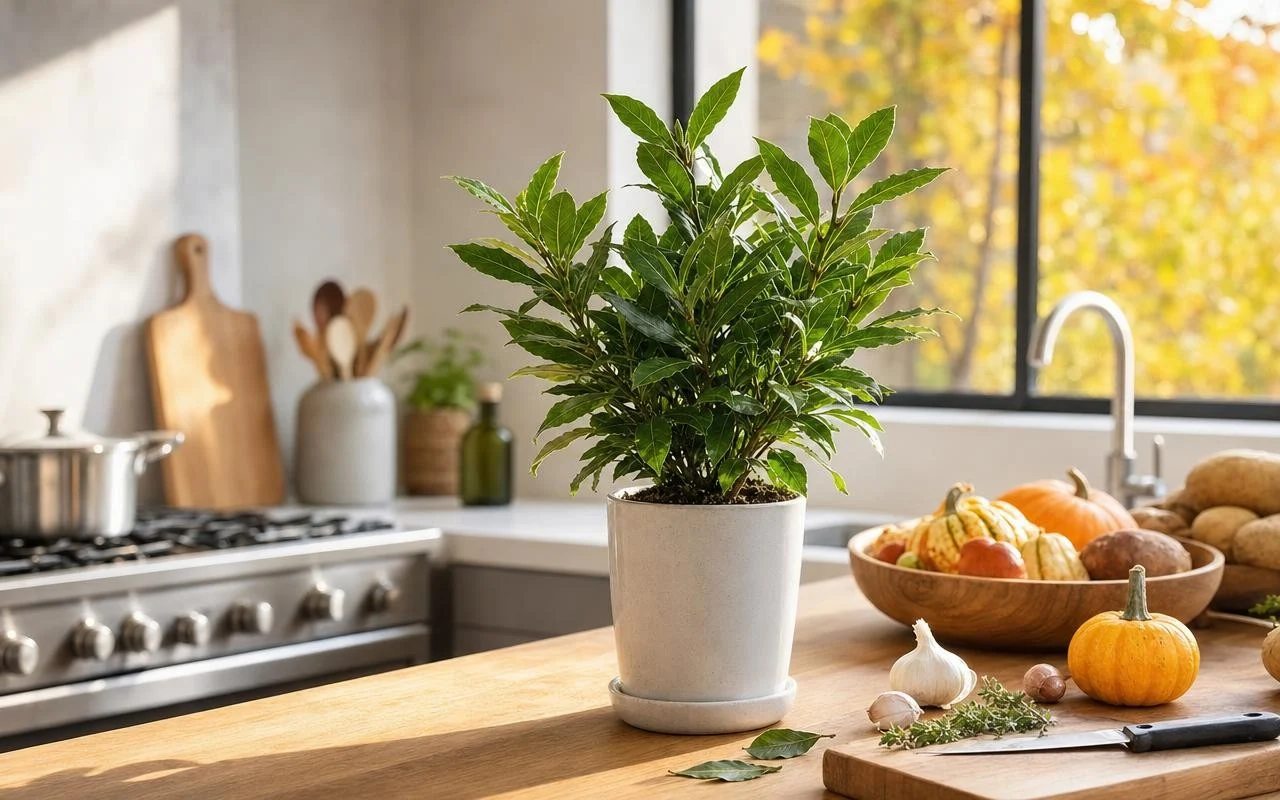
Aroma of tomato sauce, a bouquet garni plucked right from the pot on the work surface: the sight of a lush bay laurel in the kitchen can inspire dreams as autumn arrives. Many urban gardeners wonder whether they should bring their bay leaf plant into a pot indoors to keep it handy and shielded from the cold. The gesture seems straightforward, almost obvious, especially as the first cool nights approach.
Laurus nobilis, the bay laurel used in our bouquet garni, remains nonetheless a Mediterranean shrub that loves bright light and well-draining soil. The recommendations of the Royal Horticultural Society and guides like Promesse de Fleurs remind us that in a pot it does not tolerate excess water and cold drafts well. Yet in autumn, the kitchen becomes a small world of its own, with the oven warming things up, windows opening and closing, steam, and temperature fluctuations. This is where things get tricky.
Putting a Bay Laurel in a Pot in the Kitchen in Autumn: When Is It a Good Idea
Experts at the Royal Horticultural Society indicate that a bay laurel in a pot can thrive indoors if several conditions are met. First, it needs a lot of light: guides speak of four to eight hours of sun per day near a window, or, if that isn’t available, a truly bright room. The move indoors should happen before nights repeatedly dip below 4 to 5 °C, a threshold cited by several North American universities for bringing frost-tender plants inside.
In this context, the kitchen can become a good refuge for the bay laurel, provided you follow a small autumn checklist.
- South- or west-facing window, with no obstacle blocking the light.
- A pot at least 30 to 40 cm in diameter, stable and with drainage holes.
- A layer of gravel or clay balls to ensure drainage.
- Water sparingly: wait until the top few centimeters of the substrate dry.
- Keep the plant away from the oven, the stove tops, and radiators, but also monitor for scale insects.
Common Mistakes with a Potted Bay Laurel in the Kitchen
The first autumn trap is a lack of light. A bay laurel that previously received direct sun on a balcony often ends up tucked away in the back of the kitchen, far from a window. The leaves lose their color, the stems stretch, and the plant becomes fatigued. The Royal Horticultural Society’s notes and University of Wisconsin guidelines remind us that a bay laurel in a pot keeps its dense foliage only if it benefits from strong, regular light, even as days shorten.
Another very common mistake when bringing the bay laurel indoors: continuing to water as if it were summer. Growth slows with reduced light; excessive watering then suffocates the roots, especially if the pot does not drain well. Promesse de Fleurs guides recommend letting the surface of the substrate dry out and routinely emptying the saucer.
Properly Installing and Caring for the Bay Laurel in the Kitchen
To help the bay laurel withstand winter in the kitchen, placement remains decisive. Ideally, keep the pot pressed against a very bright window, while distancing it slightly from the glass to avoid cold drafts. A mix of soil and gravel or clay balls ensures good drainage.
Guides advise halting fertilization during the cold season and saving pruning for the spring. A potted bay laurel in the kitchen is feasible only if light and watering are well managed; otherwise, a bright and cool room is a better option.
