
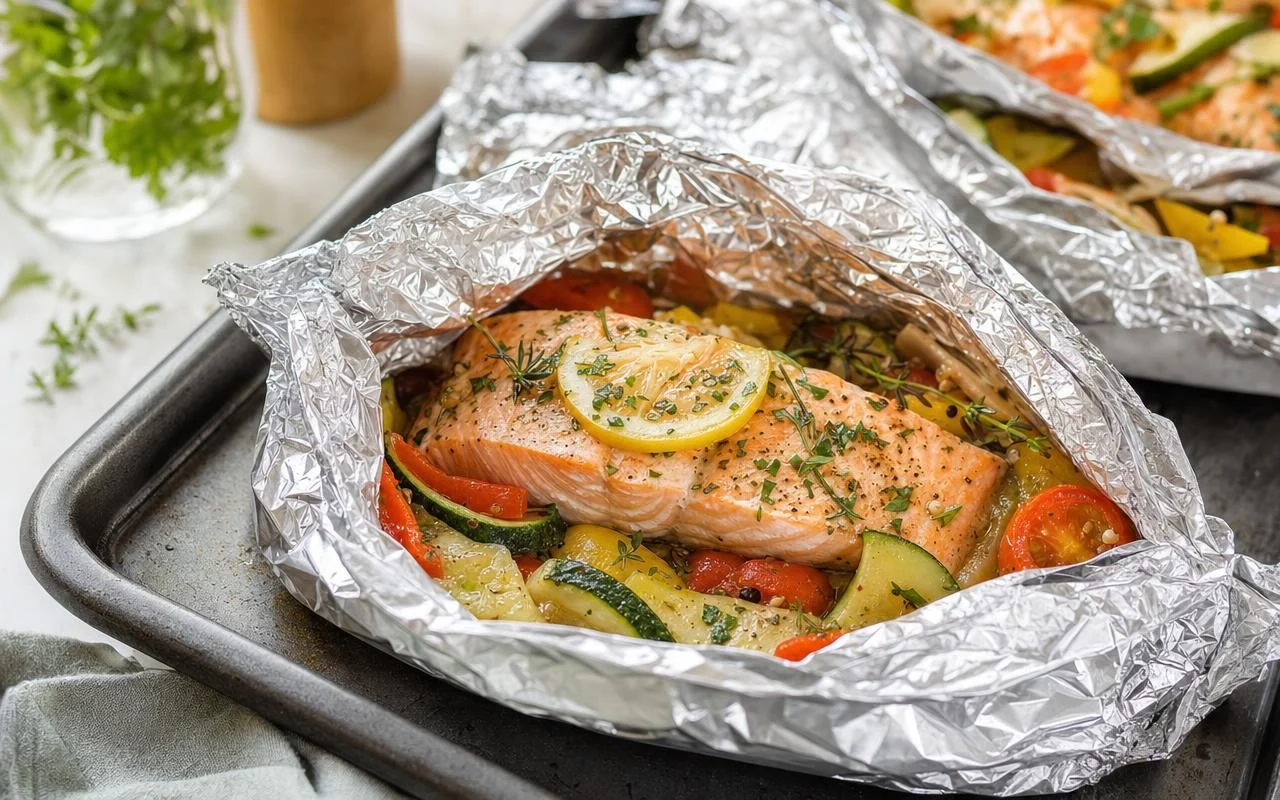
You place a beautiful fillet of salmon on the tray, it looked perfect as it came out of the oven… and it ends up dry and fibrous on the plate. With a simple aluminum foil papillotte, the same fish preserves its tender, melt-in-the-mouth texture, like in a restaurant, without complicated sauce or bulky dishes. This closed wrapper turns the oven into a cocoon for your ingredients.
It’s used for fish, chicken, or vegetables, but few know exactly what this papillotte cooking actually does. Why does a dish prepared this way come out juicier and more flavorful than a bare roast in the oven? Behind this very simple gesture lie a few easy-to-understand physical rules. They change everything for achieving tenderness.
What is a papillote in aluminum foil really for?
A papillote involves sealing a food inside a closed envelope, here a sheet of aluminum foil, before placing it in the oven. The fish, shrimp, or vegetables cook in their own juices, sometimes with a drizzle of oil, lemon juice, or broth. The papillotte minimizes added fats, concentrates flavors, and allows gentle cooking around 180 °C.
Another often-cited advantage: this method preserves nutrients better than cooking in water. The papillotte prevents the juices from escaping into the water or onto the pan. They stay in contact with the food and begin to tenderize the flesh long before you open the packet.
Why papillotte cooking makes the food more tender
In the oven, the water naturally present in fish, white meat, or vegetables turns into steam. Since the papillote is nearly hermetic, this steam is trapped around the food rather than escaping into the hot air of the oven. The interior of the papillote quickly reaches a moist environment close to 100 °C, which slowly cooks the flesh without drying it out.
The trick is to add a little liquid to start the steam and enhance the aroma: one or two tablespoons per portion are enough. Too little liquid and the food may dry out; too much and it ends up more boiled. It’s also important to leave a little air space in the papillote so the steam can circulate around the preparation.
How to make an aluminum foil papillotte, step by step and safely
The key to success lies largely in folding. You need a sheet of aluminum foil wide enough to wrap around the food and fold the edges at least twice. Lay the sheet on the work surface, matte or shiny side—doesn’t matter—then place the fish or vegetables in the center, seasoned with salt, pepper, herbs, and a drizzle of fat and liquid.
- Fold the long sides and roll them tightly to seal.
- Do the same with the short sides for a watertight package.
- Arrange the papillotes on a baking sheet, fold facing up, to keep the juices inside.
- Bake at around 180 °C; for fish, estimate about 15 to 25 minutes.
Once these steps are in place, safety remains. Aluminum foil is intended for the oven: in a microwave, it blocks the waves and can damage the appliance. It’s also best to avoid prolonged contact with highly acidic foods like tomatoes or lemon; for these recipes, you can substitute parchment paper. The matte or shiny side hardly changes the cooking; it simply results from the foil’s manufacturing.
