
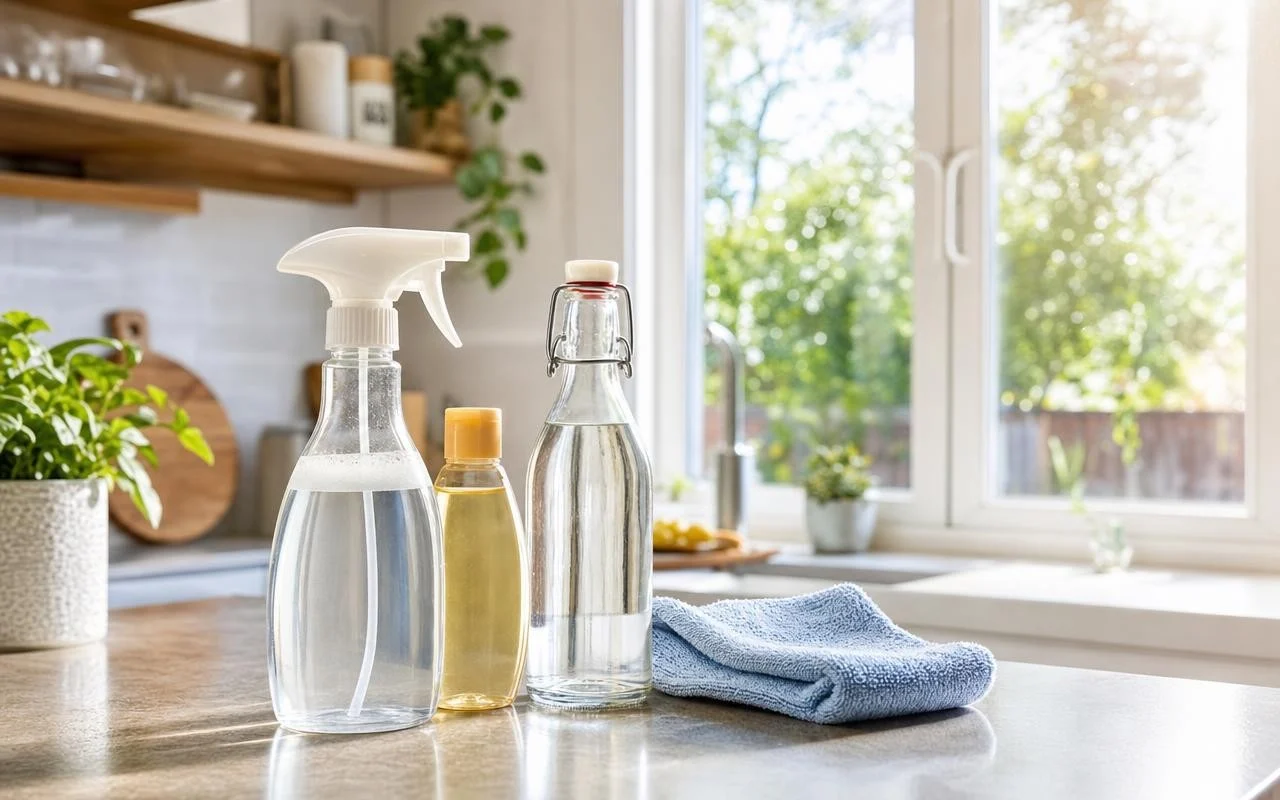
Windows full of streaks after cleaning, a slightly dull reflection despite the brand-new blue bottle: a scene familiar in many homes. Most households still reach for a store-bought spray, trying to imitate the professionals’ technique.
In reality, glaziers and seasoned window cleaners have long since changed their habits and hardly buy specialized glass cleaners anymore. Their spray bottle contains a very simple homemade mix, prepared from everyday products, at a cost that runs to only a few cents. And this mixture yields a result remarkably close to a pro’s work.
The homemade window cleaner recipe with baby shampoo and white vinegar
Store-bought window sprays sold in supermarkets often cost several euros per bottle, whereas the formula used by professionals relies on three easily accessible ingredients. In a clean spray bottle, they first pour about three quarters of warm water. They then add exactly two squeezes of baby shampoo, and top off the bottle with white vinegar. A few shakes to mix well, and the homemade window cleaner is ready to use.
This trio works as a natural degreaser. Baby shampoo, designed to be gentle and low-foaming, loosens greasy residues without leaving a film on the surface. White vinegar, for its part, tackles limescale and brightens the glass. Warm water facilitates the dissolution of the whole mixture and ensures an even distribution of the product on the pane. In the end, you obtain an effective blend at a ridiculously low price, without chemical fragrances or unnecessary colorants.
The method used by window washers for streak-free panes
Success depends not only on the recipe but also on the technique. Before spraying the product, professionals shake the bottle well to homogenize the water, the shampoo, and the vinegar. They then spray a fine mist over the entire surface of the glass, taking care not to soak the glass to avoid drips that leave streaks. A simple film is enough for the mixture to work.
For drying, they rely on a microfiber cloth, and not on newspaper or paper towels often recommended in discussions. Microfiber holds moisture, does not shed, and limits the dreaded greasy film. The process starts with broad circular motions to loosen dirt and deposits, then ends with vertical and horizontal passes, from top to bottom. This cross finish leaves a uniform surface, without marks from re-wiping.
The right habits to keep windows immaculate for a long time
Window washers prefer cleaning on cloudy days rather than in direct sunlight. When the sun shines directly on the window, the mixture evaporates too quickly and leaves unsightly marks. Another tip: dust the frames and sills before spraying the product. Dust that gathers, if it mixes with the liquid, can create new streaks as you pass the microfiber.
To prolong the effectiveness of this cleaner and keep glass sparkling all year round, a few simple habits make the difference:
- prefer regular maintenance of the glass surfaces rather than a big, occasional cleaning that requires more product and effort;
- store the spray bottle away from direct light to avoid altering the mixture over time;
- refresh the preparation about every two weeks to enjoy a cleaner that is always fresh and effective.
