
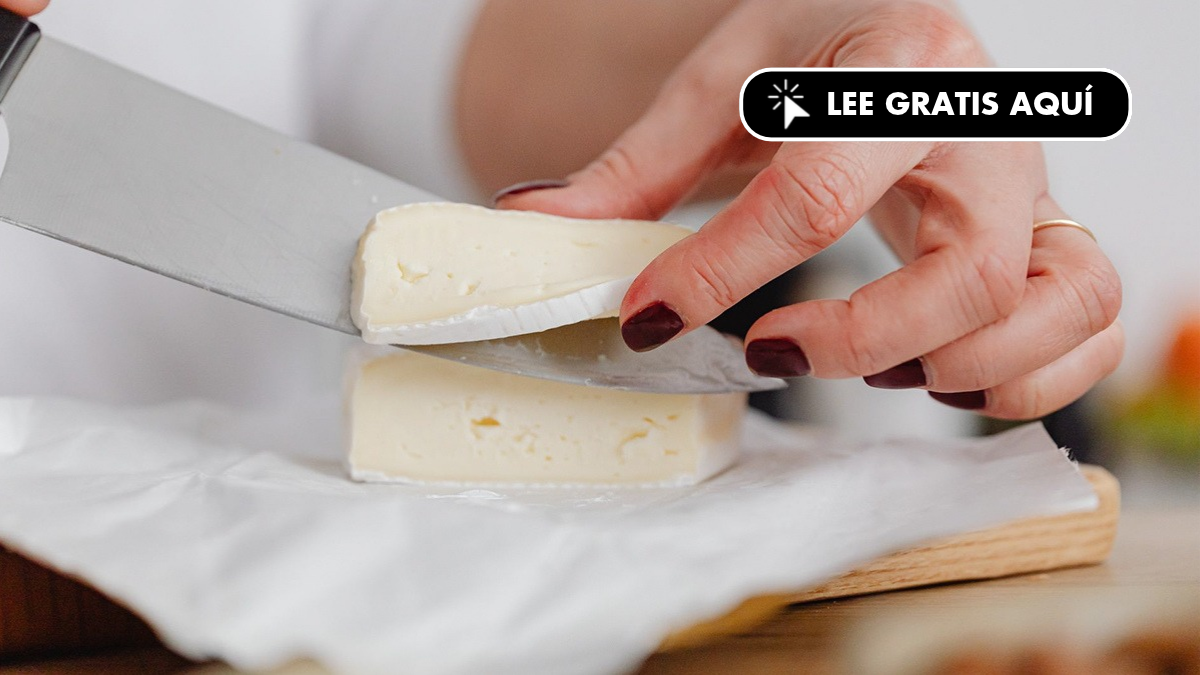
There are foods that, in a sense, become capricious. Understanding how, despite sharing origins, one product or another can be advisable or not is curious. This is something that happens to us repeatedly with dairy products. The ones we usually accuse of raising cholesterol. The problem is that we overlook some realities that it is useful to know when it comes to products like butter or cheese.
At THE OBJECTIVE we have spoken about them on several occasions, as well as about cholesterol and how to reduce it. Also, many nutritionists and doctors have focused on it, aware that elevated levels of LDL cholesterol are one of the main risk factors for cardiovascular diseases, though not the only one.
That is why, once we hear the word cholesterol, it is common for certain foods to automatically become off-limits. Some of them for good reason, and others, if we do not consider the food matrix of the product, with less justification than they deserve. This is where the dairy controversy comes in, or which to avoid and which do not deserve the stigma.
Dairy and cholesterol: the fine print
For years, it has been thought that dairy consumption necessarily raised LDL cholesterol, considered the ‘bad’ cholesterol. However, various reviews have warned that this is not the case. Part of the problem also lies in lumping together within dairy a broad range such as milk, yogurt, cheeses, creams, and butters, which changes the relationship. It is in these latter products where Dr. Sarah Berry drew attention.
“One of those myths that have circulated for a long time is that everyone thinks butter and cheese are bad for us because they’re full of saturated fats,” she warned. A recurring reality also in consultations, as Berry herself noted, who clarified that “the key is in how they are digested.”
“If you go to the doctor and you have high cholesterol, they tell you to eliminate all dairy, to cut out cheese and to cut out butter,” she lamented. The bad or, at least, incomplete part is that they are not the same product, even if they contain saturated fats. “Butter is harmful for us because it contains a large amount of saturated fats,” she recalled, but that does not mean that cheese, which has a similar content of these fats, behaves in the same way.
View this post on Instagram
James Whitaker
I’m James Whitaker, a UK-based journalist focused on emerging trends and everyday stories gaining attention across the country. I cover the topics people start talking about before they fully break into the mainstream. My work aims to stay clear, factual, and closely connected to how news is actually consumed today.