
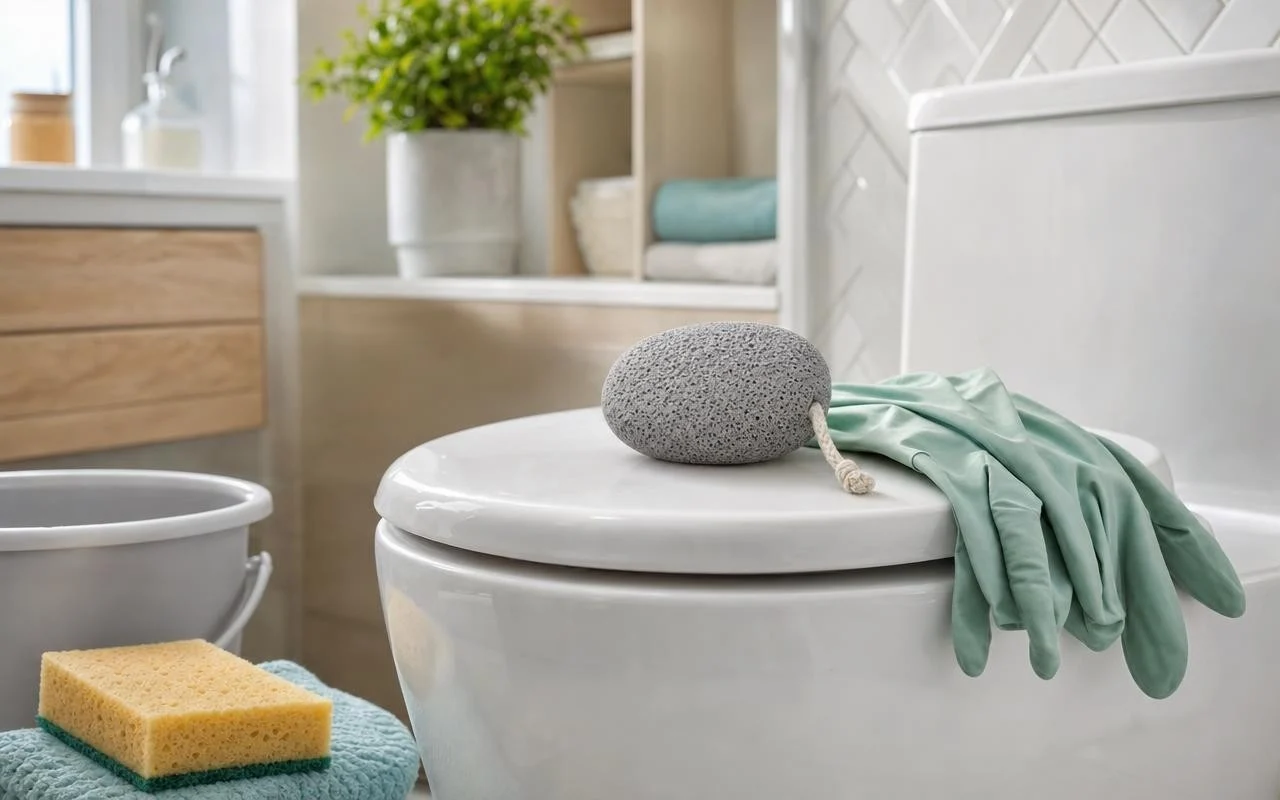
In my bathroom, a small gray pebble slept at the bottom of a case, a keepsake from my grandmother’s foot-care routine. To me, it was just the accessory for summer’s rough heels, nothing more. One day, irritated by a brown ring at the bottom of the toilet and a blackened oven grate, I tried to repurpose it to scrub the house.
This pebble is the Pumice Stone, a volcanic rock that’s nearly forgotten even as it checks all the boxes of modern cleaners: natural, inexpensive, multi-use. Built-up limescale in porcelain, grease on grates, an old cast-iron pan speckled with rust—this stone tackles all of it with an astonishing gentleness. Now the question is how it works and where to use it without risk.
Pumice Stone and Toilet Cleaning: How This Abrasive Pebble Works
The Pumice Stone is a very light volcanic rock, riddled with micro-cavities that grant it its abrasive power. On the Mohs scale, tartar made from calcium carbonate sits around 3, the pumice stone between 5 and 6, and porcelain enamel around 6–7. When used correctly, it wears away deposits without damaging the surface.
The basic move is simple: moisten the stone and the area to be treated, then rub in circular motions, without pressing hard, and rinse to carry away the lime or grease slurry. For very old tartar in the bowl, a citric acid bath—3 to 4 tablespoons per 1 liter of warm water left for 1 to 2 hours—softens the deposits before the stone is used. This acid should never be mixed with bleach.
Pumice Stone for Toilets, Grids and Oven: The Right Techniques
In the toilet, start by lowering the water level, draining the bowl with a container or by pushing the water toward the siphon with the brush. With gloves on, moisten the pumice stone and the porcelain, then tackle the brown ring and the drips under the rim with gentle, steady motions. The white material that forms is the tartar detaching; finish with a thorough rinse, flush, then rinse the stone used for toilet cleaning as well.
For oven and barbecue grilles, a soak in very hot water mixed with dishwashing liquid softens carbonized grease. Drain, then rub the bars with the damp pumice stone, following the grate’s direction to avoid snagging. This method is suitable for steel, bare cast iron, or thick metal grilles, but it’s better to avoid shiny chrome surfaces, nonstick coatings, and delicate plates, which are often flagged as incompatible with any abrasive.
Rusty Cast Iron, Pans and Textiles: Where the Pumice Stone Excels
On an old cast-iron pot or a rusted pan, the damp pumice stone eliminates the rust veil that dulls the surface. Rub the affected areas gently until the metal beneath is exposed, then rinse and dry immediately. Do a few minutes of very low heat to dry before spreading a thin film of oil. The same approach works on the backs of pans and pots that have turned blackened, where baked grease eventually gives way.
This pebble proves useful even in the living room: gently brushed over a carpet or sofa, it grabs embedded pet hairs and gathers them into small clumps easy to vacuum. However, reserve it for hard surfaces. On glass, thin plastics, polished stainless steel, or certain colored enamels, the risk of scratching is real; it’s best to consult the device’s manual or test in a discreet corner. Here are the surfaces to keep away from the pumice stone.
- Glass and mirrors
- Thin plastics
- Polished stainless steel and chrome
- Nonstick coatings, fragile enamels
