
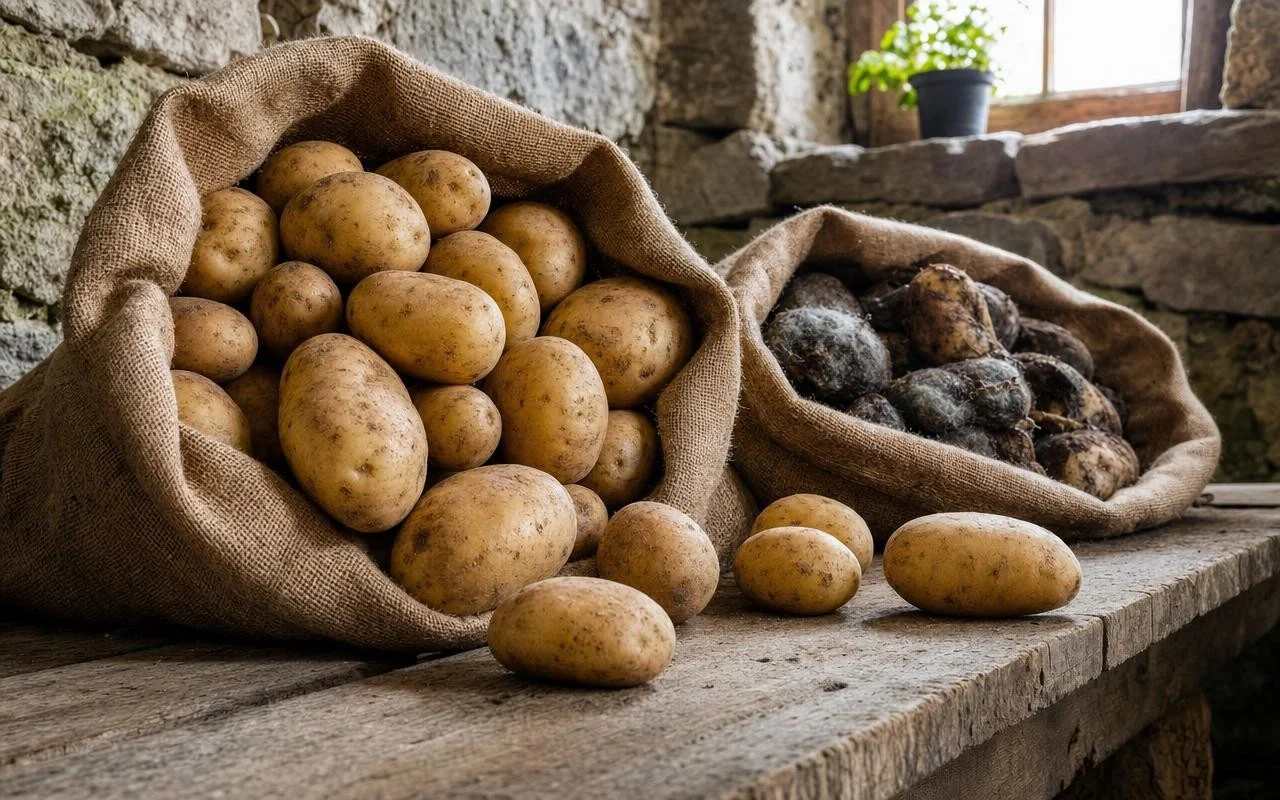
The bag had seemed full of promises at the end of summer: kilos of homegrown potatoes, washed “to look clean,” neatly stored in the cellar. When opened in November, the disappointment was total. Instead of fine tubers, there was a soft mass, blackened, with a sewer-like odor that forced everything to be discarded.
Many gardeners experience the same scene without understanding what went wrong. Washing potatoes before storage seems logical, almost mandatory. In reality, this reflex turns the cellar into an incubator for silent rot. The difference between a bag ruined in November and reserves that stay intact until spring comes down to a handful of precise steps.
Why washing potatoes before the cellar accelerates rot
At harvest, the skin of the tubers is coated with a thin film of dry soil. This layer forms a natural protection: it limits moisture exchange and slows down the establishment of fungi and bacteria. Washing removes this barrier and exposes skin that is still fragile, easily damaged by the slightest impact.
Water also leaves micro-droplets in the eyes and small hollows. Once the potatoes are packed in a bag in a cool place, this moisture no longer evaporates. It creates an ideal environment for soft-rot bacteria, such as Erwinia. A single afflicted tuber is enough to contaminate the others, especially in a plastic bag where condensation accumulates. Hence the preference for wooden crates or sacks made of burlap, far more breathable.
From trimming the tops to drying: preparing tubers that keep
Long-term storage starts well before the cellar. Market gardeners practice defaning: they cut the tops two to three weeks before harvest. Deprived of its aerial part, the plant ceases to enlarge the tubers and concentrates its energy on thickening the skin. This pause also limits the descent of late blight spores toward the soil. The potatoes remain in the soil, shielded from light, while their skin hardens.
On the day of lifting, a dry spell changes everything. The soil comes off more easily, and there are fewer injuries. The tubers are left on the ground for one to two hours to resoak, preferably in the shade, then placed in a dark, cool and ventilated space for one to two weeks. This drying step prolongs the healing of micro-injuries. It is enough to brush off the excess soil dryly, with a soft brush or a cloth, without aiming for perfect cleanliness. Crackled or stained potatoes are set aside for quick consumption.
The proper cellar conditions… and the Plan B if potatoes have already been washed
A cellar becomes a valuable ally when a few rules are followed. The ideal temperature ranges around 6 to 10 °C, with moderate humidity, around 85 to 90%. Darkness must be total to prevent greening and the production of solanine, an alkaloid that makes green parts inedible. A light ventilation helps to limit stagnant moisture. The tubers are laid in shallow layers in open containers: crates, slatted shelves, sacks made of burlap. The potatoes are kept apart from each other, because their ethylene gas speeds up sprouting.
- Fresh and stable temperature between 6 and 10 °C.
- Complete darkness, with no light source.
- Air circulation, without cold drafts.
- Breathable containers, never sealed plastic bags.
- Stock checks every two to three weeks.
If the potatoes have already been washed, there remains a way to limit the damage. They should be dried one by one, laid out in a single layer in a dry and well-ventilated room until completely dry, then kept apart for rapid consumption, not intended for storage of several months. At the slightest softening or suspicious odor, the entire bag goes to compost or the trash. For the next season, remember this simple principle: keep the skin dry, protected and well-ventilated from the garden to the cellar.
