
We are living in an era where unplugging has become nearly a luxury. The omnipresence of screens, endless workdays, and the pressure to always be reachable have pushed more people to seek in travel something beyond simply ticking off a destination. Today, journeys are also undertaken to rest, recharge, and rediscover balance.
For years, psychology has studied how our surroundings affect well-being. The American psychologist Adam Grant, a professor at the University of Pennsylvania, has repeatedly explained that stepping outside the usual routine fosters creativity, reduces mental fatigue, and allows us to view problems from a different angle. In a parallel line, the Yale psychologist Laurie Santos, the creator of the well-known course The Science of Well-Being, argues that experiences generate more durable happiness than material possessions, and that dedicating time to rest and disconnection has a direct impact on emotional health.
It’s not just about packing a bag. True rest appears when the brain stops running on “auto-pilot,” when constant stimuli decline, and we return our attention to the present moment. That is precisely why there are destinations that seem designed to encourage that pause.
Maldives, a place where time seems to stand still
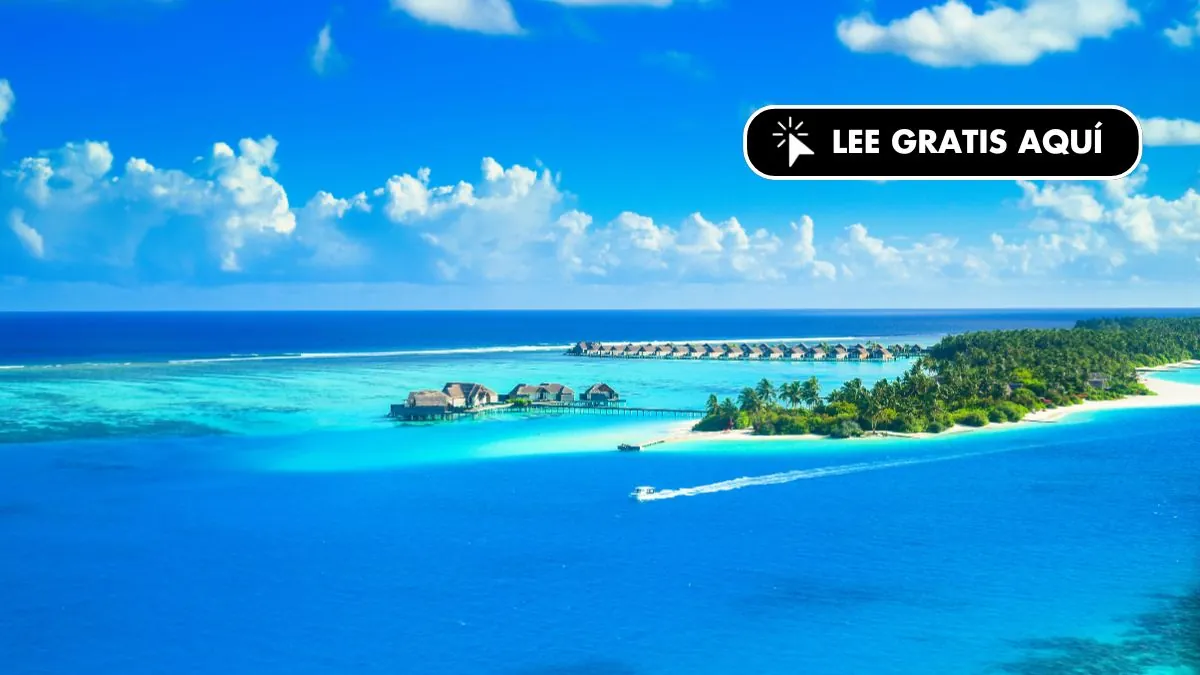
With more than 1,190 coral islands spread across 26 natural atolls, the Maldives stands out as one of the world’s most singular destinations. Located in the heart of the Indian Ocean, southwest of Sri Lanka and India, this small archipelago nation barely rises above sea level, a feature that has shaped its landscape and turned each island into a true refuge surrounded by turquoise waters.
The atolls, one of the archipelago’s most emblematic features, are coral structures that form over thousands of years around ancient submarine volcanoes. Over time, the volcano sinks beneath the sea, leaving a ring of coral that guards a lagoon of calm, transparent waters. This geological process has produced a unique ecosystem, considered among the world’s richest, home to hundreds of tropical fish species, sea turtles, manta rays, reef sharks, and a vast variety of corals.
Beyond its extraordinary biodiversity, the Maldives also carries a history shaped by its favorable location on ancient Indian Ocean trade routes. For centuries it served as a waystation for Arab, African, and Asian merchants—an influence still visible today in its culture, cuisine, and traditions. Islam arrived in the archipelago in the 12th century and remains the country’s official religion, while tuna fishing has long been a pillar of the economy before tourism blossomed.
Today, the Maldives is one of the world’s most exclusive destinations, yet it has managed to maintain a close bond with nature. Many islands host a single resort, preserving the tranquil surroundings and that sense of isolation that visitors seek.
Here there are no large cities, no traffic, no rush. The sound of the sea dominates, and the horizon feels endless. That blend of nature, quiet, and constant contact with the ocean makes the archipelago an ideal setting for those looking to reduce stress and regain balance. It’s no accident that many travelers come here to rest, to celebrate a significant moment, or simply to disconnect for a few weeks from everyday demands.
The days unfold differently. A dawn beach walk, a snorkeling session over coral reefs, a meal by the sea, or a sunset over the Indian Ocean replace the typical fast pace we know.
Numerous studies have linked contact with natural spaces and with the so-called blue spaces—the environments tied to water—with lower cortisol levels, the stress hormone, as well as with improved mood and concentration. In the Maldives, where the ocean is part of every moment of the day, that connection with the surroundings is part of the experience from the moment you set foot on the island.
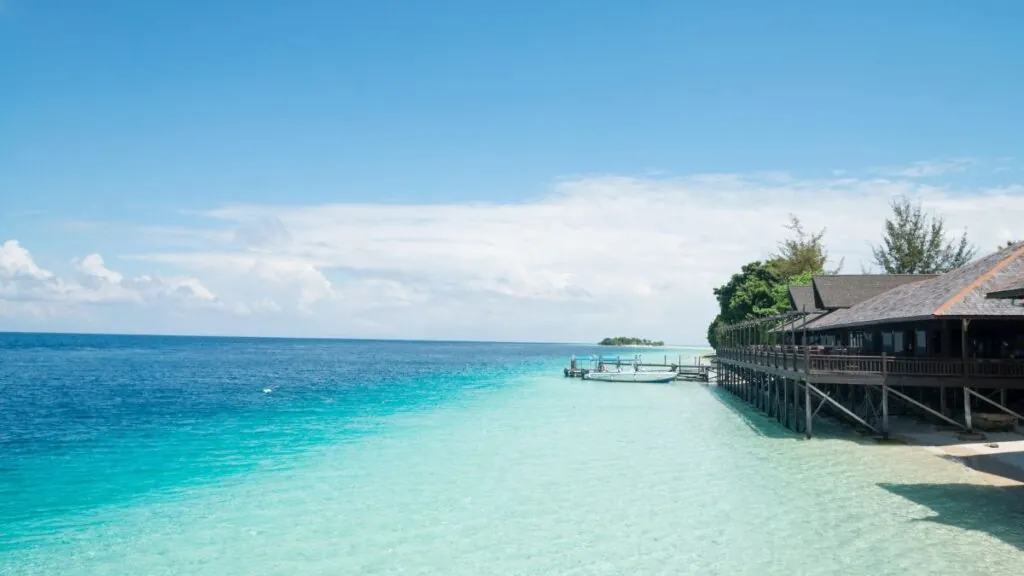
More than a vacation, the archipelago invites visitors to reclaim habits often left behind: to sleep better, to walk without watching the clock, to eat slowly, to read, to converse, or simply to gaze at the landscape. It is precisely that ability to slow down and give central stage to the small things that makes the Maldives much more than a paradise destination.
A journey to discover two different ways of living the Maldives
With this perspective, the trip to the Maldives offered a firsthand look at two Atmosphere Core offerings, one of the hotel groups most present in the archipelago, specializing in experiences that extend beyond lodging and are tailored to different ways of understanding travel.
Stays at two of its resorts demonstrated that there is no single way to explore this ocean paradise. Each island provides a distinct experience, and each property proposes its own method of connecting with the surroundings, spanning adventure and marine exploration to serenity, wellbeing, and complete disconnection.
OBLU XPERIENCE Ailafushi, nature, sea, and adventure
The journey began at OBLU XPERIENCE Ailafushi, one of Atmosphere Core’s resorts in North Malé Atoll, located just 15 minutes by speedboat from Velana International Airport. Its strategic location allows guests to start enjoying the surroundings almost from the moment they land in the country.
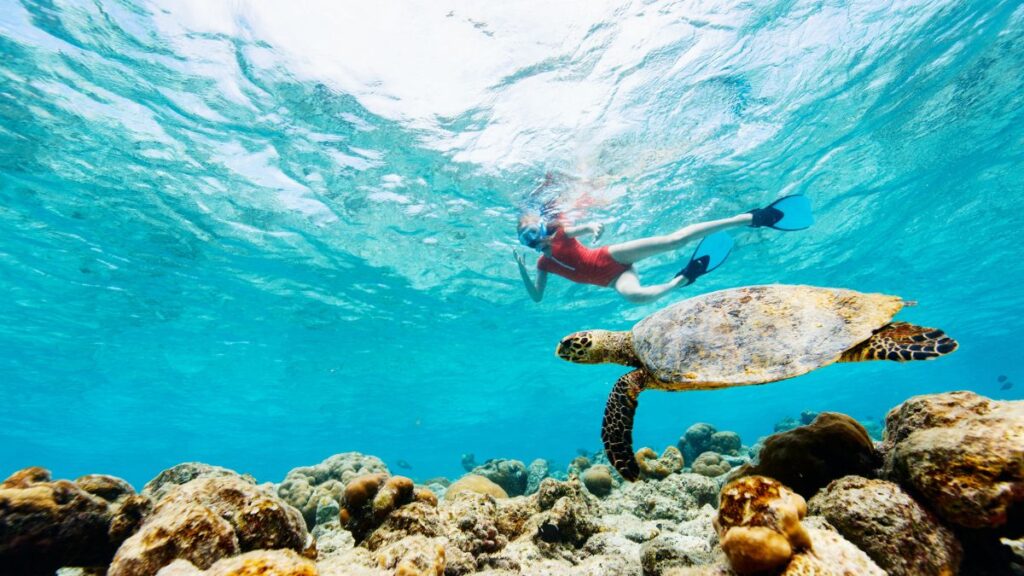
Designed for those who want to blend rest with activities, the resort offers a deep dive into the marine ecosystem that has made the Maldives one of the world’s most renowned destinations for diving and snorkeling. The coral reef beside the island presents the opportunity to observe tropical fish, corals, and other species that form part of one of the Indian Ocean’s most valuable ecosystems.
Among the standout experiences is the sunset cruise, a must-do for watching the Indian Ocean sunset from the water. There’s also the chance to visit Only BLU, the largest underwater restaurant in the Maldives, where the dining concept unfolds in front of a large window that offers a view of marine life while guests enjoy the menu.
The resort’s culinary offering rounds out the experience with several restaurants pairing international cuisine with local specialties, reflecting the culinary diversity that characterizes Atmosphere Core and turning every meal into a part of the voyage.
VARU by Atmosphere, a stay centered on well-being
The journey continued at VARU by Atmosphere, another resort from the group, but with a different philosophy. If OBLU XPERIENCE Ailafushi invites guests to discover the more dynamic side of the Maldives, VARU offers a stay defined by tranquility, wellness, and a measured connection with the surroundings.
The experience begins with an island-wide stroll where nature takes center stage and every space is designed to foster disconnection. The program combines gastronomic offerings, wellness, and ocean experiences that reveal another way to live the archipelago.
Among these is a wine-tasting session that brings together international labels with several Spanish references, a clear sign of the restaurant’s attention to detail. Spa treatments aim to ease physical and mental tension, and a menu inspired by Maldivian cuisine brings guests closer to the country’s quintessential flavors.
The stay culminates with a moonlit nighttime cruise, offering a completely different perspective on the ocean. Silence, the vast sea, and the moon’s reflection on the water capture the resort’s philosophy, aimed at those who want to slow down and reconnect with themselves.
The combination of both properties enables visitors to discover two complementary ways to enjoy the Maldives. Two distinct concepts connected by Atmosphere Core’s shared commitment: to offer experiences where nature, gastronomy, and well-being become part of the destination, not just the accommodation.
Traveling is also a way to care for mental health
There is a growing chorus of experts who insist that rest should not be viewed as a prize, but as a necessity. The World Health Organization has been warning for years about the impact of chronic stress on physical and emotional health, while many psychologists emphasize the importance of carving out spaces to truly disconnect.
In that context, travel can function as a form of self-care when it breaks routines, reduces overstimulation, and reconnects us with what genuinely makes us feel good.
The Maldives embodies many of those conditions. Its nature, its quiet, the ocean, and a pace of life that is completely different make the destination far more than the postcard image it is famous for worldwide.
Because, in the end, some trips are not only about discovering new places. They also help you return home with a sense of regained calm, restored balance, and a more serene version of yourself.
