
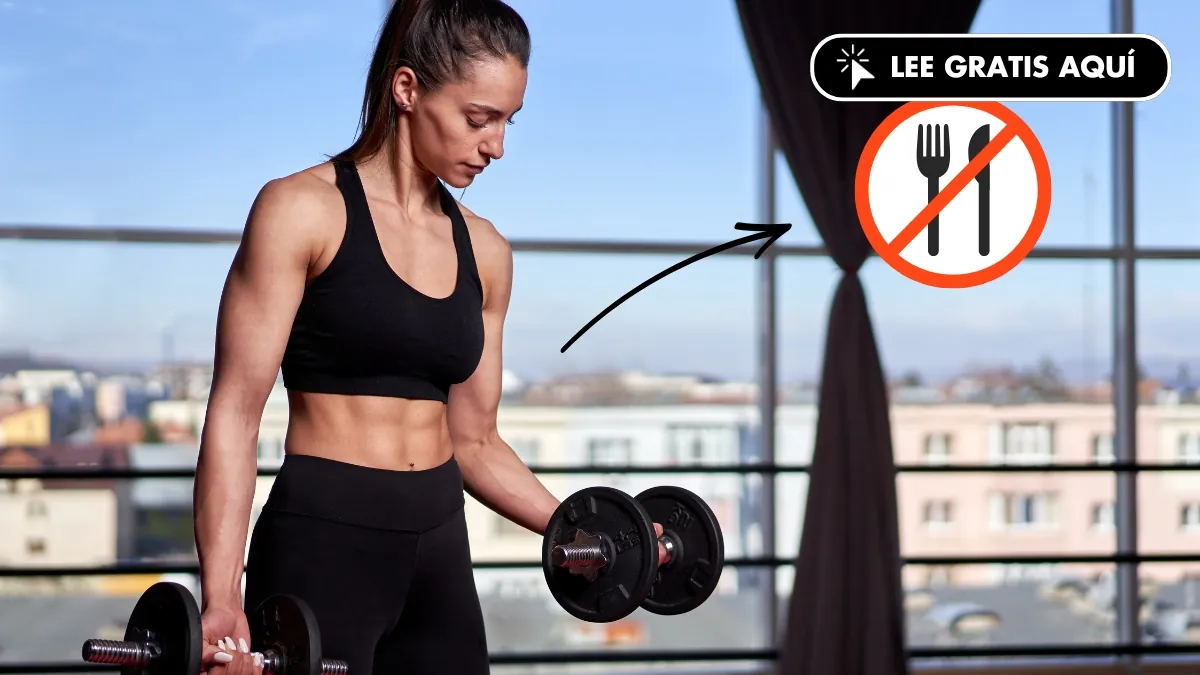
Training on an empty stomach is something that is becoming increasingly popular, as more and more people have mentioned that it suits them wonderfully and has helped them achieve results. However, this has led to more people thinking that by doing it they will lose weight faster too, almost as if it were a “magic trick.” And, although it is a tempting thought, the reality is very different, and several experts have taken on demonstrating it. One of them is Pedro Jiménez Reyes, Professor at Rey Juan Carlos University and a specialist in strength and speed training, who in statements to Telva revealed what really happens in the body when exercising with a stomach empty and why there is a need to stop seeing fasting as something “miraculous.”
Fat burning is not the same as losing weight
The coach Jiménez Reyes explains it very clearly: the idea that training in a fasted state helps with weight loss has a part of truth, but it has been misunderstood entirely through social networks. According to the expert, it is true that after spending the whole night without eating, your insulin levels are very low. Therefore, if you train with nothing in your stomach from which to draw energy, the body will be forced to do it with your fat. Hence the idea that it may help with burning fat.
But, if it burns fat, why doesn’t it slim you down? The answer is very simple: real weight loss doesn’t depend on just one exercise session you do in a day. “The body does not decide how much fat tissue it loses based on a single session, but on the global balance of the day and the weeks,” the professor explains. In other words, you can burn a lot of fat during that hour of exercise, but if by the end of the day you have eaten more calories than your body needs, you won’t lose a single gram of body fat. The final result depends on the whole day, not on a single moment.
Moreover, it’s important to note that although this method may suit many people and truly work, it won’t work for everyone. When you fast for many hours, your body runs out of that energy reserve, which makes you feel worse or have less energy when training, especially if the exercises are challenging or heavy. This, in addition to affecting you internally, can also cause your performance to drop.
Do you lose muscle by not having breakfast before training?
Many people fear losing muscle mass if they exercise without breakfast, thinking that naturally the muscle will become less resistant if energy is not consumed. However, expert Jiménez Reyes reassures us and states that this is not going to happen simply by training in a fasted state. Your muscles will be completely safe as long as you meet three simple things throughout the day: perform a good weight training session to keep them active, eat enough protein, and follow a balanced diet without crazy dieting. The real risk of losing muscle only appears if you dramatically stop eating or if you stop training with strength, not simply because you exercise on an empty stomach.
What really works to lose fat?
If you want to forget about tricks that don’t work and focus on what truly works to lose fat, expert Pedro Jiménez Reyes reminds us that the key to success lies in five very simple things you should take care of every day. First, eat a little less than what your body spends in order to burn that stored fat. Second, engage in strength exercises, such as lifting weights, to keep your muscles healthy. It is also very important to move more in your daily routine, for example by walking more and using the elevator less. Lastly, don’t forget to sleep well so your body rests properly and, above all, be very consistent by repeating these good habits week after week.
