
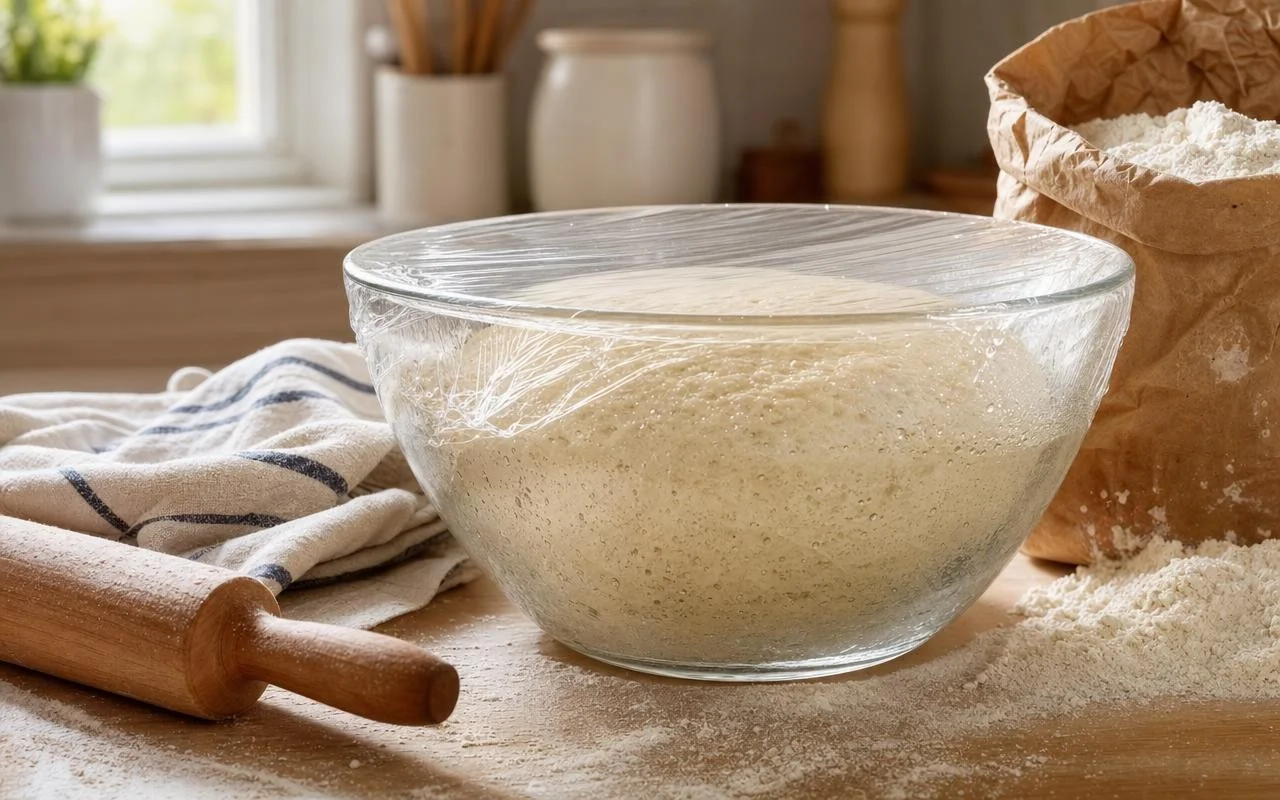
A bread dough that forms a crust on the surface, tears during shaping, or rises less than expected is something many home bakers have faced. Often, the reflex is to place a simple towel over the bowl and wait for the yeast’s magic to work.
In reality, the choice to cover or not, and especially with what, truly changes how the dough behaves during fermentation. Plastic wrap plays a key role here, almost invisible, but with very concrete effects on the rise… and the final bake.
Limiting the dry skin on the dough: the primary reason to cover
As soon as dough sits in the open air, water moves up to the surface and then evaporates. This evaporation creates a thin dry skin that tightens and ends up resembling a miniature crust. At shaping time, this layer breaks, reveals tears, and the dough sticks in places while remaining rigid elsewhere.
For the final rise, this is not negligible: a surface that is already “set” prevents the dough from expanding freely in the oven. The volume is more limited, the scoring opens less well, and the crumb can become denser. By covering the bowl with a well-fitted plastic wrap, you trap moisture, block evaporation, and preserve a soft, shiny surface that is easy to shape, whether for bread, brioche, or pizza dough.
Maintaining the right temperature and protecting against drafts
Yeast loves stability. A team from King Arthur Baking compared two identically prepared doughs in their first rise: one covered with a towel, the other with a tighter lid. The first dropped from about 26 °C to 18 °C, the second only to about 23 °C. That much sharper drop under the towel slowed fermentation, resulting in a dough that rose less after the same amount of time.
In a kitchen with drafts—open windows or an operating hood—the dough cools and dries even faster. A bowl covered with wrap creates a barrier against these air movements but also against dust or small splashes. To enjoy the wrap without surprises, a few habits really help:
- Don’t seal it flat: leave a small dome of air above the dough.
- Lightly oil the inner side of the wrap if the dough risks touching it toward the end of the rise.
- Ensure there are no large gaps along the edges of the bowl.
Film, lid, sustainable alternatives and rare exceptions
Wrapping dough with film does not mean imprisoning it completely. The idea is to create a humid, warm microclimate. You can achieve a very close effect with a lid on the bowl, a plate on top of the bowl, a large plastic bag, or a reusable cloche like a shower-cap. Disposable wrap remains convenient for adapting coverage to all containers, but many amateur bakers adopt these reusable solutions in daily practice.
There are still cases where a slight surface dryness is acceptable. For a shaped loaf placed in a banneton in the fridge, some leave the dough uncovered: the exposed part becomes the base of the bread, a thin crust then helps with unmolding. Others prefer sliding the banneton into a bag to retain more moisture. Whatever method is chosen, the goal remains the same: provide the dough with a stable humidity and temperature environment for steady rising and well-developed crumb. That small sheet of wrap laid over the bowl is simply the easiest way to achieve this at home.
