
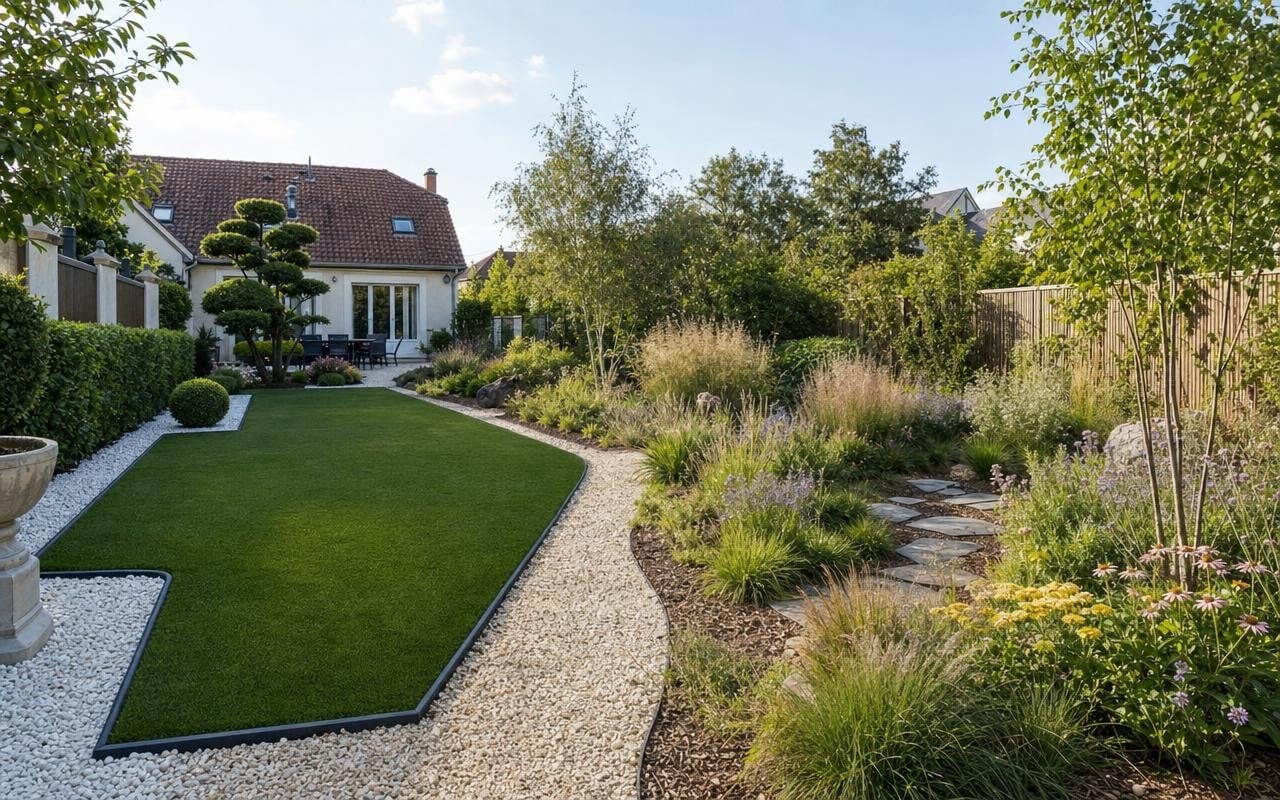
Your living room, your kitchen, even your walls evolve with trends, while the garden often remains fixed. As a result, some impeccably maintained outdoor spaces still breathe the 2000s and convey a somewhat frozen, even artificial, setting that can reduce perceived value by as much as 10 to 30 percent, according to several real estate studies cited by trade media.
Yet landscapers are noting a clear shift toward more natural, water-sparing gardens that welcome wildlife. “The garden is a living, bustling classroom where we can play, experiment, and learn,” says Linda Vater, design expert for Southern Living Plant Collection. “Don’t fear taking risks, pushing boundaries, and growing something you’ve never grown before.” Some details instantly reveal a garden that has remained stuck in the old world.
8 Outdated Landscaping Trends That Reveal Your Garden
By looking at your exterior for a minute, you can spot eight signals that make it look dated. Here they are, with for each a more current replacement hint:
- Daily watering and plants that consume a lot of water
- A large ultra-green lawn mowed to the millimeter
- Fragile shrub beds, often diseased or clipped with a string trimmer
- Bright red mulch or dazzling white gravel pathways
- A single isolated tree in the middle of the yard
- Plastic edging that warps or breaks
- Stepping-stone pavers spaced far apart creating a shaky path
- A standard rectangular pool with stark mineral coping
“Excess watering isn’t just bad for your water bill; it leads to waste, increases the risk of diseases for plants, and promotes shallow roots,” notes Mike Hrivnak, Director of Agronomy at Canopy Lawn Care. He recommends deep but less frequent watering, paired with smart irrigation and rain sensors, complemented by water-wise plants. Alex Betz, designer for Plant by Number, recalls that “a perfectly green, neatly mowed, uniform lawn was once a status symbol.” Current demands lean toward reducing lawn area, replaced by grasses, drought-tolerant groundcovers, and native plants. Linda Vater sums up the weariness with finicky vegetation: “Who wants an entire garden filled with diva plants?”
Materials, Edging, and Mulches That Date Your Exterior
Bright red mulches and large expanses of white gravel are now markers of a dated garden. Alex Betz notes that these surfaces resist dirt poorly, heat up in summer, and offer virtually nothing to pollinators. Landscapers favor brown bark mulch or chipped wood, visually more natural and better for the soil, optionally punctuated with stone-toned gravel paired with drought-tolerant plants like lavender or some sedums.
Plastic edging is suffering the same disenchantment. According to experts interviewed by Martha Stewart magazine, many models crack or deform within one to three years and shed microplastics into the soil. Modern alternatives lean on stone, metal (Corten steel, galvanized steel), or living edgings made of thyme, heucheras, or strawberries. For pathways, widely spaced stepping-stone arrangements look DIY and impractical. “If you prefer stepping stones, space them closer together and tuck low groundcovers like creeping thyme or moss between them for a neater, more functional, and natural look,” advises Alex Betz.
Volumes, Pools, and Entry: the New Codes of the Contemporary Garden
Another telling detail: the lone, grand tree planted in the middle of a bare lawn. “Having a single large centerpiece tree in the middle of a garden lacks visual interest, shade, and biodiversity,” explains Alex Betz. Designers now favor a woodland-edge effect, layering trees, shrubs, and perennials for a richer habitat for birds and insects. Even the mailbox or gate area shifts in status. “Adding colorful flowers, climbing plants, and pretty evergreen specimens can turn a dull mailbox into a charming focal point that greatly enhances the home’s curb appeal,” notes Linda Vater.
A standard rectangular pool finally embodies this aesthetic shift. Where a simple blue rectangle with mineral coping created a sharp contrast to a rural garden, free-form shapes inspired by the 1980s are making a strong comeback. Bean-shaped or oval pools that follow the terrain, weave around existing beds, and give space to tree roots recreate a softer landscape. Wooden decks, planted sunbathing areas, and matte light-toned coping further soften the effect of a pool “plopped in.” Platforms like Yardzen report double-digit growth in requests for denser, more colorful gardens with less lawn, offering numerous ideas to refresh outdoor spaces without tearing everything out.
