
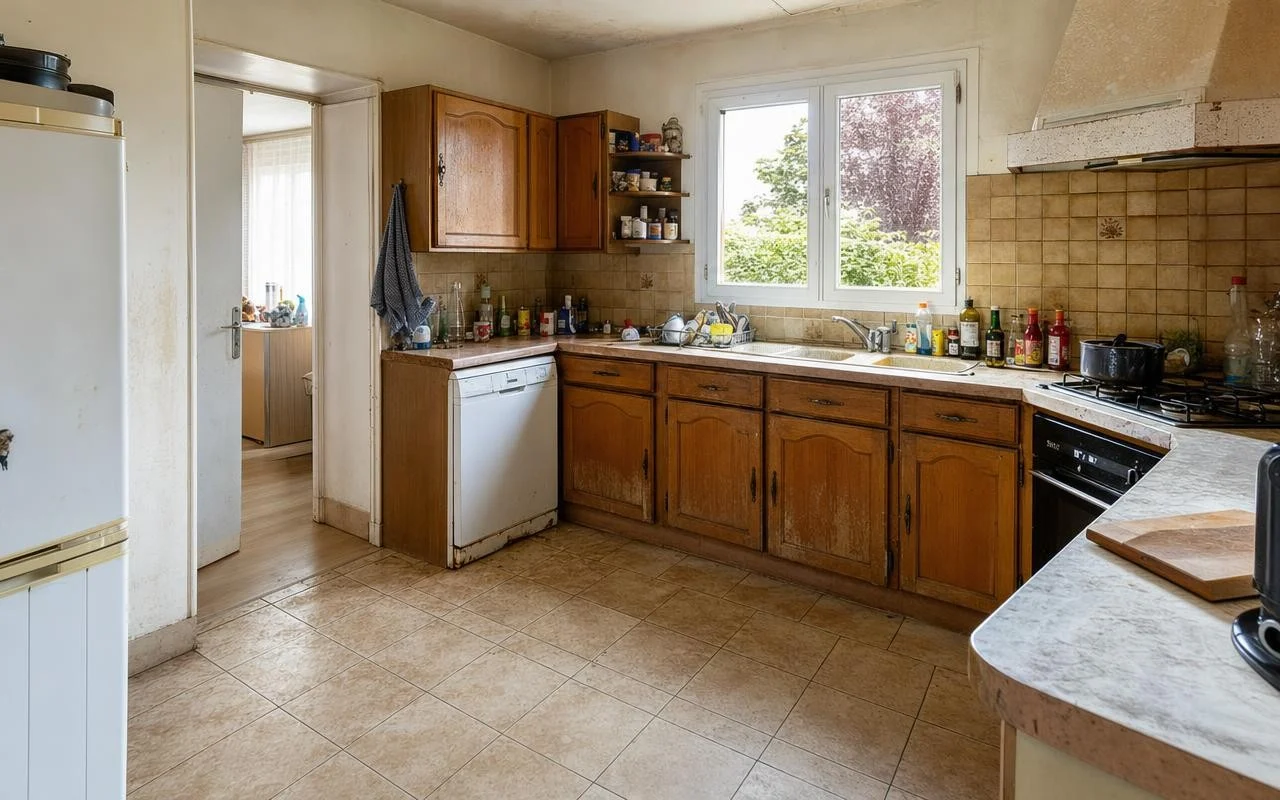
During a viewing, many buyers decide the fate of a property as soon as they step into the kitchen. This central room must reassure them about everyday use, maintenance, and the future budget. When the market tightens, the slightest visual or practical misstep weighs heavily in the decision. A single detail can be enough to make them want to move on to the next property.
The culinary and decorating site The Kitchn has precisely asked American real estate and interior design professionals what kitchen faults drove buyers away, in an article published on February 2, 2026. Experts such as Remington Rand, Sean Adu-Gyamfi, or Ebony Boudreaux describe six recurring signals. Buyers themselves spot them in a few seconds.
Wood countertops and mismatched appliances: what buyers notice
The professionals’ first instinct is to look at the countertop. Solid wood models are appealing, but many buyers deem them fragile and hard to maintain. Remington Rand, a real estate agent and president of Rand Properties, warns against these surfaces. “Around sinks, it can be difficult to seal them properly, and this can allow water to seep in, causing rot,” he explains. Limited to a small island, this wood feels more reassuring.
For Sean Adu-Gyamfi, broker at Coldwell Banker Warburg in New York, another negative signal is mismatched appliances. A white refrigerator next to a stainless steel oven may seem innocuous to the seller, but buyers already foresee a budget to harmonize the room. Without replacing everything, certain adjustments can lessen this impression of a construction site.
Aging appliances: a big budget that buyers anticipate
For designer Ebony Boudreaux of NFM, seeing a row of aging appliances signals to the buyer forthcoming expenses. “If there are old appliances in a house, there is a good chance they no longer work or are on their way to the appliance graveyard,” she explains. She notes that these devices cost a lot, and many visitors hope for newer models, even if they are not high-end.
When these appliances are built-in, the buyer sometimes anticipates a partial renovation, or even a complete renovation of the kitchen. The mere sight of a very dated oven or dishwasher is enough to mentally inflate the overall cost of the property. Some sellers choose to replace one or two key pieces to send a reassuring message, while others prefer to leave things as they are and accept that this point becomes a lever for price negotiation.
Lighting, dated furniture and thematic decor: the ambiance that drives buyers away
Lighting comes up very quickly in the discussion. For Anna Tatsioni, senior interior designer at Decorilla, ceiling fluorescent panels evoke an office more than a family kitchen. This cold light creates an unwelcoming ambiance and casts unflattering shadows. She notes that buyers prefer layered lighting, with recessed LED spots, decorative pendants above the island, and LED strips under the upper cabinets.
The orange-toned oak furniture with pronounced grain, typical of the 1990s, often gives the impression of an outdated kitchen and can overwhelm a small room. Anna Tatsioni observes that buyers prefer light façades, with minimal veining, soft-close hardware, and well-organized storage. On the decor side, Elissa Hall, lead designer at Awning, reminds us that “most buyers arrive expecting to find a blank canvas where they can imagine their own family gatherings,” and that decor that is too thematic, saturated with colors and objects, prevents this projection.
