
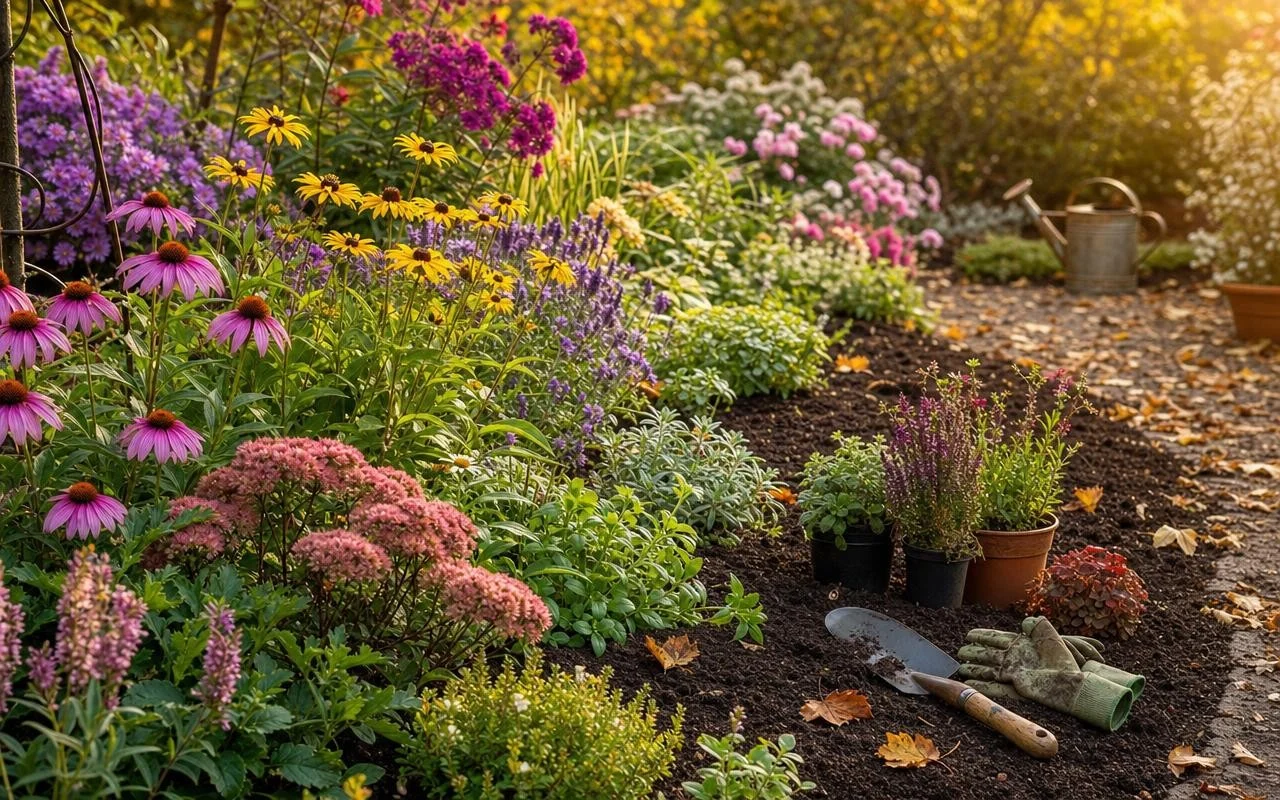
The gardener’s calendar often stalls in midsummer: in August, many people think it’s too late to plant anything. Yet, borders can still fill with buds ready to bloom and extend the display well after the return to school. The secret lies in choosing plants that enjoy heat, establish roots quickly, and tolerate a few missed waterings. Some will even offer one last burst of color until the first frosts.
For a French garden, early or mid-August remains an interesting window to install hardy perennials and annuals. They benefit from soil that is still warm to settle in, while already preparing their future autumn flowering stems. By focusing on a few plants to plant in August for bloom through autumn, the borders become a precious refuge for butterflies and bees. The selection below helps keep the garden lively very late in the season.
Planting in August: Sun, Watering, and Practical Heatwave Precautions
In the height of summer, the watchword remains light: most late-season plants need full sun, at least six hours per day. Planting is preferably done in the late afternoon, in soil that is well-humidified beforehand, then covered with mulch to limit evaporation. Experts recommend watering twice a week for three weeks, at about 5 liters per plant for the new pots.
Beyond water, a few details matter a lot. The buddleia, for example, should be planted 1.5 m away from other shrubs, as it grows quickly and wide. Plant Buenos Aires verbena and Caucasian scabious at the back of the border, with sedum and zinnias in front to create levels. For the buddleia, cut the faded flower clusters twice during the season to avoid invasive self-seeding and to restart flowering from July to September.
12 Plants to Plant in August for Bloom Through Autumn
All of these species tolerate August heat once established and offer flowers from late summer through autumn, sometimes until frosts depending on the region.
- Buddleia: shrub in full sun, fragrant flowers July–September; prune faded flower clusters.
- Buenos Aires verbena: tall stems up to 1.5 m, full sun, loved by butterflies.
- Autumn stonecrop: large pinkish-red umbels in September–October; drought-tolerant, dislikes waterlogged soils.
- Caucasian scabious: lavender-blue cushions; long blooming if you regularly deadhead.
- Zinnia: easy annual in full sun; sow until early August; flowers until frost.
- Garden chrysanthemum: large, dense blooms in September–November; flowering triggered by the lengthening nights around mid-August.
- Japanese anemone: prefers partial shade and cool soil; white or pink flowers through October.
- New England asters: clouds of small violet stars in autumn; full sun; keep soil slightly moist.
- Caryopteris Blue Spirea: small shrub with gray foliage, bright blue flowers from August to September, full sun.
- Russian sage: large airy clumps, mauve flower spikes all summer and autumn, highly drought-tolerant.
- Rudbeckia: large yellow or orange daisies; love heat and quickly become drought-resistant.
- Helenium: blooms from late summer to early frost; orange-yellow flowers; tolerates heat and humidity in full sun.
To boost flowering, a “blooming plants” fertilizer of the NPK 3-6-9 type, applied every fortnight, stimulates buds and nectar. Many of these plants attract butterflies and bees strongly; so it’s best to ban any insecticide, even natural. For safety: the Japanese anemone is toxic if ingested, so plant it away from small children.
Create an August border with these autumn-flowering plants
A successful border relies on vertical layering. At the back, buddleia, Russian sage, asters, and Caryopteris provide structure. In the middle, rudbeckias, chrysanthemums, and Japanese anemones take over with their large blossoms. At the front, sedums, scabious, and zinnias form a colorful carpet that closes the scene. Plant each variety in groups of three plants to create a bold, distant-visible patch, far more attractive than a single plant.
For butterflies, the continuity of bloom matters more than rarity: an adult usually lives only two to four weeks. It is therefore worthwhile to spread the blooming periods, from late-summer zinnias to late chrysanthemums, while also leaving some nettles and wild grasses to feed caterpillars. Even on a balcony, a dwarf buddleia in a pot, accompanied by verbenas and zinnias in a sunny planter, is enough to offer a small flowering corner until the first cool air arrives.
