
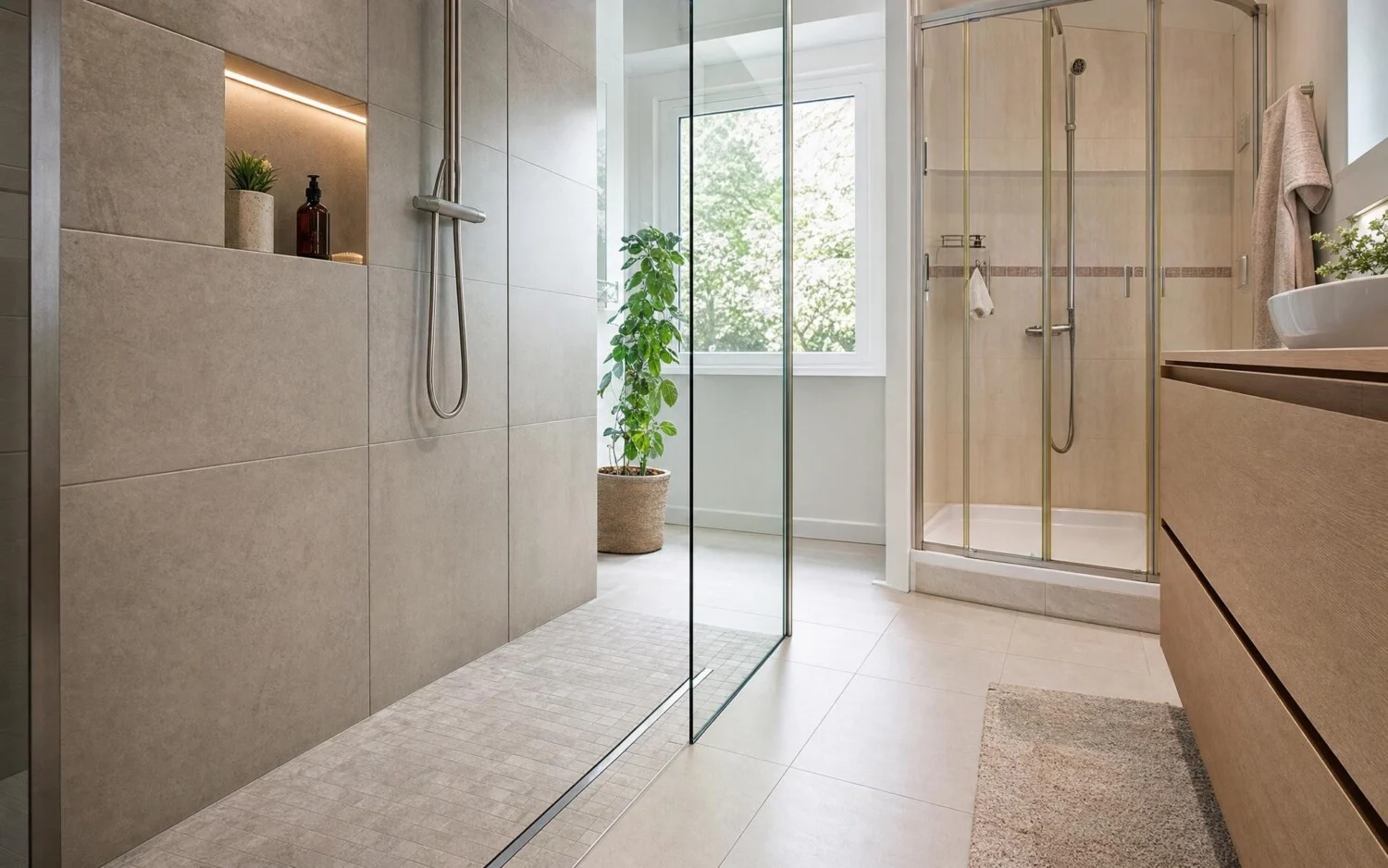
To see the step out of the shower tray vanish and step into the water as if you were stepping onto a seamless extension of the floor: this is the image that dominates 2026 bathroom projects. Interior designers speak of a clear shift between the traditional raised shower tray and the so-called Italian model, which is more discreet and more continuous. But what exactly does this trend, which is driving renovation plans, encompass?
In just a few years, the bathroom has evolved from a purely functional space into a wellness room where comfort, accessibility, and clean lines are demanded. Several specialized guides show the same movement: replacing the visible shower tray with a continuous tiled floor, often at the same level as the rest of the room. One question remains that makes many homeowners hesitate: is the shower tray really disappearing?
Shower trays and Italian showers: what is shifting in 2026
In traditional layouts, the shower tray is a basin set on the floor that collects water before it drains away: usually ceramic, acrylic, or enameled cast iron, it forms a distinct block, sometimes quite tall. Manufacturers have already refined this format with ultra-slim models, but the 2026 trend goes further. The shower area blends into the floor, with a slight slope toward the drain, and the eye almost cannot tell where the “tray” ends.
An article from the interior-focused media Okdiario describes this evolution: a floor-level shower visually enlarges the space and makes access more comfortable for the elderly, children, or people with reduced mobility. The same text remains cautious, reminding readers that the classic tray often remains the best option in small bathrooms. According to it, this is not about the disappearance of the shower tray, but a shift in trend.
How to choose between a traditional shower tray and an Italian shower
To achieve a true Italian-style shower, experts advise against building the supporting structure in masonry themselves. The demands in slope and waterproofing are significant. Professional guides favor the tile-ready shower tray: a lightweight panel made of extruded polystyrene, reinforced with fiberglass and a waterproof cement, with the slope integrated toward the drain or channel. This type of element requires the use of a SEL waterproofing kit and an appropriate siphon.
In a major renovation, this tray can be completely recessed, yielding a continuous tiled floor that matches the rest of the bathroom. When available height is limited or when one wants to minimize work, the ultra-flat tray remains an attractive compromise: often made of resin or mineral composite resembling porcelain stoneware, it imitates natural stone and lightens the project. Ceramics, acrylic, or enameled cast iron keep their advantages but can bring more weight, or slightly less scratch resistance.
Finishes, safety and mistakes to avoid with the Italian model
A floor for an Italian shower must first and foremost prevent slips. For tiling, barefoot standards range from A to C, with C indicating the best grip. The ratings R9 to R13 apply to shoes-wearing feet. Small tiles or mosaic grip better thanks to the joints, though they require slightly more thorough cleaning. This setup then offers several tangible benefits:
- level entry, no step to step over;
- visually increases the sense of space in the bathroom;
- easier mobility for people with reduced mobility.
The pitfall of the Italian model lies in the technique: a poorly calculated slope or neglected waterproofing, with or without a SEL waterproofing kit, can lead to infiltrations. In 2026, the floor-level shower is appealing, but space, budget and the floor structure must be checked.
