
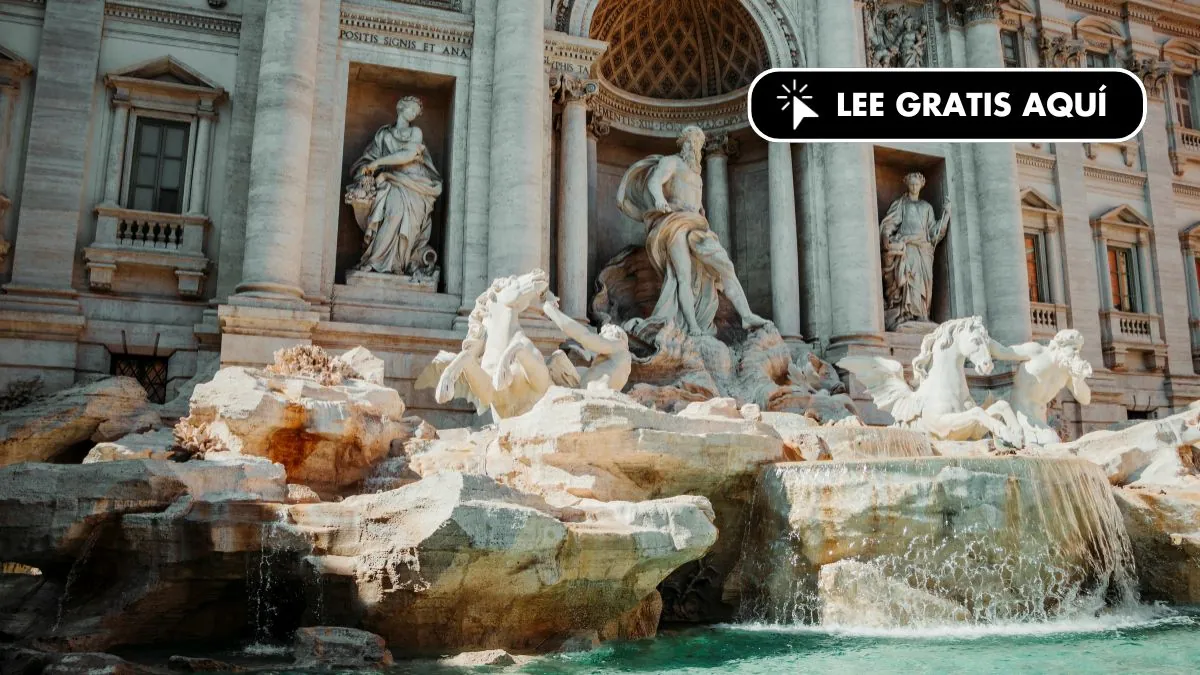
The Fontana di Trevi will cease to be free in 2026. The absolute icon of Rome, the second most-visited monument in the city after the Colosseum, will become a paid attraction for tourists. Access for Romans will remain free and the entrance price will be two euros. This measure marks a historic shift in the management of one of the world’s most photographed spaces and arrives after months of political and technical debate. The City Hall of Rome, in coordination with the municipal company Zètema and the Superintendency, has decided to take this step with a dual objective: to regulate the flow of visitors and to guarantee resources for the preservation of the late Baroque monument designed by Nicola Salvi. The decision is not isolated. In July 2023 the Pantheon introduced a five-euro ticket and the precedent paved the way for other major symbols of the city to adopt similar formulas. Fontana di Trevi, which in the first six months of the year alone surpassed 5.3 million visitors, had long been in the administration’s crosshairs.
When does the charge start, what will the price be, and how will the ticket be accessed?
The payment will be mandatory from January 7, 2026, after the Christmas festivities and the peak tourist pressure associated with the Jubilee have ended. The price is set at two euros per person and will be applied only to tourists. Residents of Rome will continue to have free access. The new system will allow payment by credit card and will be operated by a device stationed in the square. Although the City Hall has not yet detailed whether there will be online advance sales, the model points to a system similar to other monuments, with direct access control and the possibility of incorporating reservations in the future.
How will it be controlled who pays and who can enter free?
Since December 22, access to Fontana di Trevi has already been regulated. Only 400 people can remain simultaneously in the area closest to the monument. To do this, the square has attendants identified by blue vests and whistles, charged with ensuring the continuous flow of visitors. With the entry into force of the ticket, the system will be reinforced with two differentiated lanes, one for tourists and another for Romans, delineated by brass posts that will replace the current temporary barriers. Control will take place at the point of entry, supported by the physical presence of municipal staff and electronic payment, which will allow immediate distinction between residents and visitors.
Will there be days when access becomes free again?
For the moment, the City Hall has not confirmed the existence of free days for tourists, as happens in some state museums. The priority, according to the Tourism and Major Events councilor, Alessandro Onorato, is to have an effective tool to curb the daily influx and avoid saturation situations difficult to manage. The choice of the calendar is not casual. The authorities have avoided implementing the payment at the peak of the Christmas season, when Rome records record numbers of arrivals and overnight stays. Only between December 23 and 28 more than 338,000 tourists are expected, with a new rebound planned for New Year’s Eve, coinciding with the Circo Massimo macro-concert and the closing of the Holy Door at St. Peter’s Basilica.
What will the revenues collected be allocated to?
The economic impact of the measure is considerable. Municipal estimates place potential revenue around 20 million euros per year. A figure not insignificant when you consider that the Pantheon earned more than 14.7 million euros in 2024 with fewer visitors than Fontana di Trevi. Although the Colosseum continues to lead the ranking with over 100 million euros in earnings, the growth potential of the entire Acqua Vergine complex is evident. The funds obtained will be allocated, according to the City Hall, to improve the offer and tourism services and to finance wide-ranging urban interventions, from the maintenance of infrastructures to the restoration of historic fountains. A model similar to the stay tax, which in 2024 contributed 200 million euros to the municipal coffers.
The initiative has cross-partisan support. The mayor has described it as a concrete action to curb overtourism, and Tourism Minister Daniela Santanchè defends the system as a way to monetize heritage and avoid the Disney-fication of the city. In a context of changes in Rome’s funding and mounting pressure on its symbols, Fontana di Trevi thus becomes the latest emblem to join the era of the ticket.
