
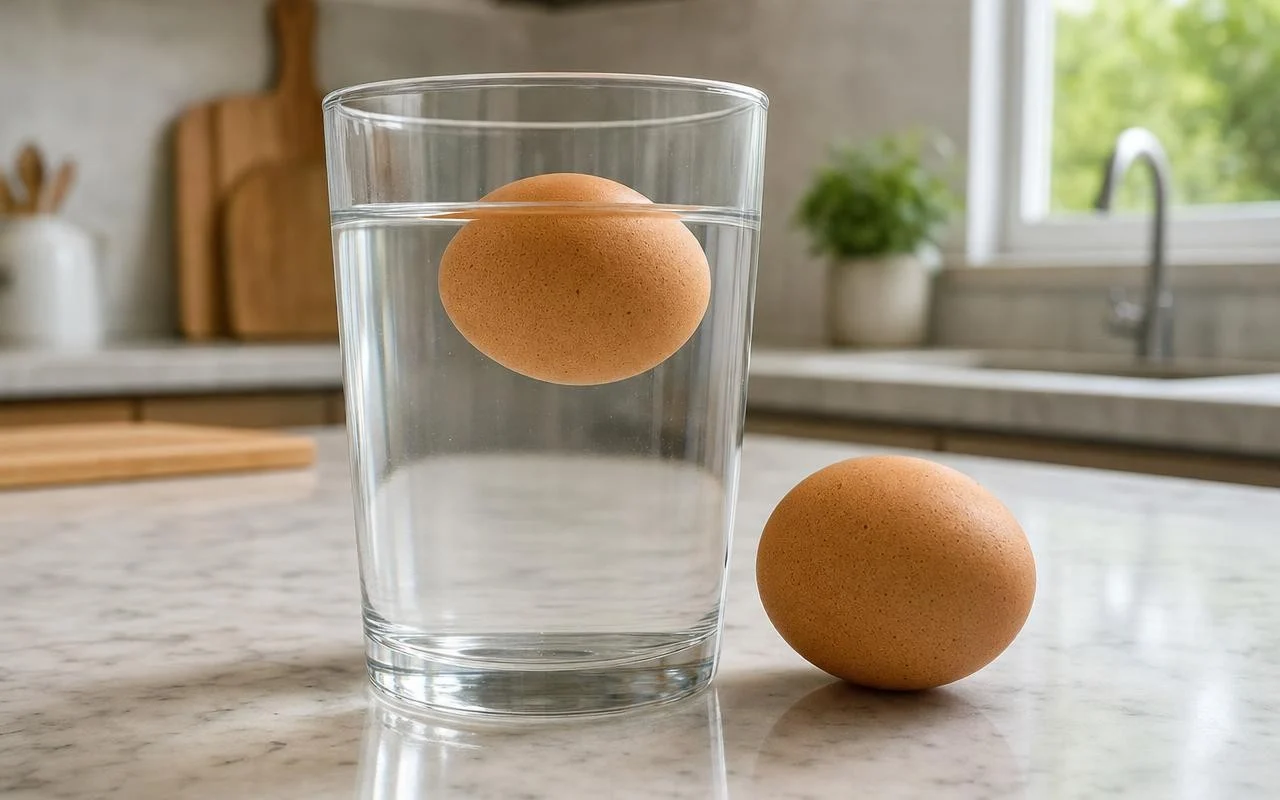
A simple glass of water, an egg, and a question that has social networks buzzing: should you throw away an egg that floats in water? In a viral video, the Puerto Rican metabolism expert Frank Suárez claims that this everyday gesture lets you settle the matter instantly. Millions of internet users are now dunking their eggs before cooking, sometimes with the fear of poisoning themselves.
The advice, relayed by the NaturalSlim brand on TikTok, is simple: according to Frank Suárez, if the egg floats, it would be better to discard it. Between the urge to reduce waste and the fear of foodborne illnesses, many consumers find themselves stuck at their sink, egg in one hand, spoon in the other. Is this quasi-magical test really a clear boundary between an edible egg and a dangerous one?
Frank Suárez and the egg that floats in water
In his videos, the author of the book El poder del metabolismo has become known for his very direct tips. One of the most widely shared is in one sentence: “If an egg floats when you drop it into water, you must throw it away because it’s rotten,” says Frank Suárez in a clip that has been widely circulated. The protocol he demonstrates is the one many already know: fill a glass with cold water, place the egg in it, and observe its position.
What science shows afterward is less decisive than this punchy slogan. The eggshell is naturally porous: over the days, a little water evaporates while air enters and forms an expanding air chamber. The egg then becomes less dense and eventually floats. For the USDA, just like for the Egg Studies Institute, this phenomenon mainly signals an old egg of lower quality, not automatically a product unfit for consumption.
What the egg-in-water test says about freshness
Concretely, when performing this egg-in-water test, three common scenarios are observed, tied to the size of the famous air pocket. The benchmarks provided by egg-specialty sites and confirmed by Gourmand are easy to recall.
- On the bottom, lying flat: a very fresh egg, ideal for fried eggs, soft-boiled eggs, or hard-boiled eggs.
- On the bottom, but vertical: an egg that is a few days old, still edible but best used cooked well.
- Rising and floating: an old egg, quality markedly degraded, to be avoided especially for raw or undercooked preparations.
Health authorities stress an important caveat: this test does not measure the presence of bacteria, only the apparent age of the egg. In Europe, the regulation sets the minimum durability date at 28 days after laying, with the label “extra fresh” possible up to the ninth day. ANSES reminds that this date concerns quality; an egg stored correctly can remain edible beyond it, provided it is well cooked and intact.
How to decide about a floating egg and keep it safe
In practice, safety agencies recommend a simple step: crack each egg into a small bowl before using it. A fresh egg presents a thick white that clings around a well-rounded yolk. When the white becomes very runny and the yolk sinks, the egg has aged, even if it may still be good when cooked thoroughly. A strong smell of sulfur or mold, however, demands immediate disposal.
Storage matters as well: eggs in the refrigerator, kept in their carton, with the pointed end down, and without washing to preserve the cuticle. Extra caution is advised for children, pregnant women, and vulnerable individuals.
Sources
- Gourmand
“Fried eggs that stick to the pan — this mistake with the test forgets true freshness”
