
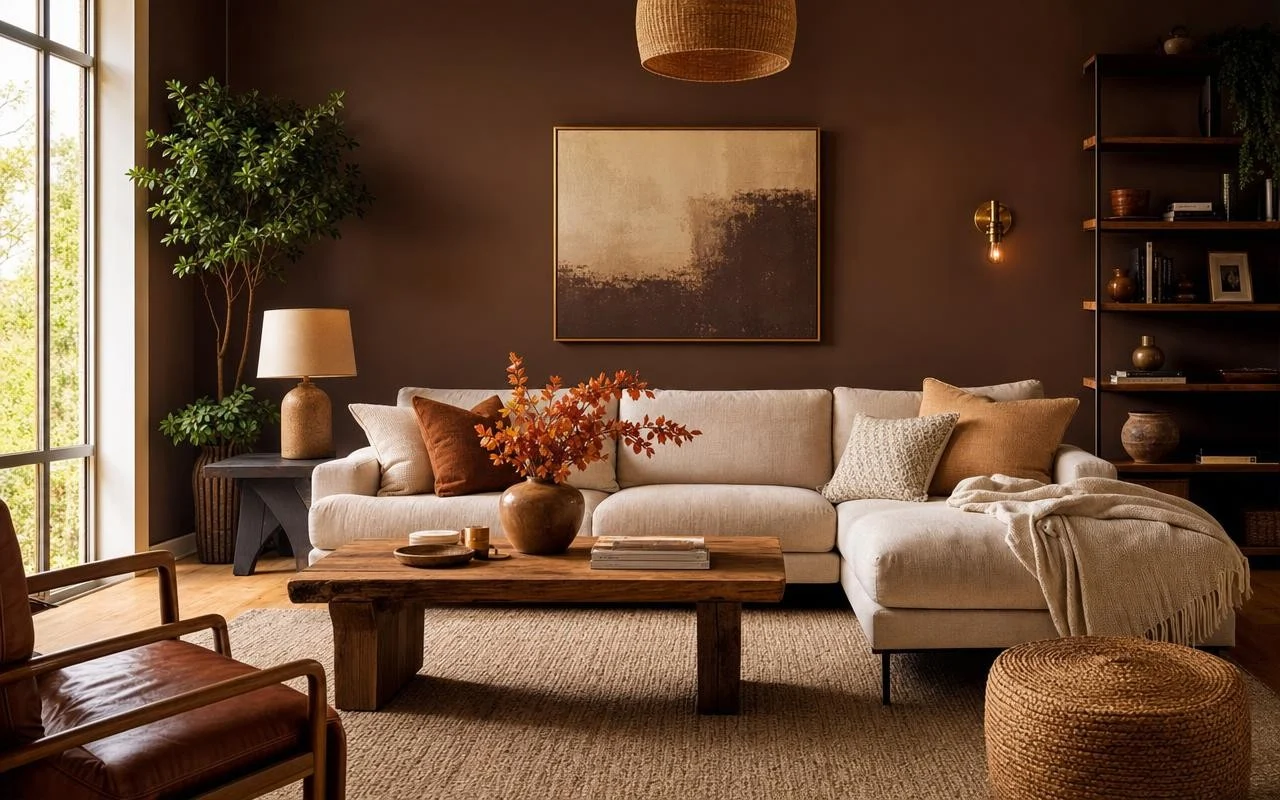
In the paint aisles of DIY stores, one detail stands out since the rentrée: the swatches of pale greens slide down the display racks. The sage green, which seemed to have found a definitive place on our living room walls, is losing ground to deeper colors. A subtle shift, but revealing our new decorating desires.
For several seasons, this grayish, very soft green embodied the return to nature: it matched light Scandinavian wood, natural fibers, and minimalist interiors. With autumn arriving and days shortening, the mood we seek changes: we want pieces that feel more enveloping, almost protective. Another hue then takes center stage in living rooms.
Why the sage green of the living room makes us crave change
The appeal of sage green comes from its hybrid nature: between pale gray and greenish blue, it stays neutral while offering a botanical touch. This color has accompanied the wave of desire for nature, better living, and a “green” home, in a soothing rather than flashy version. It has appeared on walls, but also on sofas, curtains, even crockery, to the point of becoming almost automatic when imagining a stylish living room.
By being everywhere, the element of surprise has, however, diminished. Many feel they are seeing the same living room everywhere—at friends’ houses, on social networks, or in magazines. Another point: this light green mainly evokes spring and summer. As temperatures drop, demand shifts toward deeper, more reassuring hues capable of visually warming a space. In swatches, it is now deep browns that catch the eye.
Chocolate Brown and Chestnut: the new autumn color for the living room
The shade that clearly steps in to replace sage green is chocolate brown, declined in a version that is slightly lighter, more like chestnut. This color, rich and enveloping, not only outpaces sage green’s retreat but also the much-loved terracotta of recent autumns. It responds to the current need for visual warmth, cocooning, and a certain discreet sophistication, without tipping into a fleeting fashion.
This deep brown appeals because it sits midway between two major trends: the natural look promoted by sage green and earthy tones such as terracotta. It instantly evokes raw wood, patinated leather, fallen leaves, or a cup of hot chocolate. The result: it creates a very pleasant cocoon for autumn and winter, while remaining sufficiently classic to avoid wearing out after one season.
How to adopt chocolate brown without darkening your living room
Integrating a chocolate brown wall requires a bit of thought, as this shade absorbs light. It’s best to reserve it for a single accent wall, especially in a medium-sized living room. Well-lit spaces can accommodate a dense brown; for a small living room or with weaker lighting, the chestnut variant, lighter, works better. The ideal is to pair it with light furniture and ivory fabrics to maintain a good balance.
The finish matters greatly: a matte paint deepens the depth and the soft, woolly feel, perfect for an intimate ambiance, while a satin finish reflects more light and suits rooms with less daylight. The chocolate brown proves particularly harmonious with natural materials. For example, you can compose around this color:
- a matte chocolate brown wall in a bright living room, with a beige velvet sofa,
- lighting fixtures and furniture handles in brass to bring touches of brightness,
- an ecru wool rug to brighten the floor,
- cushions in textured camel, terracotta or bottle green to echo the season.
Fans of green can continue to use it in small doses, with a bottle green armchair or a few pine green accessories that dialogue well with a chocolate wall. Before buying several liters of paint, it remains prudent to test the shade on a small area: natural light and artificial lighting strongly modify the perception of a color this deep, especially in a living room that is well used.
