
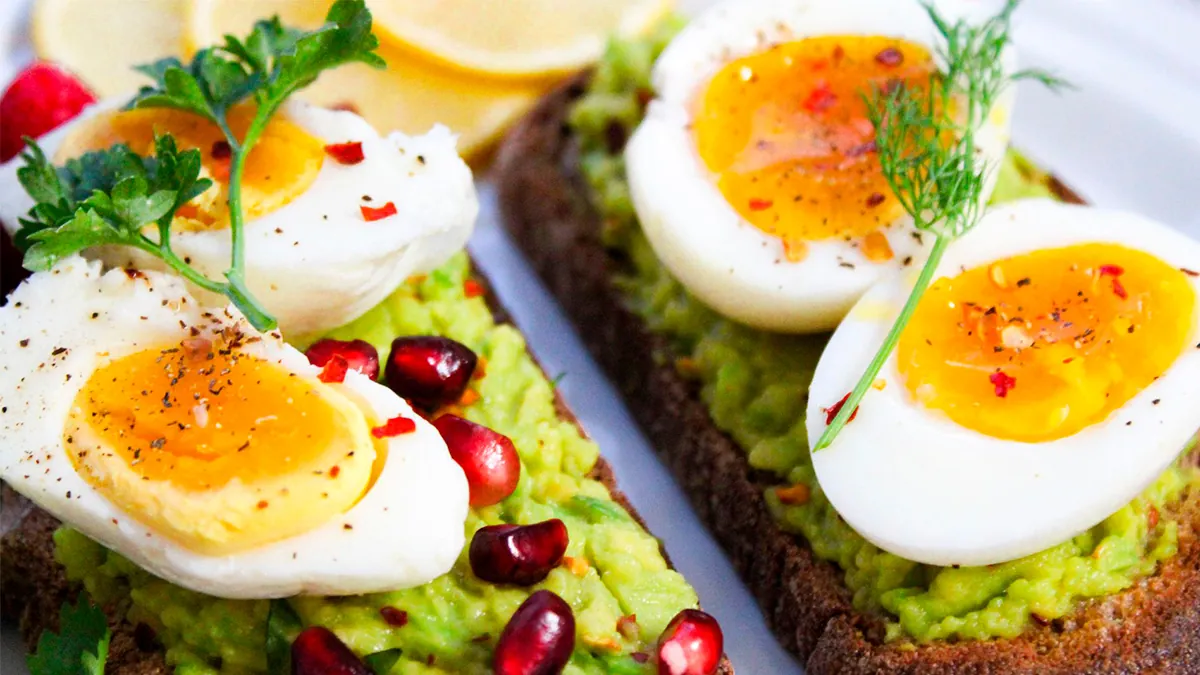
The breakfast terrain is a landscape where, too often, what is customary and usually established has not turned out to be the most nutritionally relevant. The myths that breakfast is the most important meal of the day have largely been debunked.
The truth is that all meals matter equally, although breakfast, by breaking the overnight fast, carried a special relevance. There is no denying that there are some breakfasts that might not be as nutritionally useful.
At first glance, between 15% and 25% of daily calories should come from breakfast, something hardly attainable with just a slice of toast and a coffee. That is why many specialists insist that it should be a complete meal in which proteins, carbohydrates, fats, and fiber appear. Something we have already discussed at The Objective.
Also, other nutritionists like Raquel Bernácer insist on another reality, especially when the specter of dieting or intermittent fasting appears. Restricting breakfast can be a bad idea, as it does not guarantee weight loss. On the contrary, she stated on her social networks that “skipping breakfast is counterproductive” because “you consume fewer calories in the morning, but you will have uncontrollable hunger in the afternoon.”
Breakfast, better the more complete
The breakfast debate is crucial in our daily eating routine, especially regarding ongoing nutritional deficits and hunger that carry on through the day. Preparing a simple breakfast with coffee and toast or a pastry, which is quite common, leaves the first meal of the day very imbalanced.
If we choose butter and jam, for example, there will be many saturated fats and a lot of carbohydrates. In that case, some experts like Paloma Quintana recommended replacing it with cottage cheese and fresh fruit. It is also important to consider that breakfast should be a natural source of fiber, especially if we use whole-grain bread, a more advisable option than white bread, a tip also given by the dietitian Paloma Gil.
Ver esta publicación en Instagram
And, of course, it should include proteins. Not only for the role they play in our daily life, but also for their satiating virtue. It’s not about a breakfast that includes only proteins and, as much as possible, where they are complete.

In this case, giving priority to the egg, for its high-biological-value proteins and its high bioavailability, is interesting. It would also be relevant to turn to fish, such as smoked salmon, for the protein and for the omega-3 fatty acids they include. It isn’t a bad option, always in moderation, to have Iberian ham or some kind of turkey cold cuts, as well as cheese, another classic protein source where it should be remembered that, the more cured it is, the higher the nutrient concentration. That necessarily means more calcium, but also more protein, more fat, and more salt.
The risks of skipping breakfast
Skipping breakfast or regularly making an incomplete breakfast adds an extra problem: how we correct it afterward. This is precisely what Raquel Bernácer referred to when explaining that “you’ll have uncontrollable hunger in the afternoon.” Leaving our stomach to rumble mid-morning opens the door to falling into some trap snack, the result of cravings, such as sweets loaded with simple sugars, when what’s most advisable would be to eat a handful of nuts or a piece of fruit like a banana.
However, if we pay that toll of not opting for breakfast, it’s possible that we’ll also reach lunch without hunger after the snack. Again, we remain on the path of poor hunger management. Possibly with a hollow stomach in the mid-afternoon, which opens the door to a quick sweet to resolve the tangle.
Raquel Bernácer, in this example, mentioned intermittent fasting, a trend that does not work for everyone. She also stressed that it must be planned well and during a period of calm. Therefore, she reminded that, in perimenopausal women, “habitually skipping breakfast keeps cortisol elevated in the afternoon.” And all this, even if you continue skipping breakfast because you do not feel hungry.
Understanding that not everyone feels hungry first thing in the morning—or wants to cook—Raquel Bernácer offered her tip. “One and a half to two hours after waking up, have a breakfast rich in protein, in fiber, and with healthy fats to help manage that cortisol much better,” she warned. In this way, you’ll achieve “not reaching the afternoon with so much hunger.”
