
The first cool evenings arrive, the windows close, the barbecue gets stored away… and it is often at this moment that stealthy noises can be heard behind the baseboards. Autumn doesn’t only make humans crave cocooning: mice also seek a warm refuge, sheltered from wind and rain.
Wildlife experts such as Robert Pierce and Sheldon Owen remind us that these small rodents need only a tiny opening to invite themselves into your home, then multiply. Between health risks and property damage, ignoring a few droppings behind a piece of furniture can quickly become costly. A simple 6 millimeter hole is enough.
Why do mice target your home in autumn
For Robert Pierce, an associate professor at the University of Missouri, “mice can enter houses all year round, but when temperatures drop, they look for sheltered places. What they need is protection and food.” Whether it’s the domestic mouse Mus musculus or wild species like Peromyscus leucopus and Peromyscus maniculatus, the goal remains the same: to turn your home into a comfortable winter neighborhood.
Sheldon Owen, wildlife specialist at West Virginia University, notes that mice “chew, contaminate food, and spread diseases through their urine, saliva, and droppings.” He mentions hantavirus and leptospirosis among the risks, not to forget the ticks they can carry. In terms of reproduction, the figures illustrate the stakes: up to 5 to 10 litters per year, with 5 to 6 young each time, and the youngsters able to reproduce around 6 weeks old. “A population grows quickly when conditions are favorable,” emphasizes Robert Pierce.
Sealing entry points: the priority to keep mice outside
Experts emphasize a key fact: a mouse slips through a hole of about a quarter of an inch, roughly 6 millimeters, and a rat through an opening of about half an inch. In practice, any gap through which a thread of light can pass becomes suspect. Robert Pierce sums up the strategy: “The most effective way to manage mice is to prevent them from entering, while removing food and shelters near the home.” The round of the house, outside then inside, thus becomes the autumn reflex to adopt.
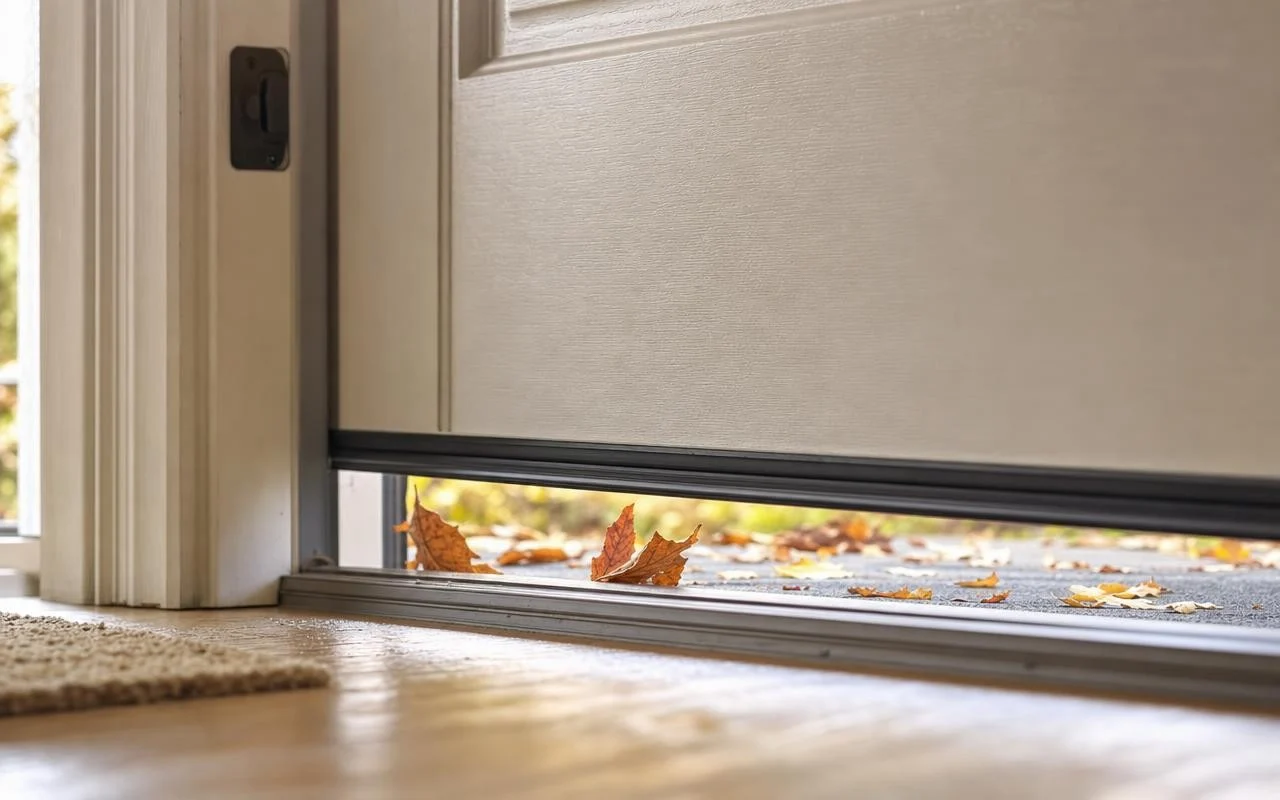
To block these access points, specialists advise filling small cracks with appropriate sealant, and reserving a tougher treatment for larger holes: stuff with copper wool or copper mesh, then seal. This material is harder for rodents to gnaw through than steel wool. Conversely, wood, plastic, rubber, simple expanding foam, or a fine mesh screen can be gnawed away very quickly. You should also check door bottoms, door sweeps, and the garage threshold, repair screens, trim shrubs that touch the facade, and move firewood and clutter away, as they provide hiding places and “stepping stones” for rodents.
What to do if mice have already entered the house
Once you know what to watch for, spotting an intrusion becomes easier. We’re talking about small brown-black droppings shaped like grains of rice, often under the sink, behind the refrigerator, or in cupboards. There are also gnawed food packaging, insulation or fabrics, dark marks along walls, and running or scratching sounds in walls or ceilings, especially at night. The presence of these signs is not necessarily linked to poor hygiene: mice are mainly seeking warmth and easy-to-access food.
For experts, the most effective method remains the use of snap traps. “They are inexpensive and effective,” explains Robert Pierce. He recommends first placing the baited trap without arming it for a day or two so the mouse gets used to it. The reference bait remains a thin peanut butter pat, which forces the animal to pull on it. Traps should be placed along walls, every few meters, with the mechanism facing the wall, because mice like to travel along the edges. Sheldon Owen warns against live traps, which leave a living animal to manage and come back to the same problem if released nearby, as well as glue boards, considered cruel and risky to handle. Poison baits also raise concerns: risks for pets, rodents dying inside walls with lingering odors. In case of heavy infestation or the presence of rats, hiring a professional remains the safest route to restore true protection for your home.
