


The abdominal plank is a fundamental exercise in any workout routine due to its proven effectiveness in strengthening the core musculature. However, trainer María Casas warns in a video that the ideal practice of this well‑known exercise should not focus solely on passively holding the position, but on deliberately enhancing muscle activation. Accordingly, the expert believes the object of this exercise should be to achieve quality in the tension generated.
“Isometric planks are not just ‘holding’. They are about creating tension and control from the core,” emphasises Casas in a video in which she invites us to recognise that distinction in order to achieve good results in training. “Don’t aim to last longer; aim to tense better”, she recommends, urging us to stop watching the clock.
Progression for Front Planks
To ensure the abdominal tension is correct, Casas advises performing the exercise in controlled sets: you should complete 3 to 4 sets, holding the position for between 20 and 40 seconds. To achieve this, it is essential during the execution to keep the abdomen engaged and the hips perfectly aligned.
If you’re someone who already masters the static exercise and finds it monotonous, the trainer offers several progressions for the abdominal plank.
Isometric

The Level 1 is the straightforward starting point. We begin with something simple: front planks held for 15 to 20 seconds in isometry, that is, tightening the abdomen firmly without letting the lower back sag. Once this foundation of stability is mastered, you can move on to Level 2.
Dynamic Planks
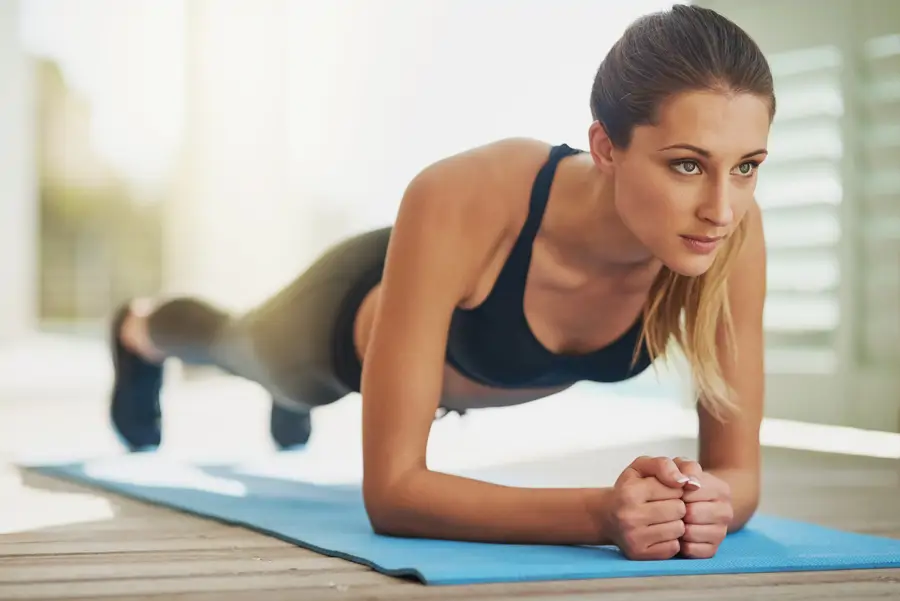
In this level, the aim is to lift and lower while tightening the abdomen to maintain stability at all times. The intensity increases markedly in the succeeding levels.
Plank Jacks
Level 3 requires greater control, as it consists of performing the planks “tightening well while you move your legs”. Open them and close them with a jump while you keep the trunk and arms static. “Here you’ll feel it burn right to the very core,” the trainer asserts.
Superman Plank
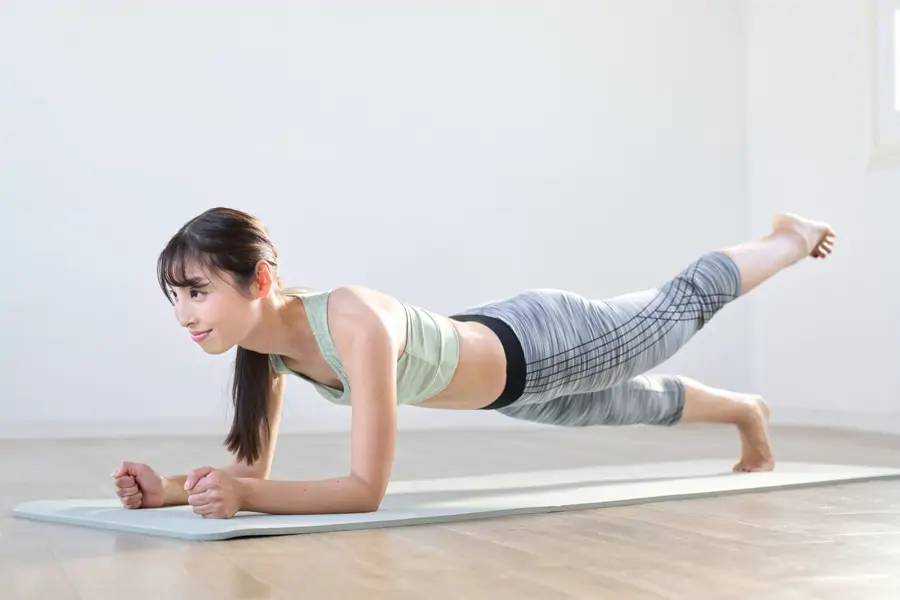
At this level 4, the difficulty increases to such an extent that the trainer herself experiences the intensity of her own execution. “If I’m honest, I was finding them incredibly hard to perform,” she admits.
Sliding Planks
The final challenge in this progression is the sliding plank, which demands total coordination and isometric strength. That’s why it is the ideal progression for the more advanced and experienced. You can practise it with an abdominal wheel.
This progression demonstrates that core training can be varied and challenging. In fact, the trainer concludes her challenge by inviting us to see how far we can go. The aim, regardless of each person’s level, should always be deliberate abdominal activation, ensuring that the execution of the exercise focuses on tightening better rather than merely lasting longer.
Benefits of a Strong Core
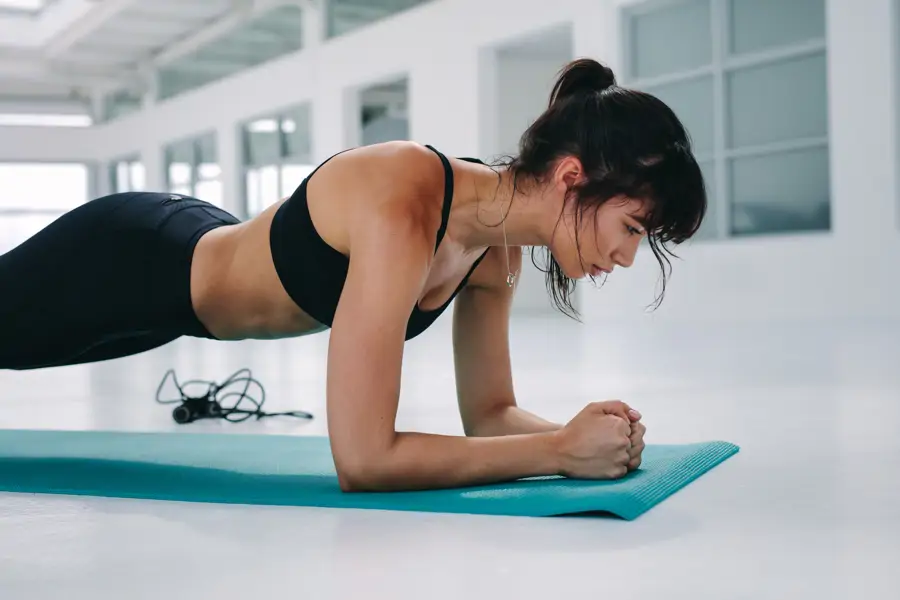
The benefits of this deep activation extend beyond the physical appearance, according to the expert, who emphasises that “the core is not just aesthetics. It is performance, stability and power”. And indeed, having a strong core has a direct impact on overall performance during exercise, for example by improving strength when performing fundamental movements such as the squat, the deadlift and the bench press.
Not to mention that a well-trained core helps achieve “a firmer and more defined abdomen”, and that from the perspective of postural health and injury prevention, “it protects the lower back and improves posture”.
