
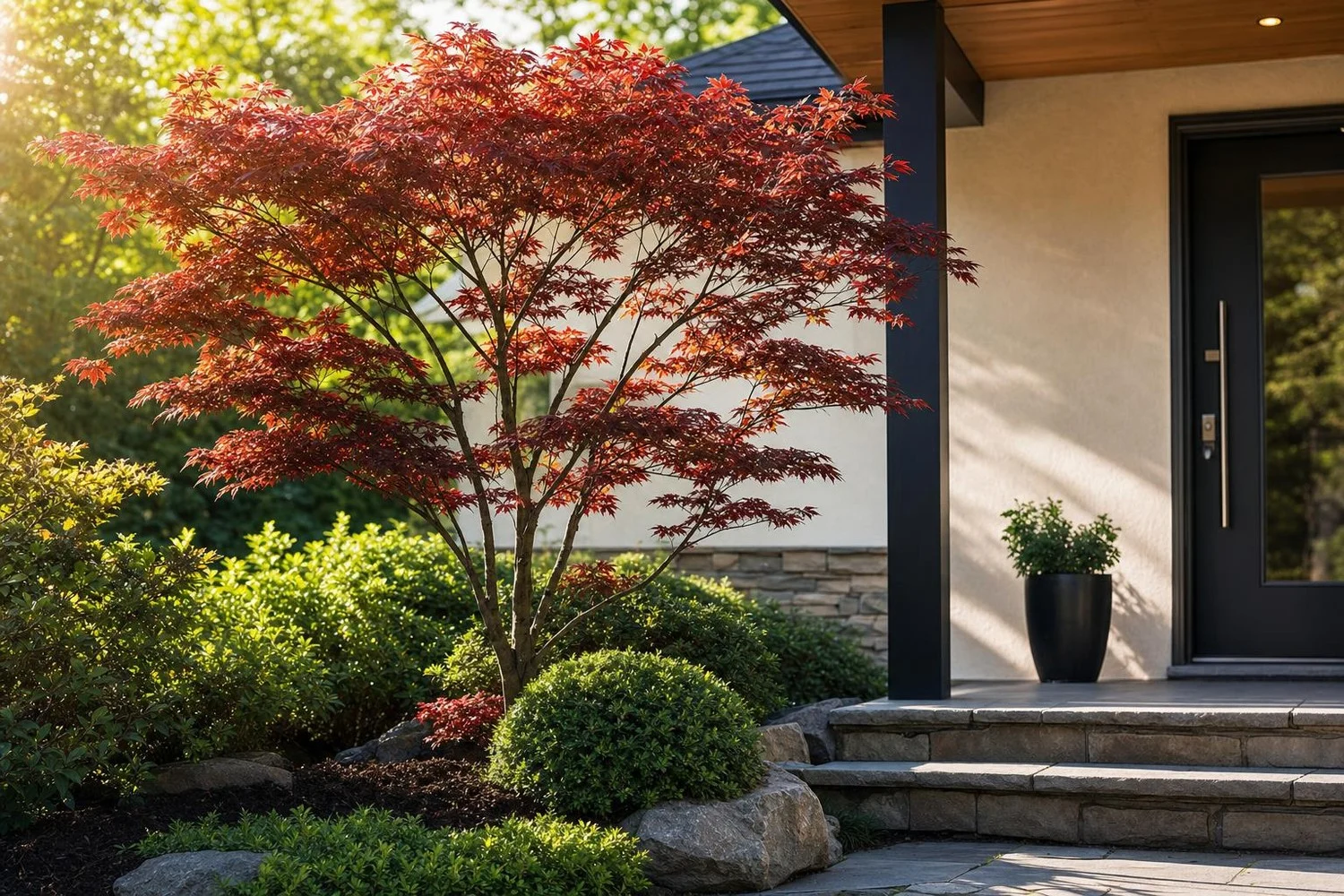
A single tree capable of changing the atmosphere of a garden, calming the eye, and, according to Feng Shui, drawing luck toward the home: the Japanese maple ticks all the boxes. Its finely cut leaves, shifting from soft green to brilliant red, captivate both gardeners and spiritual enthusiasts.
For Feng Shui masters as for landscape designers, however, it is not a decorative detail that makes the difference, but its precise placement. Planted in the right spot, the maple becomes a genuine magnet for positive energy; mispositioned, it loses part of this symbolic power. It all hinges on a few square meters of garden.
Why the Japanese maple is linked to luck in Feng Shui
In Japanese culture, the maple evokes beauty, change, and renewal, through its spectacular autumn colors. This idea of gentle transformation speaks strongly to Feng Shui, where the tree is associated with the Wood element. The specialist Jo Lambell reminds us that “Japanese maples are linked to the Wood element in Feng Shui; planting this tree to the east or southeast of the garden is believed to promote growth, health, and family harmony.”
In the bagua map, the East corresponds to the realm of family and vitality, the Southeast to prosperity and progress. Installing an Acer palmatum there, according to this tradition, nourishes these zones with beneficial energy, or chi. Jo Lambell adds that “many people also like to plant it near the front of the house, because the color change through the seasons is seen as a way to attract good energy toward the home.”
The best Feng Shui locations for your Japanese maple
Therefore, the first recommended spot remains the East section of the garden, provided it offers soft light. The Japanese maple loves dappled shade, with a bit of morning sun and light shade in the afternoon. Jo Lambell summarizes: “Japanese maples prefer partial shade with a little gentle morning sun, and soil that stays moist but well drained and slightly acidic.” An East-facing corner, sheltered from the wind, near a path or a bed, often meets these conditions.
The Southeast works in the same way for material luck, provided you avoid the full hot sun in the south and walls that reflect heat. Guides for planting like Gamm Vert recommend humus-rich, well-drained soil, with a pH around 5 to 6, enriched with compost and covered with mulch. Another guideline given by installation specialists near the house is to keep at least 1.50 m of distance from walls and foundations, to protect the tree and ensure the circulation of energy.
Practical checklist for choosing the ideal location for the Japanese maple
Around the entrance, Feng Shui advises using it as a frame, not as a barrier. Jo Lambell warns: “Feng Shui says that a maple placed exactly on the axis of the front door can block energy rather than welcome it; it’s better to shift it to the side to frame the entrance rather than place it right in front.” A tree planted slightly to the left or right of the path, or in a pot near the doorstep, remains within the luck-bringing spirit while keeping the passage fluid.
Before digging, a few simple checks are in order. Observe the light over a day: does the chosen spot receive the soft morning sun followed by light shade, without the scorching afternoon sun or a wind corridor? Test the soil, which should stay cool but not become waterlogged; in heavy clay soil, experts recommend a mound or a large pot filled with a mix of garden soil, potting soil, gravel and compost. Watering will stay steady in the early years, with a mulch to preserve moisture. For pruning, Jo Lambell advises to intervene in late autumn or winter, “only to remove dead wood or branches that cross, in order to maintain this pretty natural shape.” The rest, it is the seasons that will do the show.
Sources
- Modes & Travaux
“Top 6 des meilleurs petits arbres à planter dans un pot”
