
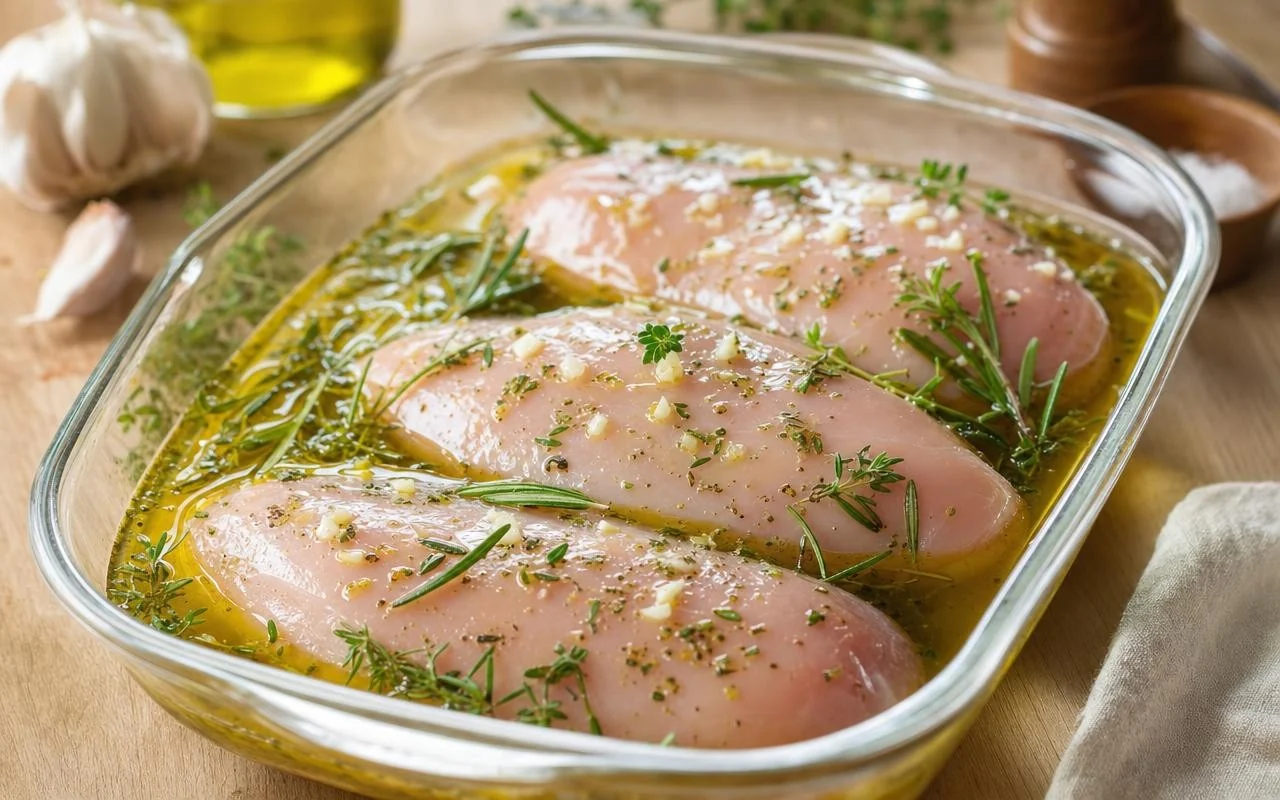
You’re cooking a chicken breast in a skillet, and when you cut into it, disappointment hits: the meat is dry, fibrous, far from the tender result you expect. Many people lower the heat or add cream, without really solving the problem. Yet chefs have revealed a much simpler trick, based on a brief preparation before cooking and on an ingredient that everyone has in their kitchen.
In a recipe that went viral, cooks explain that the difference between a dry chicken breast and a moist, tender one is decided even before the meat lands in the pan. Their secret lies in an express marinade, based on olive oil and sometimes lemon juice, which rests for about thirty minutes in the fridge. And above all, a few very precise cooking reflexes that change everything.
Why chicken breast dries out so quickly in the pan
Chicken breast is a very lean cut, almost devoid of intramuscular fat. When it stays on the heat for too long, the water it contains evaporates, the fibers tighten and the texture quickly becomes stringy. A pan that is too hot, heat left on too long, or a piece of meat that is very thin only worsens this drying. Without any preparation, the slightest overcooking is immediately evident on the plate.
That’s where the chicken breast marinade comes into play. By coating the surface of the meat, the oil helps the seasonings to distribute evenly and forms a thin barrier that limits juice loss. When you add lemon juice, its acidity gently acts on surface proteins and slightly tenderizes the piece. The meat stays raw at this stage: the goal is not to cook it, but to prepare it.
The 30-minute olive oil marinade for a juicy chicken breast
According to these chefs, you only need to mix two tablespoons of olive oil with the juice of half a lemon for one or two small chicken breasts. Place the meat in a dish, pour the mixture over it and massage to coat both sides. You can add finely chopped garlic, black pepper, a bit of oregano or parsley, without resorting to heavy sauces or complicated marinades.
This preparation should then rest for about 30 minutes in the fridge, in a covered dish or an airtight container. Professionals remind that you should not leave the raw chicken at room temperature during this resting period. Once the half-hour has passed, remove the meat, let the excess liquid drain and discard the raw marinade, or boil it for several minutes if you want to use it as a sauce.
Cooking the marinated chicken breast: times, temperature and mistakes to avoid
For cooking, start by heating a skillet over medium-high heat with a thin drizzle of olive oil. Place the marinated chicken breast in the hot skillet and let it brown without touching it for a few minutes, then turn it once. The chefs stress one key point: do not pierce the meat, nor press it with a spatula, lest the juices escape.
To keep the meat safe and juicy, the internal temperature should reach about 74 °C before taking the chicken breast off the heat. Depending on its thickness, a few minutes on each side, without extending the cooking once this threshold is reached. Let the piece rest for two or three minutes on a plate before slicing. Served with sautéed vegetables, rice or a salad, it will stay truly juicy.
